Incident Overview
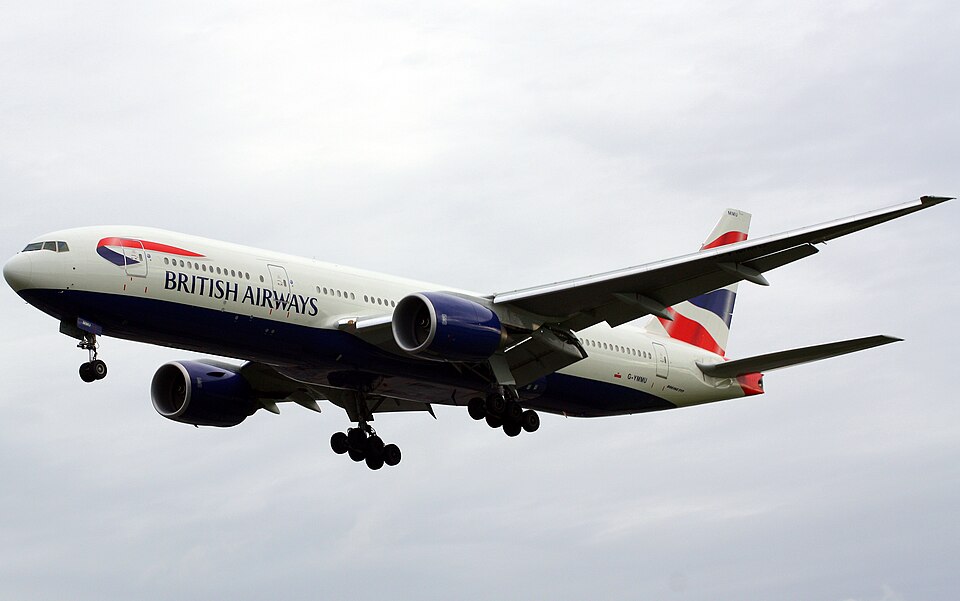
On 3 July 2019, at 1530 UTC, a Boeing 777-236, registration G-YMMU, was involved in a serious incident shortly after departure from London Heathrow Airport. The aircraft was operating a scheduled commercial passenger flight to Bengaluru Kempegowda International Airport, India. There were 13 crew and 259 passengers on board; no injuries were reported, and no damage occurred.
Flight History
The aircraft had been dispatched with the Auxiliary Power Unit (APU) bleed air valve and right air conditioning pack isolated, as allowed by the Dispatch Deviations Guide, due to two previous fume events. The flight was operated by three pilots due to its length.
After engine start but before taxi, the third pilot detected a smell of fumes. The commander and co-pilot did not notice anything unusual. After discussion, the crew decided to proceed.
Shortly after takeoff, all three pilots smelled fumes described as an “organic cheesy, oily smell” that left a metallic taste. The intensity increased as the aircraft passed through 2,000 ft. The co-pilot donned his oxygen mask and took control. The commander and third pilot assessed the situation, called the Senior Cabin Crew Member (SCCM) to the flight deck, who confirmed the smell but reported none in the cabin. The commander and third pilot then donned oxygen masks and initiated the ‘smoke, fire or fumes’ QRH checklist.
After completing initial checklist items, the crew discussed the need for an urgent landing. At that time, the aircraft was approximately 51 tonnes above maximum landing weight. Since fumes were confined to the flight deck and all pilots were on oxygen, they decided to jettison fuel to reach maximum landing weight rather than land overweight.
The crew made a PAN (urgency) call to air traffic control and began fuel jettison. The smoke, fire, or fumes checklist required switching off the left air conditioning pack to identify the source, but doing so would depressurize the aircraft because the right pack was already isolated. The crew also realized they could not determine if selecting the pack off stopped the fumes without removing their oxygen masks. They initially requested descent to FL100 to depressurize but subsequently decided to leave the left pack on.
After fuel jettison was completed and passengers and cabin crew were briefed, the aircraft returned to Heathrow for a normal approach and autoland. Cabin crew later reported that during the approach, fumes could be smelled around Door 2L and on the left side of the cabin from rows 1 to 5.
Previous Fumes Events
Fumes had been reported on G-YMMU on 29 June 2019 during final approach to Heathrow after a flight from Buenos Aires. The crew smelled an oily odor but did not use oxygen. The operator’s engineering department could not replicate the smell on the ground; the APU bleed was isolated as a precaution.
On 1 July 2019, while holding at FL80 inbound from Cairo, the crew smelled “diesel fumes” and experienced a “dry, tickly throat.” They donned oxygen masks and declared a PAN, landing uneventfully. Subsequent engineering found damage in the right pack air cycle machine, which was replaced; other components were changed. Odor from the APU and right pack was detected during ground runs. The aircraft was returned to service with the APU bleed and right pack isolated.
Subsequent Events
Two further fume events occurred on 8 August and 17 August 2019, neither requiring oxygen use. On 8 August, oily fumes were detected during takeoff from Heathrow but dissipated. On 17 August, the co-pilot detected a “wet dog” or “sock” smell at FL90 approaching Heathrow; it lasted about one minute and reoccurred on the ground.
Engineering Investigation
After the 3 July event, the operator conducted ground engine runs and a flight test. During the flight test, fumes were associated with the left pack. The aircraft was returned to service with the left bleed valve isolated and the APU bleed and right pack reinstated. Further inspections on 7 and 15 July led to replacement of additional components; no fumes were detected during subsequent ground runs. The left bleed valve was reinstated on 15 July.
After the August events, further inspections found no faults.
Conclusion
Fumes were reported in the flight deck on five flights over two months, two of which required oxygen use. Despite extensive engineering investigation by the operator, the source of the fumes has not been found.