History of the Flight
The pilot, who held a Private Pilot’s Licence, prepared for a local flight with three passengers, with an expected duration of 60 to 75 minutes. The weather was fine, but a westerly wind of about 20 kt with occasional gusts was blowing directly across Runway 36, which was in use. The aircraft’s takeoff mass was 2,845 lb, below the maximum permitted 3,000 lb. Runway 36 was 775 m long. The pilot wondered why Runway 23 was not being used and assumed it was unavailable.
After completing pre-takeoff checks, the aircraft began its takeoff run. Shortly after lift off, the aircraft rolled sharply to the right, which the pilot attributed to a gust of wind. As the aircraft deviated from the runway centreline, the pilot attempted to correct, but the aircraft entered a series of oscillations. The pilot felt the controls becoming less responsive and later thought this might have been due to the aircraft encountering a tailwind component as it moved to the right.
Believing his only option was to land, the pilot set the aircraft down on a disused runway section before crossing onto farmland, still within the airfield boundary. The aircraft touched down on rough ground, sustaining damage to the propeller, tail surfaces, and landing gear. It came to a stop and was secured before the airfield fire truck arrived.
Aircraft and Pilot Information
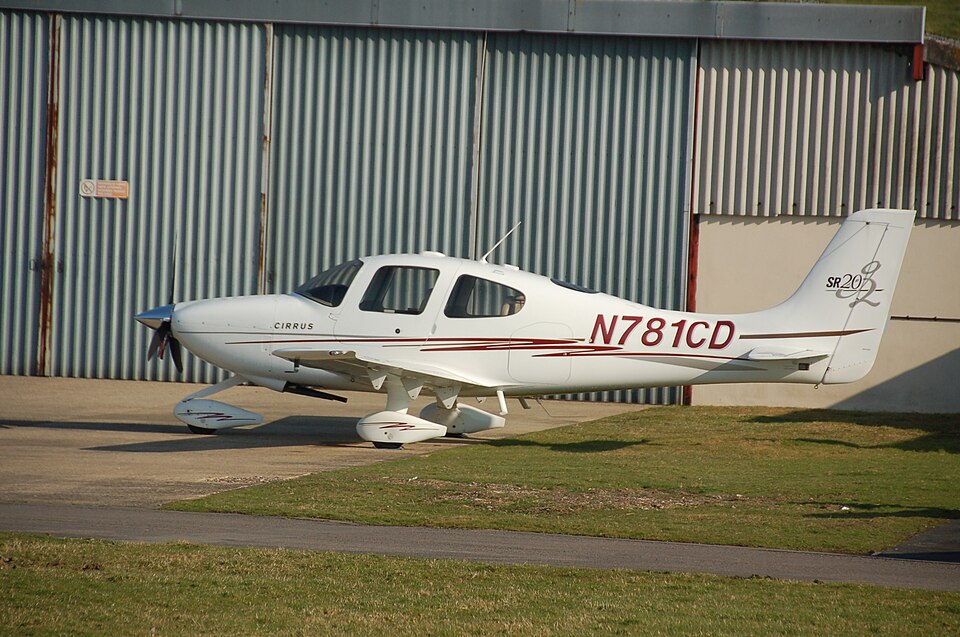
The aircraft was a Cirrus SR20, registration N781CD, manufactured in 2004 with a single Teledyne Continental Motors IO-360 piston engine. The pilot, aged 57, had 212 hours total flying experience, with 14 hours on type. In the previous 90 days, he had flown 13 hours, and in the last 28 days, 4 hours. No injuries occurred among the four occupants.
Damage
The landing gear, tail surfaces, and propeller suffered damage as a result of the landing on rough ground.