History of the Flight
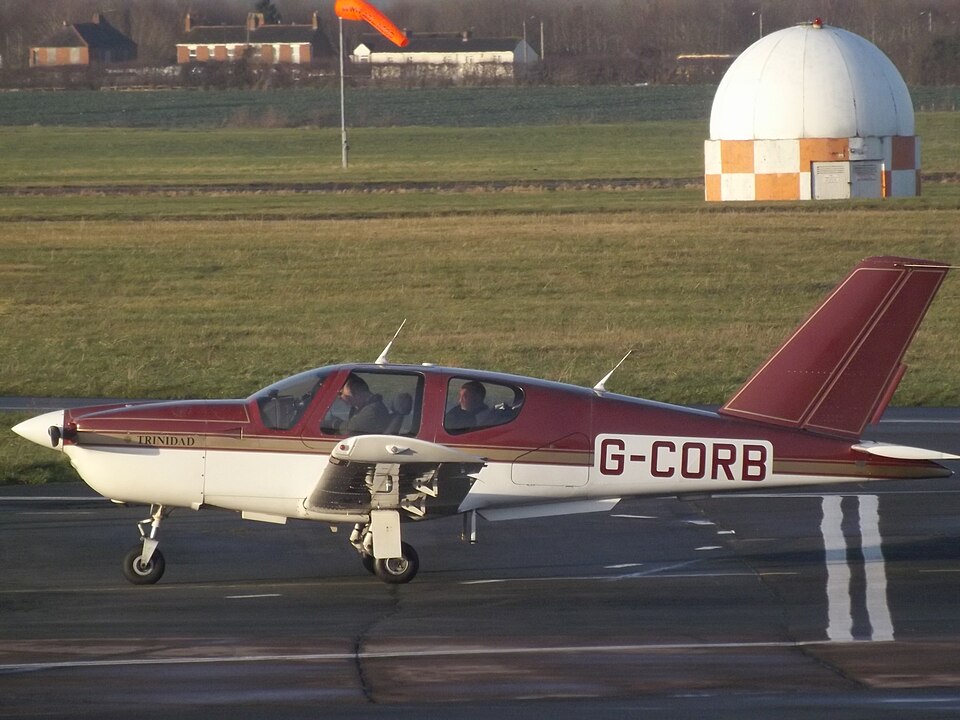
The aircraft, a Socata TB20 Trinidad registered G-CORB, departed Gloucestershire Airport for a private flight to Glenforsa Airport on the Isle of Mull. The pilot, who held a Private Pilot’s Licence with 555 total flying hours (280 on type), planned to land on grass Runway 25. After making radio contact with the air/ground operator, the pilot was advised to expect wind shear on short final and to avoid heavy braking due to wet grass conditions. The pilot performed a low pass to assess the airfield and wind conditions, noting a southerly wind of approximately 6 kt. To maximize rollout distance, the pilot aimed to touch down as close as possible to the runway designator numbers. At about 10 ft above ground level, the aircraft experienced a strong downdraught, resulting in a hard landing slightly short of the numbers. The pilot felt a hard bump and initiated a go-around. The air/ground operator subsequently informed the pilot that the left landing gear appeared damaged.
Post-Incident Actions
The pilot diverted to Oban Airport, which had a paved runway and additional facilities. Upon arrival, the pilot requested a low pass for the Aerodrome Flight Information Service Officer (AFISO) to assess the landing gear. The AFISO reported visible damage to the left landing gear, and the Rescue and Fire Fighting Service (RFFS) was placed on local standby. Another aircraft in the area offered to fly alongside to inspect the damage from closer range. That pilot reported that the left landing gear was not properly aligned and the tyre had detached from the wheel rim, though the landing gear indication lights in the cockpit showed all gear down and locked. The pilot then declared his intention to land on Runway 01 at Oban, and the airport upgraded the incident to a full emergency, notifying local fire and ambulance services. During the landing, the aircraft touched down on the right mainwheel first; when the left mainwheel contacted the runway, the left landing gear collapsed. The aircraft slewed left and departed the runway, coming to rest on grass approximately 22 m from the runway edge. The RFFS attended, and the pilot and two passengers exited the aircraft without assistance. The other emergency services were subsequently stood down.
Airfield Information
Glenforsa is an unlicensed airfield with a single grass runway. The runway designator numbers are made of concrete sunk into the grass. Following the incident, the Glenforsa air/ground operator informed the pilot that witness marks indicated the aircraft wheels had sunk into the runway surface and the left wheel had struck the vertical edge of the concrete numbers. The airport operator provides runway safety information on its website, but this did not include any reference to the concrete numbers.
Discussion
The pilot commented that in future, if faced with similar circumstances, he would ensure his touchdown aiming point allowed more clearance beyond the concrete numbers. The airport operator stated it was not aware of any previous occasions where the concrete runway numbers had presented a hazard to a landing aircraft, but would review the information published on its website.
Damage
The accident resulted in damage to the left landing gear and left wing landing light.