What happened
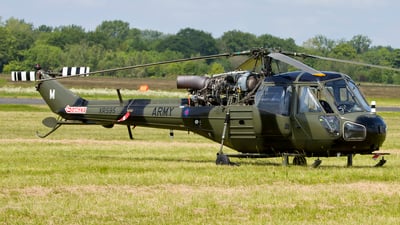
On 24 April 2026, a Westland Scout AH1 (registration G-BWHU) was conducting a training flight at Turweston Aerodrome in Buckinghamshire. The helicopter had landed to refuel and was positioned out of the wind for ease of service. After completing pre-flight checks, the instructor took control to move the aircraft into the wind before commencing a pedal turn to the left.
As the turn began, the helicopter rapidly rotated in the opposite direction to the right. The instructor applied full corrective yaw input, but the rotation continued to increase with no apparent effect on the aircraft's heading. Recognizing a potential loss of tail rotor effectiveness, the instructor closed the throttle to reduce torque and raised the collective to cushion the landing. The helicopter settled heavily, causing the main rotors to strike the tail boom while rotating.
The impact resulted in significant damage to the skids, tail cone, and tail rotor transmission system. Both crew members sustained minor injuries.
The investigation
The AAIB examined the aircraft onsite immediately after the accident. The physical evidence confirmed that the main rotor blades had struck the tail boom, disrupting the tail rotor drive shafts and support bearings. Additionally, the tail rotor blades made contact with the ground during the heavy landing, causing further shock loading to the drive train.
Investigators ruled out pre-existing mechanical faults, malfunctions, foreign object damage, or external control restrictions as contributing factors. The analysis considered the environmental conditions, which were calm with a light wind of 5–8 knots from 090°. Given the benign weather and the simplicity of the maneuver, no obvious external trigger was identified.
Consultations with experienced rotary-wing test pilots suggested that the rapid yaw and lack of response to inputs resembled a loss of tail rotor effectiveness. However, this behavior is not typical for the Scout or Wasp helicopter types in service experience. Another hypothesis considered was 'tail rotor breakaway,' a lesser-known aerodynamic effect akin to blade stall under specific light airflow conditions, but this could not be positively confirmed.
Findings
The helicopter was operating within its capabilities in unchallenging conditions when the loss of control occurred. In the absence of any technical fault or malfunction, the exact cause of the loss of control could not be identified. The incident displayed characteristics consistent with a loss of tail rotor effectiveness, although this was considered unusual for this aircraft type. The concept of tail rotor breakaway was also evaluated but remains unconfirmed.
Safety action
No specific safety recommendations were recorded in the source material.