History of the Flight
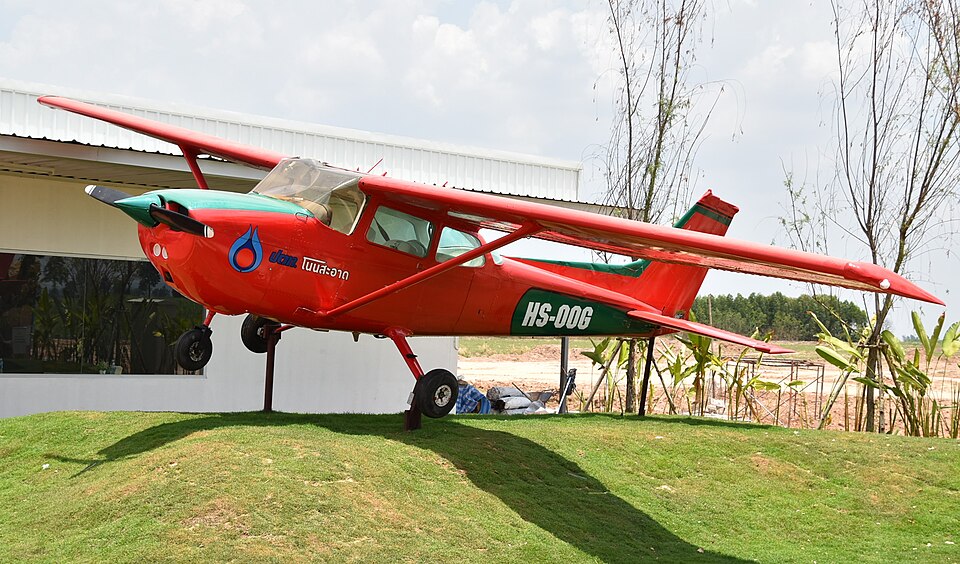
On 8 February 2016 at 15:00 local time, a pilot and a passenger operated a Cessna 172N, registration HS-OOG, for a local flight from a temporary take-off and landing area in Khokkham subdistrict, Mueang district, Samut Sakhon province. Before the flight, the pilot inspected the aircraft and found it ready with full fuel. At approximately 15:50, during landing on runway 16, the aircraft touched down but remained centered. After the nose wheel contacted the runway, the aircraft accelerated toward the end of the runway, apparently due to a strong tail wind. The pilot applied maximum brakes but could not stop. The aircraft exited the runway onto grass, collided with a mound near a canal, causing the nose landing gear to break and bend backward. The aircraft flipped forward and landed in the canal, approximately 65 meters from the runway end. The pilot and a villager assisted the passenger out of the aircraft.
Injuries and Damage
Both the pilot and passenger were slightly injured. The aircraft sustained substantial damage: the nose landing gear broke and bent backward; one propeller blade bent; the top of the vertical fin was damaged; and the left wing tip was damaged. No other damage occurred.
Aircraft and Pilot Information
The aircraft was a Cessna 172N, serial number 17273447, manufactured in 1980. It was privately owned and held a standard certificate of airworthiness valid from 4 November 2015 to 3 November 2018. The engine was a Lycoming O-320-H2AD, last overhauled on 28 January 2005. The propeller was a McCauley DTM75571C160. The pilot, aged 43, held a Thai private pilot license with a single engine land rating, valid until 14 January 2020, and a Class 2 medical certificate valid until 21 December 2016. Total flight time was 495 hours 16 minutes, with 88 hours on the Cessna 172N.
Meteorological and Aerodrome Information
No weather report was available for the temporary take-off and landing area. A windsock was installed on the left side of runway 16. The area had a single asphaltic concrete runway 16/34, 700 meters long and 20 meters wide.
Communications
Communications between the pilot and ground personnel at the temporary area were normal. There were no air traffic controllers at the location.
Investigation Findings
Post-accident tests of the aircraft systems revealed that the brake system, elevator, elevator trim, ailerons, engine controls, and mixture control were functioning normally. The flap lever was found in the 0-degree position. The engine cylinders, spark plugs, and compression were within normal limits. Lubricating oil level was at 5.5, which was normal. The pilot underwent a medical examination within 24 hours of the accident; the result included a decision to stop flying from 10 February to 23 February 2016.