Ultralight Crash in Chonburi Kills Pilot Due to Wing Fabric Failure
An X-AIR HAWK ultralight crashed in Chonburi, Thailand, killing the pilot and injuring a passenger. The accident was caused by deteriorated wing fabric and…
On December 8, 2005, a Boeing 737-7H4 (registration N471WN) operated by Southwest Airlines was involved in an aviation accident near Chicago, Illinois. Investigators recorded the probable cause as: The National Transportation Safety Board determined that the probable cause of this accident was "the pilots' failure to use available reverse thrust in a timely manner to safely slow or stop the airplane after landing, which resulted in a runway overrun. This summary draws on records from the U.S. National Transportation Safety Board (NTSB) Aircraft Accident Reports; 4 related events involving the same aircraft type or operator are linked below.
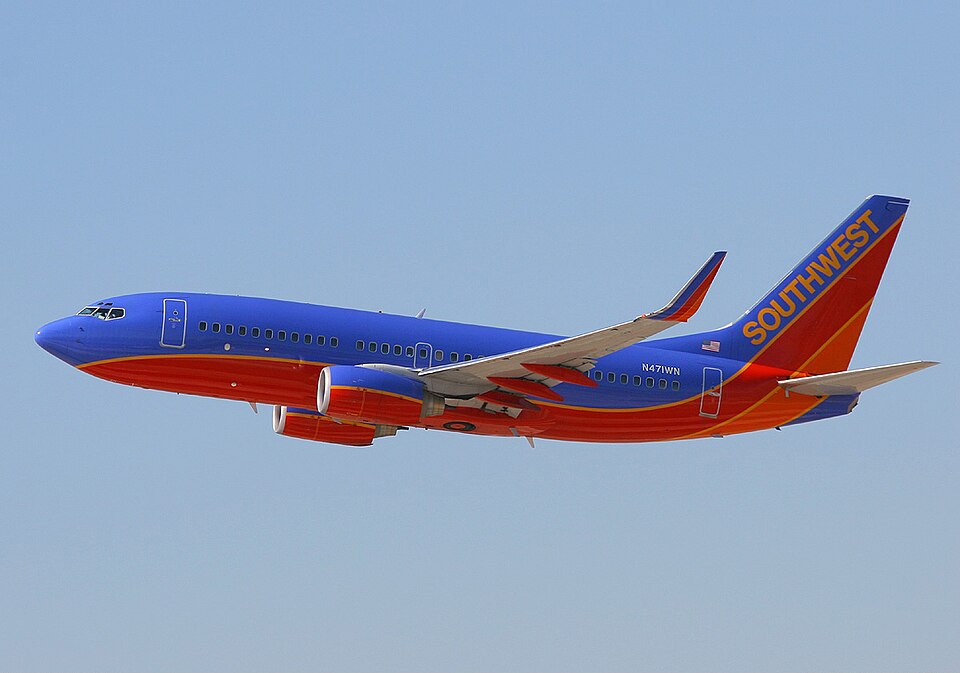
The National Transportation Safety Board determined that the probable cause of this accident was "the pilots' failure to use available reverse thrust in a timely manner to safely slow or stop the airplane after landing, which resulted in a runway overrun. This failure occurred because the pilots' first experience and lack of familiarity with the airplane's autobrake system distracted them from thrust reverser usage during the challenging landing." The Board determined that contributing to the accident were Southwest Airlines' failure to provide its pilots with clear and consistent guidance and training regarding arrival landing distance calculations; the programming and design of its on board performance computer, which did not present inherent assumptions critical to pilot decision-making; the plan to implement new autobrake procedures without a familiarization period; and the failure to include a margin of safety in the arrival assessment to account for operational uncertainties. Also contributing was the pilots' failure to divert given reports that included poor braking action and a tailwind component greater than 5 knots. Contributing to the severity of the accident was the absence of an engineering materials arresting system, which was needed because of the limited runway safety area beyond the departure end of runway 31C.
— NTSB Determination
On December 8, 2005, about 1914 central standard time, Southwest Airlines flight 1248, a Boeing 737-7H4 registered N471WN, ran off the departure end of runway 31C after landing at Chicago Midway International Airport in Chicago, Illinois. The airplane rolled through a blast fence and an airport perimeter fence onto an adjacent roadway, where it struck an automobile. A child in the automobile was killed, one automobile occupant received serious injuries, and three received minor injuries. Eighteen of the 103 airplane occupants received minor injuries, and the airplane was substantially damaged.
### The flight
Flight 1248 was a scheduled passenger flight from Baltimore/Washington International Thurgood Marshall Airport to Chicago Midway, operated under 14 CFR Part 121. The flight departed about 1758 eastern standard time, about two hours late because of deteriorated weather in the Chicago area. There were 98 passengers, three flight attendants, and two pilots aboard.
The captain, who was the flying pilot, had about 15,000 hours of total flight time, including 4,500 hours in 737 airplanes. The first officer, the monitoring pilot, had about 8,500 hours of total flight time, with about 2,000 hours as second-in-command in 737 airplanes.
### En route and holding
Instrument meteorological conditions prevailed in the Chicago area, with a National Weather Service winter weather advisory predicting heavy snow. Snow had been falling at Midway since about 1347.
While en route, the pilots reviewed and discussed the company's new autobrake system procedures. The accident landing would be the first time either pilot landed using autobrakes.
About 1833, air traffic control issued instructions to enter a holding pattern at 10,000 feet due to snowplow operations at Midway. While holding, the first officer entered updated weather and runway conditions into the on board performance computer (OPC) to determine the required landing distance for runway 31C. The reported winds of 090 degrees at 11 knots resulted in a computed tailwind component of 8 knots.
Southwest Airlines limited 737s to landing with a 10-knot or less tailwind component under all conditions, and company policies did not authorize landings with more than a 5-knot tailwind component with poor braking action. The first officer entered fair and poor pilot braking action reports separately into the OPC. The OPC estimated the airplane would stop about 560 feet before the departure end of the runway with fair braking action, and about 40 feet before the end with poor braking action. The pilots decided they would divert to an alternate destination if the tailwind component increased above 10 knots or if braking action reports indicated poor braking action for the full length of the runway.
### Approach and landing
About 1854, air traffic control provided radar vectors for the instrument landing system approach to runway 31C. About 1903, controllers cleared the flight for the approach and advised that the braking action reported for runway 31C was "fair except at the end [it's]...poor." When the pilots contacted the Midway tower about 1909, controllers advised them to continue for runway 31C, reporting winds from 090 degrees at 9 knots and braking action "good for the first half, poor for the second half."
The flight received landing clearance about 1912. Flight data recorder information indicated the airplane touched down aligned on the runway centerline at an airspeed of about 124 knots and a ground speed of about 131 knots, about 1,250 feet beyond the runway's approach threshold. The ground spoilers deployed and the autobrakes applied within about 1.2 seconds.
The captain stated that he tried to deploy the thrust reversers immediately after touchdown but had difficulty moving the levers. He stated he felt the antiskid system cycle, then felt it stop cycling, and the airplane seemed to accelerate. He subsequently applied the wheel brakes manually but made no further effort to activate the thrust reversers. He told investigators he believed the use of the autobrake system distracted his attention from the thrust reversers after his initial attempt.
The first officer stated that when he sensed a decrease in deceleration, he exclaimed "brakes, brakes, brakes" and manually applied the brakes. He then saw the thrust reverser levers were still in the stowed position. He moved the captain's hand away and initiated deployment of the thrust reversers about 15 seconds after touchdown. Full deployment occurred about 18 seconds after touchdown.
The airplane ran off the departure end of runway 31C at a speed of about 53 knots. It continued through the runway safety area, a blast fence, a navigational aid antenna, and an airport perimeter fence before striking a northbound automobile on the adjacent public roadway. The airplane came to rest near an intersection, and the occupants evacuated through the forward left and right rear cabin doors.
### What the investigation found
Postaccident examination of the airplane's throttle, antiskid, ground spoiler, wheel brake, and thrust reverser systems revealed no evidence of preimpact anomalies. Flight data recorder information from four other Southwest Airlines 737s that landed on runway 31C in the 21 minutes before the accident indicated that those flight crews deployed reverse thrust promptly. The Board concluded that the pilots' delay in deploying the thrust reversers could not be attributed to mechanical or physical difficulties.
The investigation examined the pilots' use of the OPC. Southwest Airlines policy required pilots to defer to the more critical braking action assessment when mixed conditions were reported. Because poor conditions were reported for a portion of the runway, and company guidance indicated a maximum 5-knot tailwind for poor conditions, the pilots should not have landed. The Board found that the pilots were not in compliance with company policies, noting that the pilots were unaware of the guidance regarding mixed braking action reports.
The Board also found that the OPC displays could have been misleading. When the pilots input poor braking action, the tailwind component exceeded the 5-knot limit. However, the OPC displayed a stopping margin based on the 5-knot limit rather than the actual 8-knot tailwind. If the OPC had used the actual 8-knot tailwind, it would have displayed a negative stopping margin of 260 feet beyond the runway end, which would have been highlighted in red to alert the pilots. Furthermore, the OPC stopping margins for the 737-700 assumed credit for the use of reverse thrust. The pilots were unaware of this assumption and believed their intended use of reverse thrust would provide several hundred feet of additional stopping margin.
Regarding the autobrakes, Southwest Airlines had issued a bulletin stating the new autobrake procedures were to be used beginning December 12. The pilots mistakenly believed the policy was in effect on the day of the accident. The Board concluded that the pilots' first use of the autobrake system during a challenging landing situation distracted them from the routine task of deploying the thrust reversers promptly. A postaccident airplane performance study showed that if the pilots had promptly initiated and maintained maximum reverse thrust throughout the landing roll, the airplane would not have run off the end of the runway.
The investigation also evaluated the runway safety area (RSA). The RSA for runway 31C extended 82 feet beyond the end of the runway, whereas the standard was 1,000 feet. A practicability study had previously concluded that insufficient space existed for standard engineered materials arresting system (EMAS) installations at Midway. However, the Board's simulations indicated that a nonstandard EMAS installation would have stopped the accident airplane before it departed airport property.
### Probable cause
The National Transportation Safety Board determined that the probable cause of this accident was "the pilots' failure to use available reverse thrust in a timely manner to safely slow or stop the airplane after landing, which resulted in a runway overrun. This failure occurred because the pilots' first experience and lack of familiarity with the airplane's autobrake system distracted them from thrust reverser usage during the challenging landing."
The Board determined that contributing to the accident were Southwest Airlines' failure to provide its pilots with clear and consistent guidance and training regarding arrival landing distance calculations; the programming and design of its on board performance computer, which did not present inherent assumptions critical to pilot decision-making; the plan to implement new autobrake procedures without a familiarization period; and the failure to include a margin of safety in the arrival assessment to account for operational uncertainties. Also contributing was the pilots' failure to divert given reports that included poor braking action and a tailwind component greater than 5 knots. Contributing to the severity of the accident was the absence of an engineering materials arresting system, which was needed because of the limited runway safety area beyond the departure end of runway 31C.
An X-AIR HAWK ultralight crashed in Chonburi, Thailand, killing the pilot and injuring a passenger. The accident was caused by deteriorated wing fabric and…
A Challenger II Special ultralight aircraft (U-B23) landed off-runway at Pai Airport, Mae Hong Son, on September 17, 2024, due to a gust of wind. No injuries…
The Polish aviation safety authority is investigating a serious incident involving an AT-3R100 aircraft that occurred on September 2, 2024. The investigation…
A SZD-48-3 glider suffered damage when its left wing struck a ground obstacle during a low final approach at EPWK on June 20, 2025. The pilot was uninjured.
A 39-year-old skydiver died after a hard landing near Leszno on May 1, 2026. The PKBWL preliminary report indicates the fatal impact resulted from a late,…
A student pilot crashed an SZD-50-3 Puchacz glider into the airfield fence during a solo training flight on June 6, 2026. The pilot was uninjured, but the…