Paraglider Crash in Puente Alto Injures Pilot and Passenger
A SkyWalk Join't 3 paraglider crashed into the ground near Las Vizcachas, Chile, on September 1, 2024. The pilot and passenger sustained serious spinal…
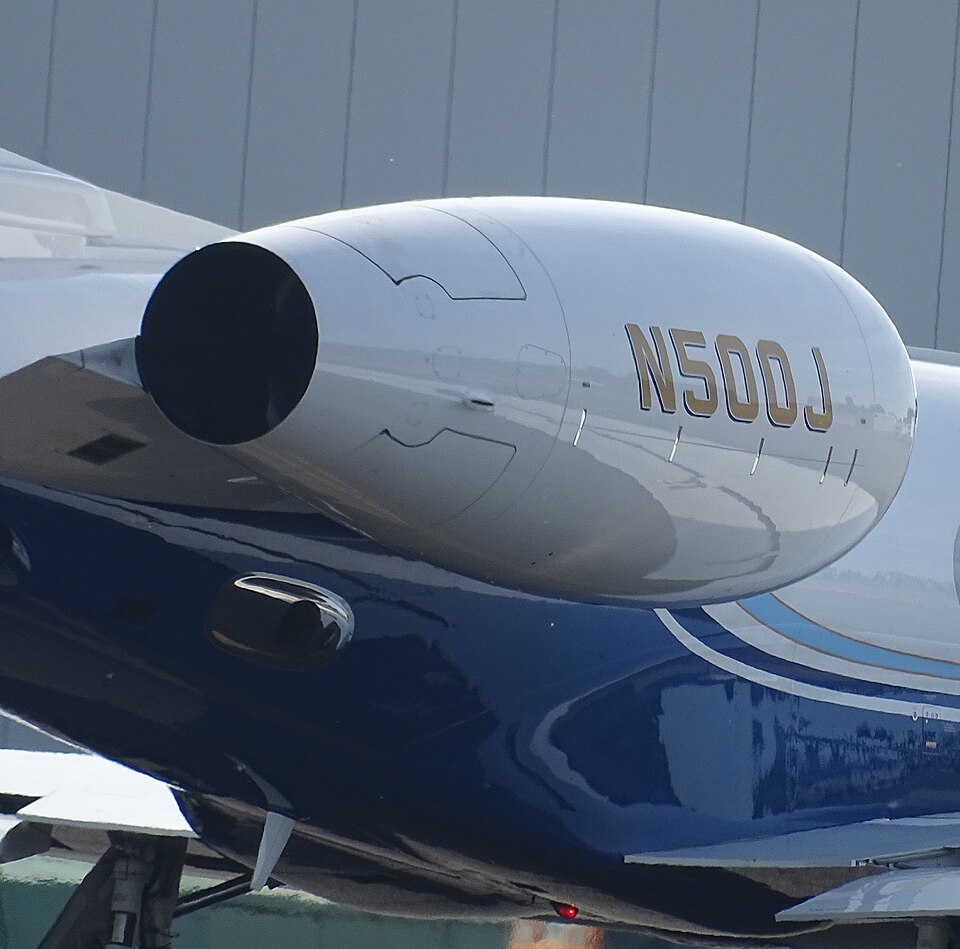
On September 26, 1976, an aircraft (registration N500J) was involved in an aviation accident near Hot Springs, Virginia. 11 people were killed. Investigators recorded the probable cause as: The National Transportation Safety Board could not determine the probable cause of the aircraft's descent below decision height and impact with terrain 500 feet below the elevation of the runway. This summary draws on records from the U.S. National Transportation Safety Board (NTSB) Aircraft Accident Reports; 1 related events involving the same aircraft type or operator are linked below.
The National Transportation Safety Board could not determine the probable cause of the aircraft's descent below decision height and impact with terrain 500 feet below the elevation of the runway.
— NTSB Determination
About 1038 e.d.t. on September 26, 1976, a Grumman Gulfstream II (N500J) owned and operated by Johnson & Johnson, Inc., crashed while making an instrument landing system (ILS) approach to Ingalls Field Airport in Hot Springs, Virginia. The aircraft was destroyed by impact and fire. Three crewmembers and eight passengers were killed.
### The flight
The flight was scheduled to transport company executives from Mercer County Airport in Trenton, New Jersey, to Hot Springs. The crew consisted of Captain Richard A. Hopkins, First Officer Rodger M. Oliver, and Crew Chief Robert E. Moriarty. Captain Hopkins had accumulated 16,982 flight-hours, including 523 in the Gulfstream II. First Officer Oliver had 2,700 flight-hours, with 245 in the Gulfstream II.
During a preflight weather briefing at 0915, a meteorologist forecast a 1,000-foot broken ceiling and two miles visibility with fog for the estimated time of arrival, with temporarily lower conditions possible. The meteorologist stated the captain was concerned by the forecast and mentioned Roanoke, Virginia, and Lewisburg, West Virginia, as alternates. The flight departed Trenton at 0944 and climbed to flight level 210.
### The approach
While en route, the crew requested the current Hot Springs weather. Both the Washington and Charleston Flight Service Stations reported an indefinite ceiling of 100 feet, sky obscured, and visibility of 1/8 mile in fog.
At 1031:28, the flight contacted the Hot Springs low sector controller, reporting out of 11,000 feet descending to 6,000 feet. Seconds later, another aircraft reported executing a missed approach. N500J asked the controller if that was at Hot Springs, and the controller affirmed. At 1033:04, the controller cleared N500J for the ILS approach to runway 24 and instructed the crew to report leaving 5,000 feet.
The controller advised at 1033:55 that the aircraft was intercepting the localizer. At 1036:42, N500J reported "out of five." This was the last known transmission from the aircraft. The wreckage was located by a search party at 1425.
### What the investigation found
The aircraft first struck trees at an elevation of 3,275 feet, about 750 feet short of the runway 24 threshold and 500 feet below the runway touchdown zone elevation. The swath through the trees was at a 5-degree descent angle. The landing gear was down and locked, and the flaps were extended 20 degrees.
Radar data indicated the aircraft exceeded the 250-knot speed limit below 10,000 feet, averaging 343 knots. The aircraft overshot the localizer course and maintained excessive speed during the turn to intercept. Calculations showed the aircraft's indicated airspeed between the outer marker compass locator (LOM) and impact was between 163 and 168 knots, exceeding the company's recommended approach speeds. The flightpath angles varied from 3.75 to 4.46 degrees, steeper than the published 3.0-degree glide slope, resulting in high rates of descent.
The altitude profile showed the aircraft descended below 5,000 feet prematurely, about 1.5 nautical miles outside the LOM, and crossed 400 to 500 feet below the minimum glide slope intercept altitude. The aircraft was consistently below the glide slope with no correction to intercept it throughout the approach. The altitude preselect controller was found set at 5,000 feet, rather than being repositioned to the decision height as required by company procedures, though the copilot's radio altimeter bug was set to 300 feet.
The Board investigated several possible factors for the descent below decision height. Both ground and flight spoilers were found down at impact, but examinations of the actuators and radar flight tracks yielded no evidence of in-flight deployment. The Board concluded the panels were stowed when the aircraft struck the terrain.
Investigators found a high-pressure pneumatic system tapping pipe on the right engine disengaged. While the engine manufacturer concluded the pipe was forced out during impact, the Board noted deformation indicating it may have been improperly installed. The Board considered that a resulting loss of bleed air could have caused abnormal engine instrument indications and a loss of thrust, potentially distracting the crew. However, the Board noted this should not have prevented the crew from arresting the descent or executing a missed approach.
The Board found that the ILS system was functioning within prescribed limits. Although the air traffic controller failed to provide the flight with the latest weather report, the Board concluded the crew was already aware that the airport was below landing minimums. Company procedures permitted the captain to initiate the approach under these conditions.
### Probable cause
The National Transportation Safety Board could not determine the probable cause of the aircraft's descent below decision height and impact with terrain 500 feet below the elevation of the runway.
A SkyWalk Join't 3 paraglider crashed into the ground near Las Vizcachas, Chile, on September 1, 2024. The pilot and passenger sustained serious spinal…
A Cessna 172N struck electrical cables while on final approach to land at Aucó Aerodrome in Chile. The pilot was uninjured, but the aircraft sustained damage…
A Bombardier DHC-8-402 suffered a tail strike during landing at Puerto Williams on September 9, 2024. All 76 occupants were unharmed, but the aircraft…
A MYD JS-MD 3 glider veered off the runway and struck a wall at Vitacura Aerodrome on January 6, 2025. The pilot was uninjured, but the aircraft sustained…
A recreational paraglider flight in Puchuncaví, Chile, ended with the pilot sustaining serious injuries after a rapid descent and impact with a hillside on…
A Tecnam P2006T landed on its belly at an aerodrome in Poland after the crew failed to confirm landing gear deployment. The incident resulted in no injuries…