History of the Flight
The pilot and a passenger departed from Malta International Airport at approximately 1500 hours local on 15 January 2019 for a local flight. After take-off from Runway 05, the aircraft conducted a right-hand circuit to the Temples Holding Area before being cleared to join final approach to land on Runway 05. Upon landing, the aircraft exited the runway on a heading of about 010°, coming to rest on the grass approximately 12 meters from the left shoulder of the runway on a heading of 325° magnetic, roughly 700 meters from the runway threshold. The total flight duration was about 10 minutes.
Injuries
No injuries were reported for the crew, passengers, or others.
Damage to Aircraft
The aircraft sustained significant visible damage including collapsed nose landing gear folded under the aircraft and turned left, buckled left-hand side engine cowling with tears, broken propeller, and bent nose-wheel control rods.
Pilot Information
The pilot, aged 19, held an EASA PPL(A) with a SEP(Land) rating and had logged 54 hours 22 minutes prior to the accident flight. The seat occupied was left. No second pilot or instructor was present. Toxicology was not performed.
Aircraft Information
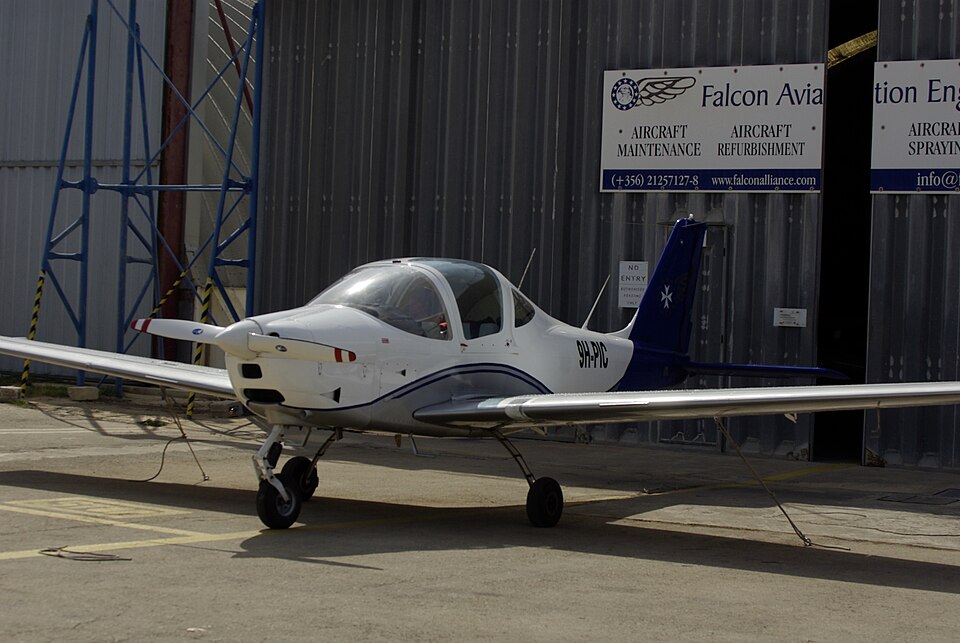
The aircraft was a Tecnam P2002JF Sierra, registration 9H-PIC, year of manufacture 2004, with tricycle landing gear and two seats. It was owned by European Pilot Academy. An ELT was not installed; a portable PLB was on board.
Meteorological Information
Conditions at the accident site were visual meteorological conditions with daylight. Wind was from 320° at 10 knots. Lowest cloud was 2,800 feet. No precipitation or obscuration was reported.
Wreckage and Impact
No debris was left on the runway. Tyre marks from the accident aircraft were identified from the touch-down zone to the left of the centreline, continuing to the runway shoulder. Fresh tracks in the grass matched the aircraft undercarriage path.
Probable Cause and Contributing Factors
The probable cause of the accident was determined to be incorrect landing technique and/or application of flight controls for a cross-wind landing. Contributing factors included the pilot's low number of flying hours and limited experience with cross-wind landings.