Flight History
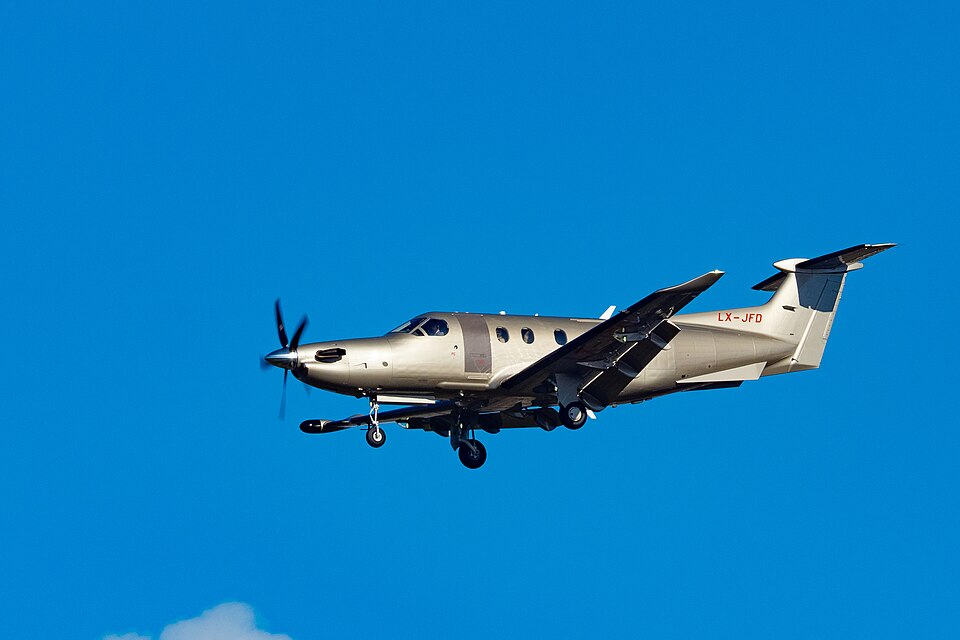
On 30 March 2020, a Pilatus PC-12-47E registered LX-JFD, operated by Jetfly Aviation S.A., was on a flight from Paris-le-Bourget to Nice-Côte d'Azur. The aircraft carried a pilot-in-command, a co-pilot, and one passenger. During descent in instrument meteorological conditions (IMC), the crew encountered turbulence and icing. They used the weather radar and stormscope to avoid storm cells. At 15:11, the crew requested a heading change for avoidance and received approval. At 15:13, they briefly had the ground in sight but lost it again at 15:15, requesting radar vectors. The controller provided vectors for a visual approach. At 15:22, the crew descended to FL 060 and turned right. At 15:23, while in calmer conditions, a brief flash of lightning and loud bang occurred. The crew reported normal engine parameters and no abnormal vibrations. They landed at Nice without further incident. After landing, inspection revealed lightning damage on the propeller and rear fuselage.
Crew Information
The 30-year-old pilot held a Commercial Pilot License with ratings including Pilatus PC-12 class. She had 429 hours on type, with 27 hours in the previous 30 days. The 31-year-old co-pilot also held a Commercial Pilot License with PC-12 class rating and had 600 hours on type, with 27 hours in the previous 30 days.
Aircraft Information
The aircraft was a Pilatus PC-12-47E (serial number 1787) with a PT6A-67P engine and a Hartzell five-blade composite propeller. Time since new was 1,243 hours and 35 minutes.
Damage Assessment
The lightning strike damaged one propeller blade, which was not repairable. The engine showed residual magnetism, arcing, and minor mechanical damage, but airworthiness was not compromised. The right ventral fin of the airframe was damaged. The stall protection system and stormscope computers were also affected. All other systems operated normally.
Meteorological Conditions
Before departure, the crew had forecasts indicating moderate turbulence and icing below FL 140. The general weather over southeast France was unsettled with embedded cumulonimbus. At the time of the strike, conditions were calm according to the crew.