What happened
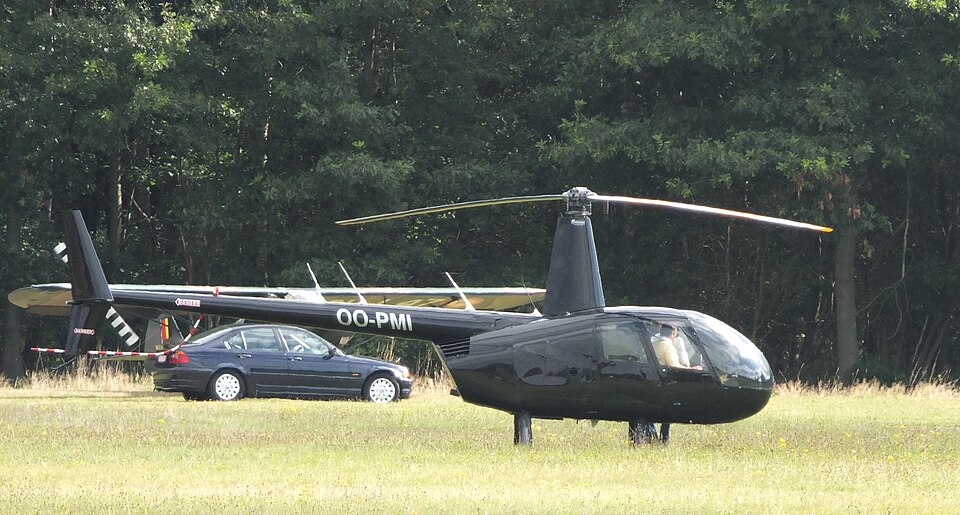
On July 15, 2017, a Robinson R4-4, registration OO-PMI, was performing solo instructional maneuvers at the Nancy Essey aerodrome. The flight was part of a private general aviation training session involving a student pilot with 80 total flight hours.
Prior to the accident, the student had completed three circuits accompanied by an instructor using a constant-speed approach technique on the unpaved runway. Following these successful maneuvers, the instructor authorized the student to perform solo circuits. During the fourth circuit, the student attempted a precision landing. To compensate for being too high relative to the glide path, the student increased the descent rate. During the final approach, the aircraft maintained an indicated airspeed of approximately 60 knots with a vertical descent rate of roughly 800 feet per minute.
As the student attempted the flare, the cyclic control inputs proved ineffective. The Robinson R44 struck the ground with excessive vertical speed and subsequently tilted onto its side, resulting in the destruction of the aircraft.
The investigation
The investigation focused on the flight parameters during the final approach and the effectiveness of the student's control inputs. Investigators reviewed testimonies from both the student and the instructor. The investigation examined the student's flight experience, noting they had accumulated 80 hours of flight time on this specific type, with only 3 hours and 20 minutes of solo experience. Meteorological conditions at the time were favorable, with CAVOK conditions and light winds.
Findings
- The student's vertical descent rate during the final approach was approximately 800 feet per minute, which significantly exceeded the standard rate of 500 feet per minute for that phase of flight.
- The instructor noted that the student's focus appeared to be centered on the touchdown point to achieve a precision landing, which likely led to a lack of monitoring of flight parameters.
- Because the descent rate was not sufficiently reduced prior to the flare, the student's cyclic inputs were insufficient to cushion the impact with the ground.