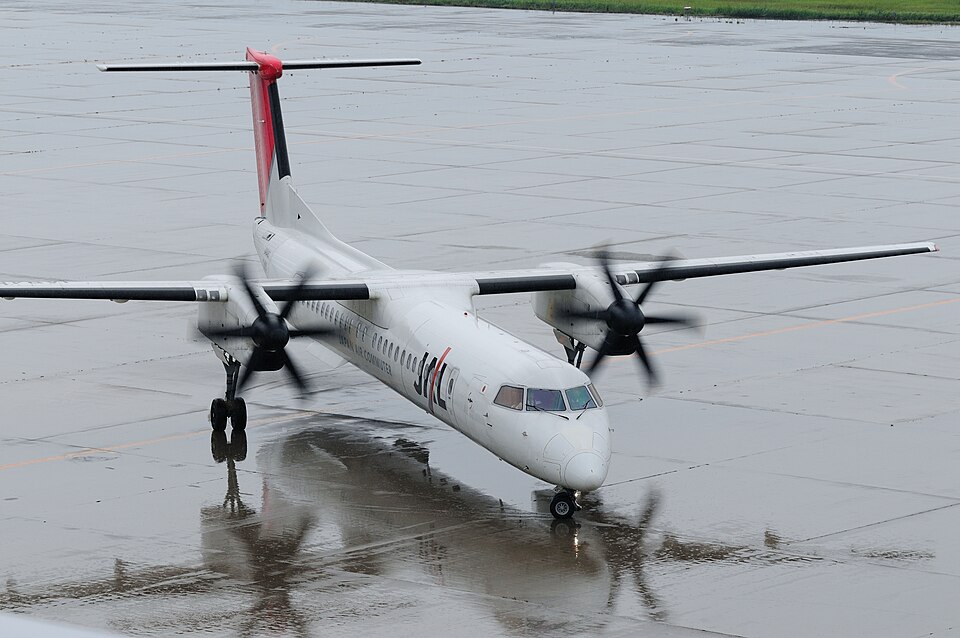
Incident Overview
At 16:27 JST on August 12, 2008, a Bombardier DHC-8-402 aircraft, registration JA848C, operated by Japan Air Commuter Co., Ltd., was taking off from Runway A at Osaka International Airport. During the takeoff roll, the No. 1 engine (left engine) experienced a failure, prompting the flight crew to abort the takeoff. The aircraft was safely stopped on the runway. No injuries to persons were reported.
Aircraft and Engine Damage
The aircraft sustained damage to the No. 1 engine. Investigation revealed that the low pressure turbine (LPT) vane segments had fractured. Specifically, multiple LPT vane airfoils were found broken, and there was evidence of thermal deterioration on the remaining vanes. The high pressure turbine (HPT) shroud segments also showed signs of thermal distress. The engine could not continue operation due to the turbine vane failure.
Investigation Findings
The Japan Transport Safety Board (JTSB) conducted the investigation. The digital flight data recorder (DFDR) and cockpit voice recorder (CVR) were analyzed. The DFDR data showed that the inter-turbine temperature (ITT) increased rapidly during the takeoff roll. Engine monitoring data indicated a decline in engine performance over preceding flights. Borescope inspections (BSI) performed earlier had not detected the damage because the critical areas of the LPT vanes were not visible through the borescope ports. The engine manufacturer's comments indicated that the vanes had experienced repeated thermal cycles that led to cracking and eventual fracture.
Probable Cause
The JTSB determined that the probable cause of this serious incident was that the No. 1 engine could not continue operation because the turbine vane of the LPT (low pressure turbine) broke. The LPT vanes had likely suffered repeated thermal damage, and this damage was not detected during borescope inspections because it was located in areas not visible by borescope.