Incident Overview
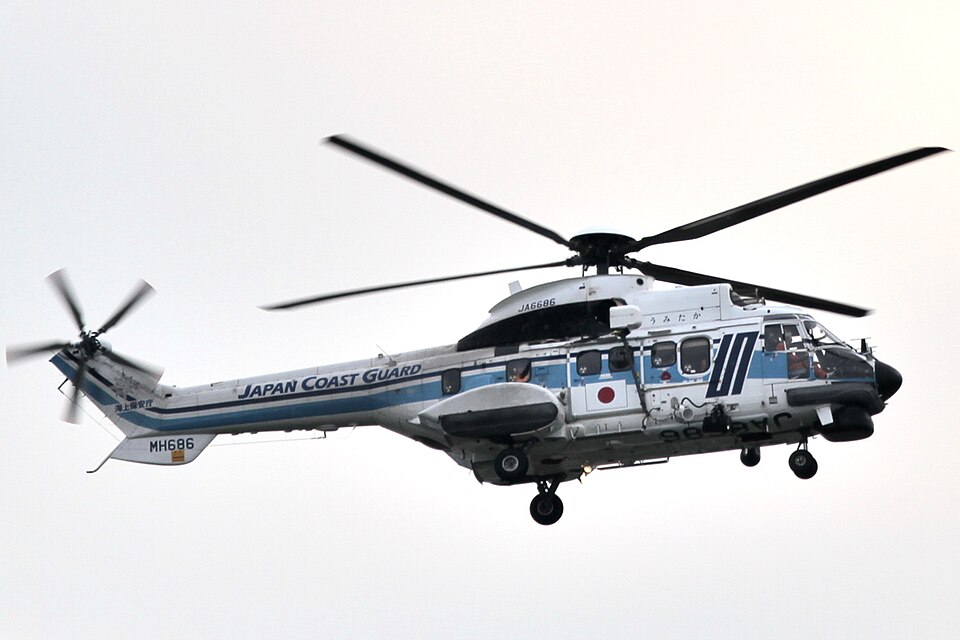
On July 3, 2023, at approximately 10:36 Japan Standard Time, an Aerospatiale AS332L1 helicopter, registered as JA6686 and operated by Shin Nihon Helicopter Co., Ltd., was conducting a slung cargo transport operation. While flying at an altitude of about 150 m over the Kamiochiai area, Aoi Ward, Shizuoka City, a sleeper that had been attached to the cargo fell away and landed in a mountain forest. No injuries or other damage resulted from the fallen sleeper.
Aircraft and Crew
The helicopter, manufactured on October 4, 1991, was configured for external load operations. The crew consisted of a captain (age 43) with 4,703 hours total flight time, and two onboard mechanics (A, a trainee, and B, an examiner). Ground Operator C (age 22) was responsible for hooking cargo at the loading site.
Event Sequence
The helicopter was scheduled to make 16 cargo trips for transmission line pylon construction. On the seventh trip, after hooking a steel truss cargo weighing approximately 800 kg, the crew observed that a wooden sleeper (about 2 m long, 15 kg) had lifted with the cargo. Onboard Mechanic A, assessing the sleeper appeared securely attached, stated "Yes, OK. No problem." The captain radioed to confirm, but the communication was misinterpreted: Ground Operator C heard a question about hitting objects and replied affirmatively. The helicopter then proceeded. At about 10:36, the captain saw the sleeper falling via a cargo mirror, and both onboard mechanics visually confirmed it. The helicopter returned to the loading site and landed.
Investigation Findings
The Japan Transport Safety Board determined that the cargo had been placed on the sleepers for about one month prior. The weight of the cargo likely caused the sleeper to become pressed and crimped against it. When the helicopter lifted, the sleeper remained attached due to this crimping. During flight, vibrations, wind pressure, and the sleeper's own weight likely broke the crimp, causing it to fall.
Pre-flight checks did not include verification of whether sleepers were secured to the cargo or intended to be transported. The crew did not share clear information about the packing style. The radio communication was unclear; the captain did not specifically mention the word 'sleeper', leading to a misunderstanding by Ground Operator C.
Probable Cause
The JTSB concluded that the probable cause was the sleeper being pressed against and crimped to the cargo by its weight, lifting with the cargo, and subsequently falling due to vibrations and other in-flight factors. Additionally, the involved parties did not share information about whether the sleeper was to be transported attached to the cargo.