History of the Flight
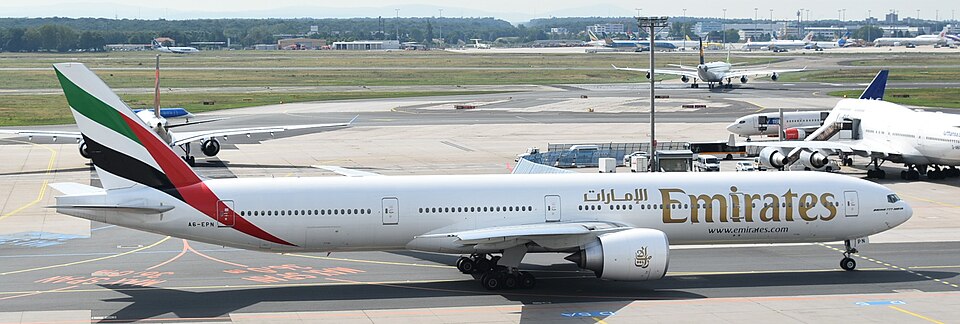
On 17 January 2021, Emirates flight EK957, a Boeing 777-31HER registered A6-EPN, departed Dubai International Airport, United Arab Emirates, for a scheduled passenger flight to Beirut International Airport, Lebanon. The aircraft carried 64 persons: 2 flight crew, 12 cabin crew, and 50 passengers.
After entering Nicosia Flight Information Region (FIR) in Cyprus during descent, the aircraft encountered moderate to severe air turbulence lasting approximately three minutes. At the top of descent at flight level 360, the commander, who was the pilot flying, instructed the cabin crew to secure the cabin and switched on the seatbelt sign. About three minutes into descent, at approximately 0804 UTC while passing 29,200 ft, the turbulence began. The copilot made a passenger announcement for cabin crew to take their seats. The flight crew believed the turbulence was clear air turbulence because the weather radar showed no precipitation returns. The autopilot and autothrottle remained engaged; the aircraft stayed within its flight envelope.
The flight continued to Beirut and landed uneventfully.
Injuries to Persons
Seven occupants sustained injuries. One passenger suffered a serious injury, two passengers and four cabin crew members received minor injuries.
Damage to Aircraft
No damage to the aircraft cabin or structure was reported.
Meteorological Information
The en-route significant weather chart in the operational flight plan forecast occasional isolated embedded cumulonimbus clouds affecting Nicosia FIR and Beirut FIR. No significant meteorological information (SIGMET) was included in the flight plan. However, the Larnaca Airport meteorological watch office had issued several SIGMETs for thunderstorms and severe turbulence in the area. The flight crew were not aware of these SIGMETs when they entered Nicosia FIR.