History of the Flight
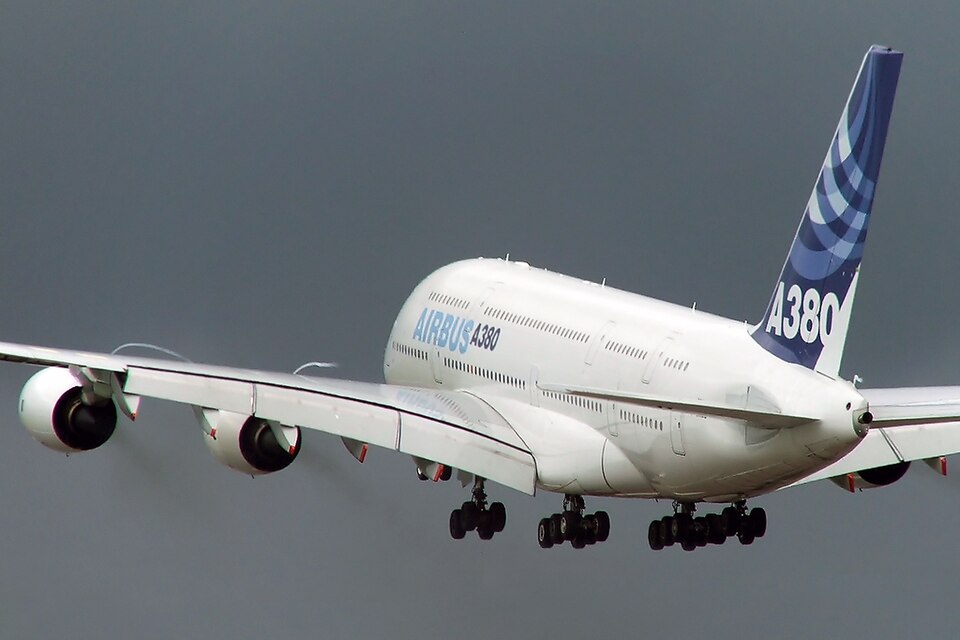
On 6 February 2025, at 0417 UTC, an Emirates Airbus A380-861, registration A6-EOL, departed Dubai International Airport (DXB) on scheduled passenger flight EK73 to Charles de Gaulle International Airport, Paris. The aircraft carried 440 occupants: 414 passengers, two flight crew, and 24 cabin crew. During initial climb, the flight crew heard a loud thud. Cabin crew reported debris being released from the No. 1 (left outboard) engine air intake cowl. The flight crew leveled off to assess the situation, maintained control, coordinated with air traffic control and the operator's Maintenance Control Center (MCC), and monitored engine parameters, which remained within normal limits. Based on the observed damage, the commander elected to return to Dubai. The aircraft performed an overweight landing without further incident. No injuries were reported.
Aircraft and Damage Information
The aircraft, an Airbus A380-800 series (manufacturer serial number 186), was powered by four GP7270E engines. It sustained minor damage limited to the No. 1 engine air intake cowl. The cowl exhibited structural failure due to internal overpressure.
Investigation and Findings
The Air Accident Investigation Sector (AAIS) conducted the investigation. The Bureau d'Enquêtes et d'Analyses pour la Sécurité de l'Aviation Civile (BEA) of France, as the State of Design and Manufacture, participated with accredited representatives and advisers from Airbus and Safran. Examination of the affected components revealed that a graphite sleeve within the nacelle anti-ice system had worn and fractured. This led to instability of the feed pipe, allowing hot air to leak into the cowl cavity. The resulting internal overpressure exceeded the structural limits of the cowl, causing the observed damage.
The investigation identified several contributing factors: there were no defined inspection criteria or wear limits for the graphite sleeve; no scheduled inspection task existed to detect degradation; and the nacelle anti-ice system had been operated in a deferred configuration under the Minimum Equipment List (MEL), which prolonged exposure of degraded components to thermal and mechanical loads.
Safety Actions and Recommendations
Safety actions have been initiated by the aircraft manufacturer, including the introduction of inspection requirements and mitigation measures via a service bulletin. Safety recommendations have been issued to manage interim risk and to review the applicable MEL provisions.
Probable Cause
The damage to the air intake cowl resulted from a progressive internal failure mechanism involving the wear and subsequent fracture of a graphite sleeve within the nacelle anti-ice system. This led to loss of feed pipe stability, leakage of hot air into the cowl cavity, and a progressive internal overpressure condition that exceeded the structural limits of the cowl. Contributing factors were the absence of defined inspection criteria and wear limits for the graphite sleeve, the lack of a scheduled inspection task to detect its degradation, and the extended operation of the nacelle anti-ice system in a deferred configuration in accordance with the MEL.