Incident
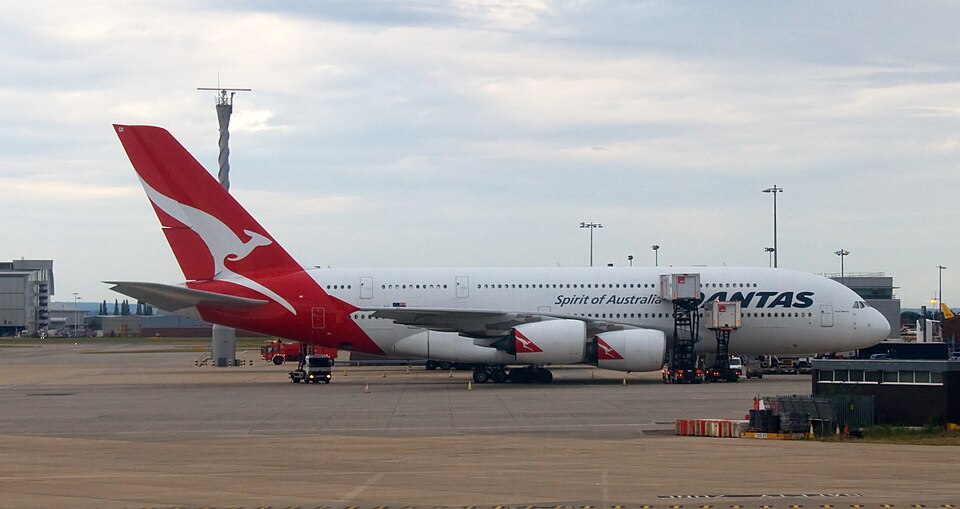
On 6 December 2023, a Qantas Airbus A380-842 (registration VH-OQI) underwent a 3-day scheduled maintenance check at Los Angeles International Airport. During a borescope inspection of the outboard left engine, a 1.25-meter nylon turning tool was left in the engine inlet. The aircraft was released to service on 8 December and departed for Melbourne, Australia. On 1 January 2024, the aircraft returned to the LAX maintenance facility for another scheduled check, where the missing tool was discovered in the low-pressure compressor of the outboard left engine. The aircraft had flown 34 cycles totaling 293.74 hours with the tool in the engine.
Investigation Findings
The Australian Transport Safety Bureau (ATSB) found that the tool was not located during the end-of-task foreign object inspections, which resulted in it remaining in the engine. The turning tool was last used to turn the compressor during the borescope inspection and was found wedged against the low-pressure compressor outlet guide vanes, deformed by engine airflow. The tool's location likely prevented it from being ingested by the rotating blades, which would have caused more damage and made it more visible.
The lost tool procedure was not commenced prior to the aircraft being released to service. The certifying engineer did not follow up on the missing tool. Several factors contributed to the failure to identify the missing tool: unfamiliarity with the task among some engineers, the reassignment of personnel to other duties, and the advice to leave tools on the task without proper return and re-issue to the next shift. A daily tooling report on day 2 was not emailed to required staff, and a subsequent email on day 3 was not properly reviewed by the service engineer, who incorrectly believed the tool was too large to be left on the aircraft. The lack of a lost-tool entry in the maintenance system further reinforced the belief that the tool was not on the aircraft.
Actions Taken
On 2 January 2024, a Qantas Engineering internal incident report was raised, with immediate action to brief staff on the importance of returning all tooling. An internal investigation was completed, and on 4 March 2024, the executive manager for Qantas Engineering issued an internal safety directive requiring all employees to meet company tooling control requirements without exception.