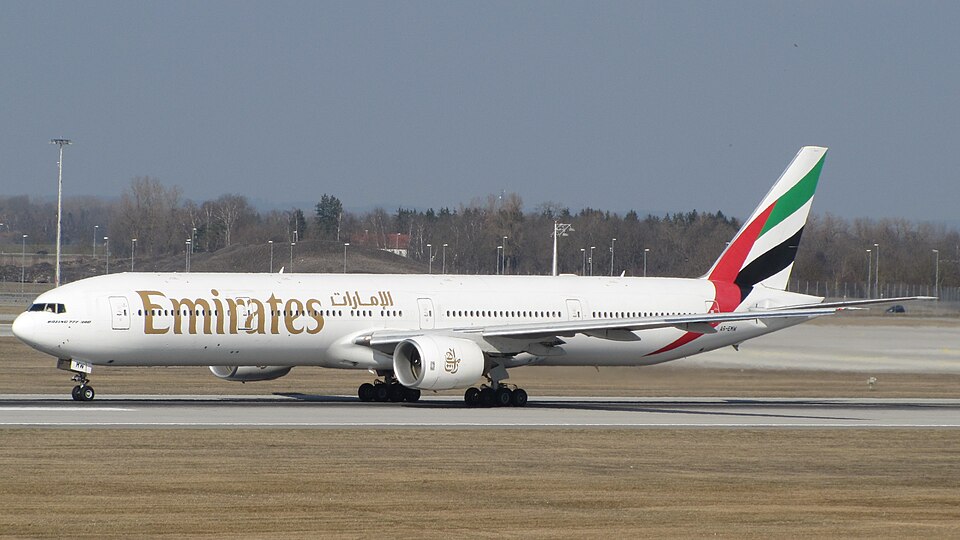
Occurrence
On 3 August 2016, at 0837:38 UTC, an Emirates Boeing 777-31H aircraft, registration A6-EMW, operating scheduled passenger flight UAE521, impacted runway 12L at Dubai International Airport during an attempted go-around. The flight had departed Trivandrum International Airport, India, at 0506 UTC with 282 passengers, 2 flight crew, and 16 cabin crew on board.
Flight and Go-Around
The commander, who was the pilot flying, attempted a tailwind manual landing. During the landing, the commander decided to execute a go-around because he perceived the aircraft would not land due to thermals and not due to windshear. The go-around was initiated by pushing the TO/GA switch, but because the aircraft had already touched down (for six seconds), the TO/GA switches were inhibited and had no effect on the autothrottle. The flight crew stated they were unaware of the touchdown.
After becoming airborne, the aircraft climbed to 85 feet radio altitude. The flight crew did not notice that both thrust levers remained at idle and engine thrust remained idle. The aircraft quickly lost height and speed. The commander then initiated the windshear escape maneuver and advanced the thrust levers, but the aircraft impacted the runway 18 seconds after the go-around initiation.
Impact and Evacuation
The aircraft slid on its lower fuselage for approximately 800 meters over 32 seconds before coming to rest near taxiway Mike 13. The aircraft remained intact during the slide, protecting the occupants, but several fuselage-mounted components and the No. 2 engine/pylon assembly separated. During evacuation, several passenger door escape slides became unusable. Many passengers evacuated with carry-on baggage.
Injuries and Damage
The aircraft was destroyed. 32 occupants were injured: 4 serious and 28 minor. One firefighter was fatally injured. The commander was the only flight crew member not evacuated.
Investigation
The Air Accident Investigation Sector of the United Arab Emirates conducted the investigation. The National Transportation Safety Board and the Air Accidents Investigation Branch participated as accredited representatives. The investigation report was issued on 20 January 2020.