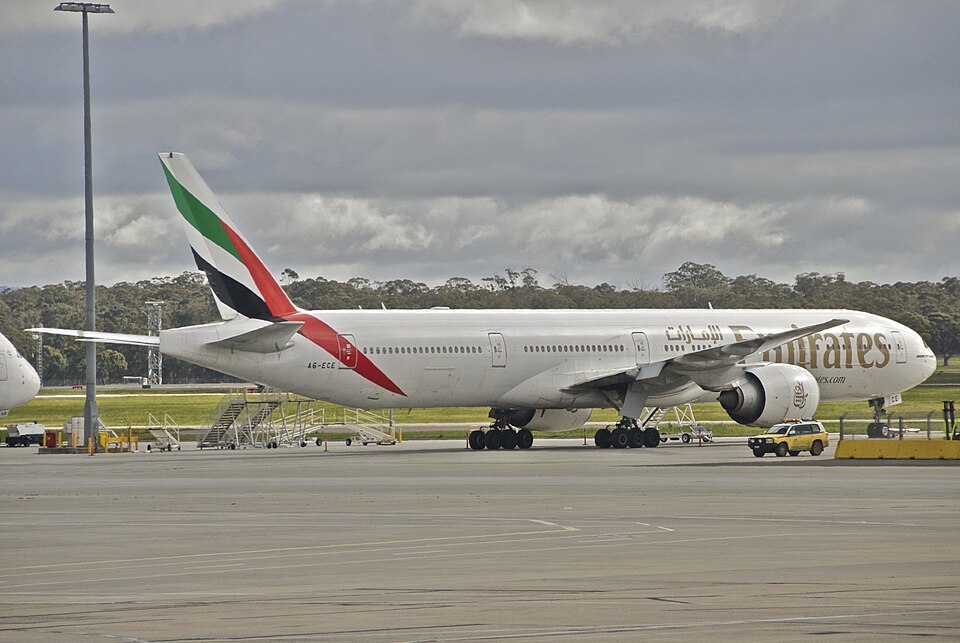
History of the Flight
On 14 February 2011, an Emirates Boeing 777-300ER, registration A6-ECE, was operating a passenger flight from Dubai to New York. During cruise, the cabin crew reported a smell of burning rubber and sulphur in the aft cabin area. The flight crew decided to divert to Stockholm Arlanda Airport, where the aircraft landed uneventfully at maximum landing weight.
After maintenance action, the aircraft departed on the subsequent sector. Shortly after leveling off at Flight Level 300, the cabin crew again reported the same odor. The flight crew consulted the Maintenance Control Centre (MCC) and subsequently turned off the right pack to isolate the ozone system. After a few minutes, the smell subsided and the flight continued normally.
Investigation Findings
The Air Accident Investigation Sector (AAIS) of the UAE General Civil Aviation Authority investigated the incident. The investigation included tests performed at the destination, inspection of the heat exchanger and condenser/reheater, and a review of the GCAA incident database. Despite these efforts, the reason for the odor could not be determined.
The occurrence was initially classified as a Serious Incident but was later reclassified as an Incident, reflecting the low probability of an accident resulting from the event. No safety recommendations were issued.
The investigation team coordinated with the Swedish Accident Investigation Authority (SHK) and the National Transportation Safety Board (NTSB), both of which appointed accredited representatives.