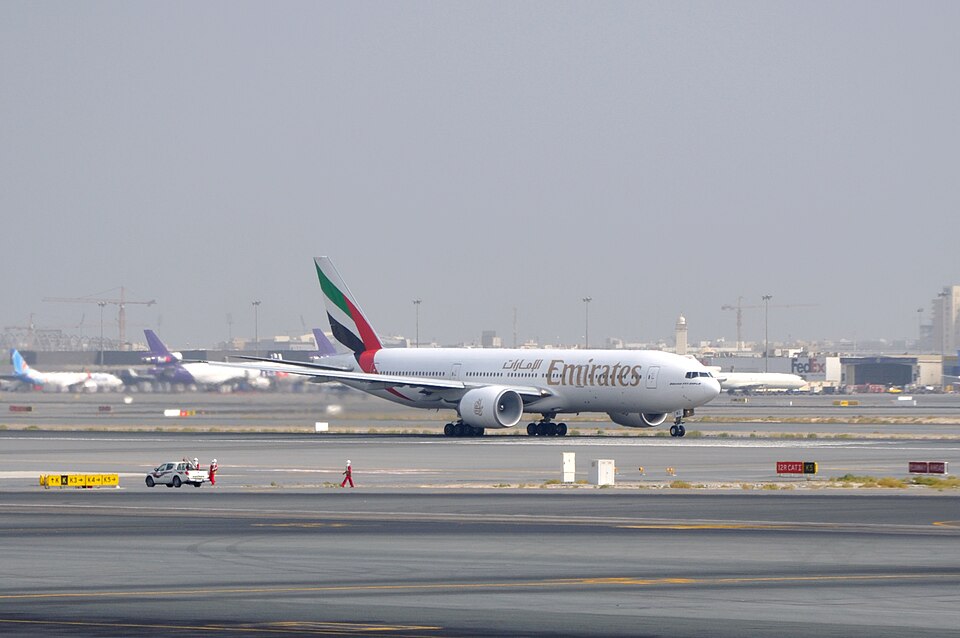
Incident Summary
On 08 August 2010, at 05:57 UTC, Emirates flight EK211, a Boeing 777-200LR aircraft registered as A6-EWC, began its takeoff roll from runway 12R at Dubai International Airport. The commander was the pilot flying. At a speed near 170 knots, the pilot flying rejected the takeoff after hearing a loud noise, prior to accelerating through V1. The aircraft stopped on the runway centerline, and airport fire services attended. There were no reported injuries to crew or passengers.
Investigation Findings
The investigation determined that the incident was caused by a tread separation of the right-hand nose wheel tire. A contributing factor was the presence of foreign object debris (FOD). The aircraft's tires were inspected, and the nose tire manufacturer provided an analysis report dated 24 November 2010. No other damage to the aircraft was reported beyond the tire tread separation.
Safety Actions and Recommendations
Following the incident, the UAE General Civil Aviation Authority (GCAA) established the UAE National Runway Safety Team and an associated Safety Action Plan, which includes an FOD prevention program. The airport operator also took safety actions, amending the airport's FOD management procedures, including training, campaigns, measurement, maintenance, cleaning, and detection.
The report contains two safety recommendations: 1. The GCAA should review the possibility of enhancing the existing FOD prevention program. 2. The GCAA should ensure that all UAE aerodromes have established effective FOD awareness programs.