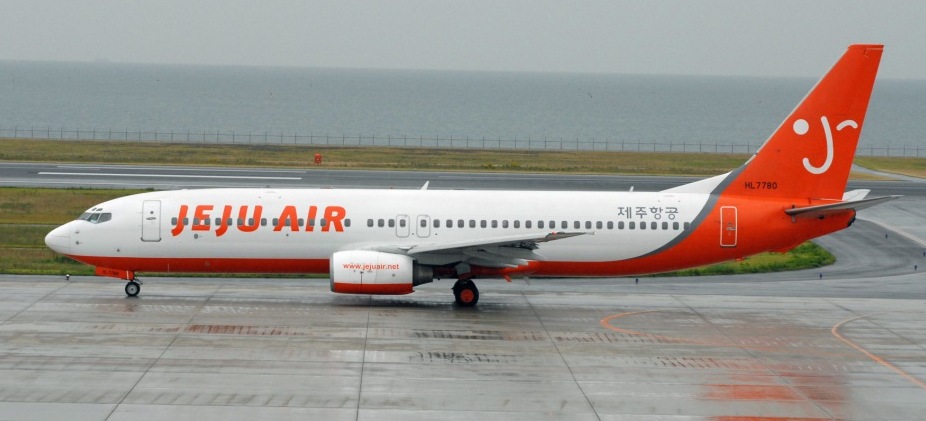
History of Flight
Jeju Air flight 120, a scheduled domestic passenger flight, departed Jeju International Airport at approximately 21:09 on 3 February 2013. The aircraft, a Boeing 737-800 with registration HL7780, landed on runway 14R at Gimpo International Airport around 22:18. During the landing roll, the flight crew attempted to vacate the runway via taxiway B1 near the end of the runway. However, the aircraft failed to decelerate sufficiently and continued straight, veering into the green zone beside the paved area about 40 meters from the end of runway 14R. The aircraft came to a stop around 22:20. The serious incident resulted in no damage to the aircraft and no personal injuries.
Aircraft and Crew Information
The aircraft was manufactured by The Boeing Company. The flight crew consisted of a captain and a first officer. The captain held an Airline Transport Pilot License and had accumulated total flight hours; the first officer held a Commercial Pilot License. Both were appropriately qualified for the flight.
Meteorological and Runway Conditions
Meteorological information recorded at the time indicated snow conditions. Snow removal operations had been conducted on runway 14R. The runway surface condition and braking action were reported to the flight crew. The flight crew received information about runway conditions, but the investigation noted that the runway surface information after snow removal operations was not provided to the flight crew.
Investigation Findings
The Aviation and Railway Accident Investigation Board (ARAIB) determined that the causes of the serious incident were: First, the flight crew failed to carefully consider the runway condition before landing, leading to inadequate prediction of braking action and lack of shared information on landing distance and deceleration plan between the pilot flying and pilot monitoring. Second, the pilot flying disengaged the deceleration system before the aircraft had decelerated sufficiently to vacate the runway, and failed to respond to the slippery condition in the last third of the runway, mistakenly believing the remaining distance was adequate. Contributing factors were the pilot flying's failure to conduct a landing briefing and the non-provision of runway surface information after snow removal operations to the flight crew by airport authorities.
Safety Recommendations
The ARAIB issued four safety recommendations to Jeju Air and one safety recommendation to Korea Airport Corporation (KAC).