Incident Overview
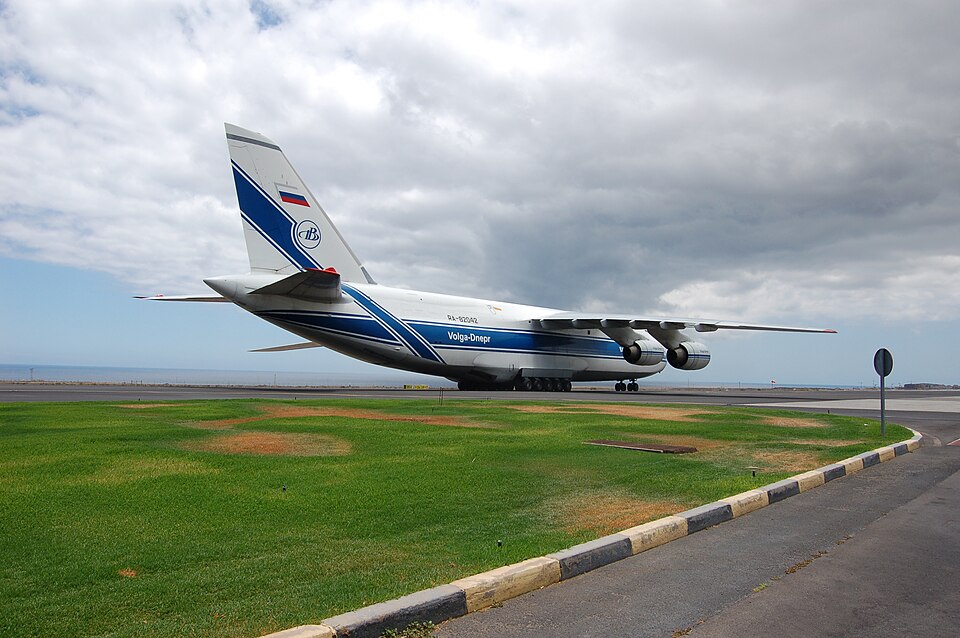
On a cargo flight from Seoul-Incheon Airport to Vienna with an intermediate stop in Novosibirsk, a four-engine airplane carrying 14 crew members and 84 tons of automobile parts experienced a catastrophic failure on engine number 2 during initial climb after departing runway 25 at Novosibirsk-Tolmachevo Airport. Debris from the failure punctured the fuselage and damaged slats on both the left and right sides.
Immediate Consequences
The damage resulted in a loss of radio communications, failure of the power supply, and a drop in thrust control on all three remaining engines. Despite the aircraft being in an overweight condition for an emergency landing, the crew entered a circuit for an immediate return to the airport.
Landing and Overrun
The crew landed on runway 25, which has a landing distance available (LDA) of 3,597 meters. After touchdown, the braking procedure was initiated, but the aircraft was unable to stop within the remaining distance. It overran the runway, lost both nose gears, and slid into a snow-covered field before coming to rest 300 meters beyond the runway end.
Evacuation and Damage
All 14 occupants evacuated safely. The aircraft sustained damage that appears to be beyond repair.
Probable Cause
The official investigation determined the probable cause to be a failure of the high pressure compressor disk on engine number 2 during the takeoff procedure.