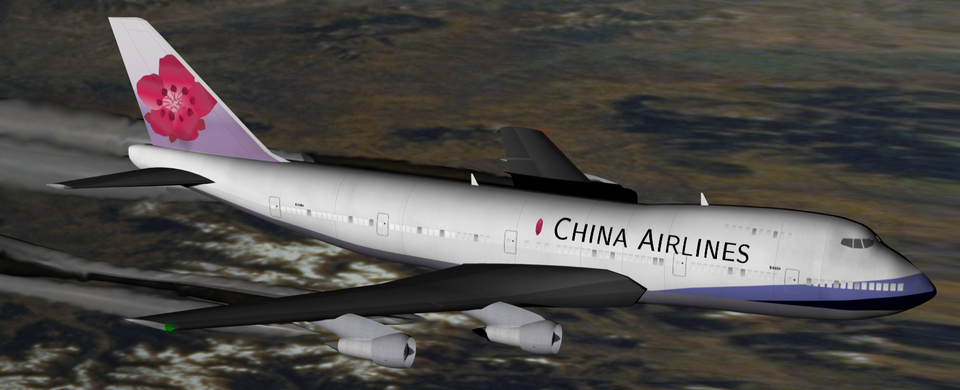
What happened
On May 25, 2002, at 15:29 local time, China Airlines Flight CI611, a Boeing 747-200 bearing registration B-18255, experienced an in-flight breakup while climbing through 34,900 feet. The aircraft was operating a scheduled passenger service from Taipei's Chiang Kai-shek International Airport to Hong Kong. The aircraft crashed into the Taiwan Strait, approximately 23 nautical miles northeast of Makung, Pengh and Islands. Of the 225 occupants on board, 175 fatalities were confirmed, with the remaining passengers and crew presumed killed.
The investigation
The Taiwan Transportation Safety Board (then ASC) conducted an extensive investigation involving wreckage recovery, examination of flight recorders, and laboratory testing. The investigation team included representatives from the Civil Aeronautical Administration (CAA) of the ROC, China Airlines, and the US National Transportation Safety Board (NTSB) as the Accredited Representative. Investigators analyzed radar data, wreckage distribution, and the position of cockpit switches. Laboratory tests at the Boeing Materials Technology Laboratory and other facilities were used to examine the fatigue cracks and the integrity of a structural repair performed years prior.
Findings
- The in-flight breakup was caused by a structural failure in the aft lower lobe section of the fuselage.
- The failure originated from a 1980 tail strike incident that had been repaired improperly; the repair did not follow the Boeing Structural Repair Manual (SRM) because the damaged skin was not sufficiently trimmed, and the repair doubler did not extend far enough to restore structural strength.
- Extensive fatigue damage, including a 15.1-inch through-thickness crack and multiple site damage (MSD), developed under the repair doubler, likely initiating from scratches caused during the 1980 repair.
- Analysis suggested a continuous crack of at least 71 inches was present before the breakup, which was sufficient to cause structural separation under normal operational loads.
- Maintenance oversight failures were identified, as the Corrosion Prevention and Control Program (CPCP) inspections for this aircraft were overdue by 13 months, and the airline's oversight programs failed to detect these missed inspections.
- The investigation ruled out external factors such as mid-air collision, engine failure, weather, or explosive devices.