Synopsis
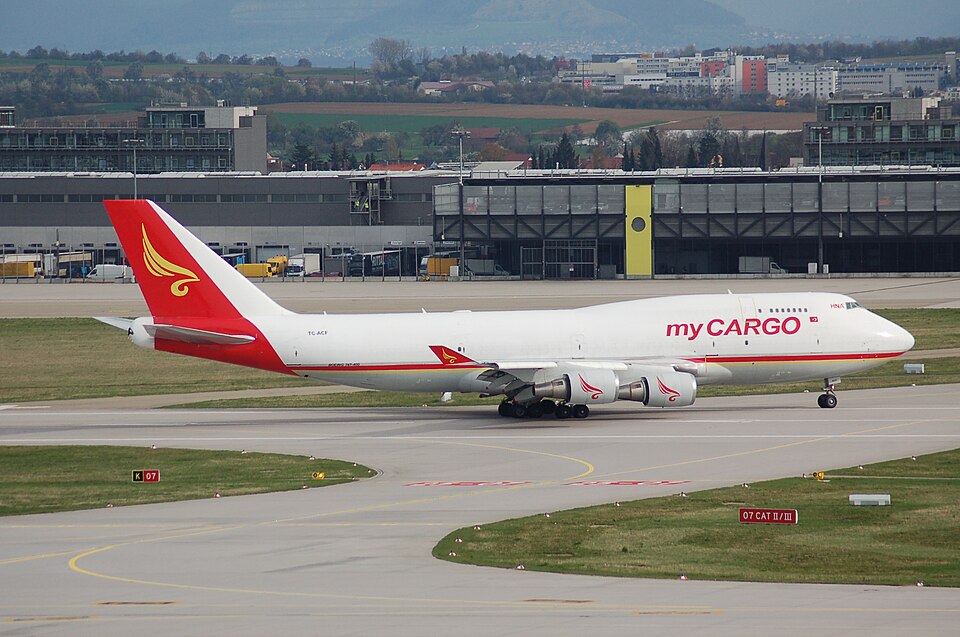
At approximately 03:52 hours on 20 October 2025, ACT Airlines (Air ACT) flight UAE9788, a Boeing 747-481 BDSF freighter operating on behalf of Emirates SkyCargo, landed on Runway 07L at Hong Kong International Airport. The co-pilot was the Pilot Flying, and the captain was the Pilot Monitoring. After landing, an AUTOBRAKES message appeared on the Engine Indication and Crew Alerting System (EICAS) display. The captain took control of the aircraft, which then veered left, resulting in a runway excursion abeam Taxiway C6. The aircraft collided with a stationary security ground vehicle on a road, causing the vehicle to enter the sea. The aircraft was destroyed, with its tail section separating during the impact. All four crew members survived; two security staff in the ground vehicle perished.
Aircraft and Crew Details
The aircraft, registration TC-ACF, was a Boeing 747-481 BDSF (serial number 25645, manufactured in 1993, converted from passenger to freighter in 2011). It was powered by four GE CF6-80C2B1F turbofan engines. The captain held an Airline Transport Pilot License from Turkey, with total flight time of 6,096:27 hours, including 4,840:10 hours on type and 417:59 hours as command on type. The flight had departed Dubai World Central - Al Maktoum International Airport and was destined for Hong Kong. There were four crew on board and no passengers.
Sequence of Events
After a normal approach and landing clearance from Air Traffic Control (ATC), which advised wind 030 degrees at 18 knots and instructed to maintain speed until vacating, the crew planned an Autobrake 2 and Flap 25 landing. After touchdown, the speed brake lever extended with an appropriate call. Reverse thrust was selected on engines 2 and 3 (approximately 95% N1), and engine 1 was set to idle reverse. An AUTOBRAKES message appeared, the autobrake disarmed, and the captain took control. According to Flight Data Recorder data, engine 4 accelerated to 90% N1 forward thrust at 03:52:30, all reversers stowed at 03:52:35, engine 4 continued to 107% N1 by 03:52:42. At 03:52:41, reverse thrust was again selected on engines 2, 1, and 3 after the aircraft had veered off the runway. Cockpit examination showed the autobrake selector indicating Disarmed, speed brake lever in Flight Detent, thrust levers for engines 1-3 closed with reverse levers at maximum, engine 4 thrust lever full forward, and its reverse lever fully forward.
Investigation Progress
The Air Accident Investigation Authority (AAIA) has inspected the site, salvaged wreckage, retrieved flight recorders, interviewed crew and ATC personnel, and obtained relevant records including ATC surveillance, meteorological data, CCTV, and AFODDS data. The aircraft was dispatched with Minimum Equipment List items including a hydraulic system 1 reservoir indication issue resolved before flight and an inoperative number 4 engine thrust reverser. The investigation is ongoing, focusing on technical, engineering, operational, human factors, and safety management issues.