Flight History
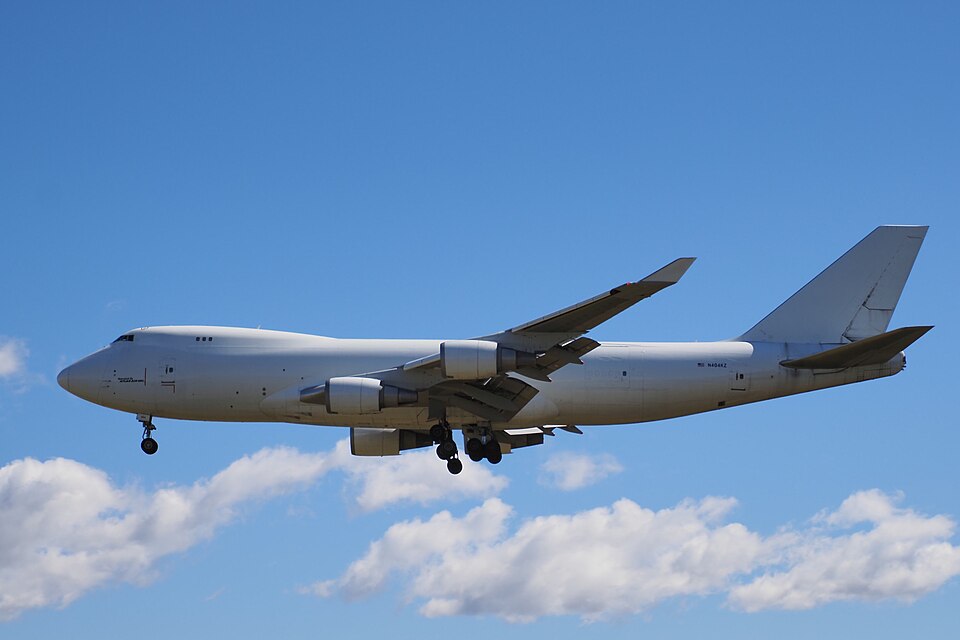
On Monday, August 12, 2024, at approximately 21:10 JST, a Boeing 747-400F, registered N404KZ and operated by Atlas Air Inc., began taxiing from a stand at Narita International Airport for scheduled flight 7106 to Los Angeles International Airport. The captain served as pilot flying and the co-pilot as pilot monitoring.
During taxi on Taxiway A between intersections W6 and W5, the crew felt a vibration as if running over an object but continued taxiing after hearing no unusual sounds. The aircraft took off from Runway 16R at about 21:39 without further issues.
Immediately after take-off, the EICAS displayed a "HYD QTY LOW 4" message, indicating low hydraulic quantity in the No. 4 system. The crew confirmed the rapid loss and performed the non-normal checklist. Believing a leak occurred during take-off, they requested runway inspection. No other abnormalities were noted initially, and the captain decided to continue to Los Angeles while monitoring.
At 21:52, while climbing through approximately 12,000 ft, a "CABIN ALTITUDE" warning appeared, with cabin altitude indicating 10,300 ft. The crew stopped the climb at FL150, declared an emergency, and performed depressurization checklists, descending to 10,000 ft and deciding to return to Narita.
Fuel jettisoning began over the sea at 00:06 on August 13 to reduce landing weight. During jettison, EICAS showed low quantity and low pressure messages for the No. 1 hydraulic system. The crew then managed loss of both No. 1 and No. 4 systems and performed an emergency gear extension. The aircraft landed on Runway 16R at 01:12, stopping just past the halfway point. Due to loss of steering and automatic brakes, the crew used manual brakes. The runway was closed for about seven hours while the aircraft was moved.
Damage
Post-flight inspection revealed substantial damage:
- The arched pressure deck in the left landing gear wheel well was punctured approximately 25 cm front-to-back and 38 cm left-to-right.
- The No. 7 and No. 8 wheel assemblies of the left body gear were damaged.
- Hydraulic system components on the landing gear shock strut were broken and buckled.
- Part of the landing gear door was missing.
- About 80 cracks and dents of various sizes were found on the outer skins of the left lower fuselage and left horizontal stabilizer.
Injuries and Occupants
The aircraft carried seven people: the captain, co-pilot, and five passengers. No injuries occurred.
Personnel Information
The captain, aged 47, held an airline transport pilot certificate with a Boeing 747-4 type rating. He had 9,140 total flight hours, including 1,181 hours on type. The co-pilot, aged 55, also held an ATP certificate with a B-747-4 type rating, with 3,830 total hours and 161 hours on type.
Aircraft Information
The Boeing 747-400F (serial number 34283) was manufactured on March 5, 2007. Its airworthiness certificate was issued August 31, 2017, and valid under the company maintenance policy. Total flight time was 64,170 hours 56 minutes. Weight and balance were within limits at the time of the accident.
Additional Findings
Runway and taxiway damage included linear and curved scoop marks. Tire pieces and landing gear door fragments were found on Taxiway A, and various aircraft parts, including tire and brake components, were scattered on the runway.
Pre-flight inspections of the landing gear before the previous flight from Incheon and after arrival at Narita revealed no anomalies. The No. 7 and No. 8 wheel assemblies had been maintained per company manual.
Examination of the tires by the equipment manufacturer found no manufacturing failures and adequate retread adhesion. The No. 7 tire showed overall damage including tread ply exfoliation and nylon dissolution, while such joint damage was not seen on the No. 8 tire. The No. 7 tire had been remolded twice and installed on June 21, 2024, accumulating 89 cycles. The No. 8 tire had been remolded once and installed on August 9, 2024.
Weather at the time was fine: wind south-southeast at 3 m/s, visibility 10 km, temperature 27°C, dew point 26°C, sea level pressure 1005 hPa.