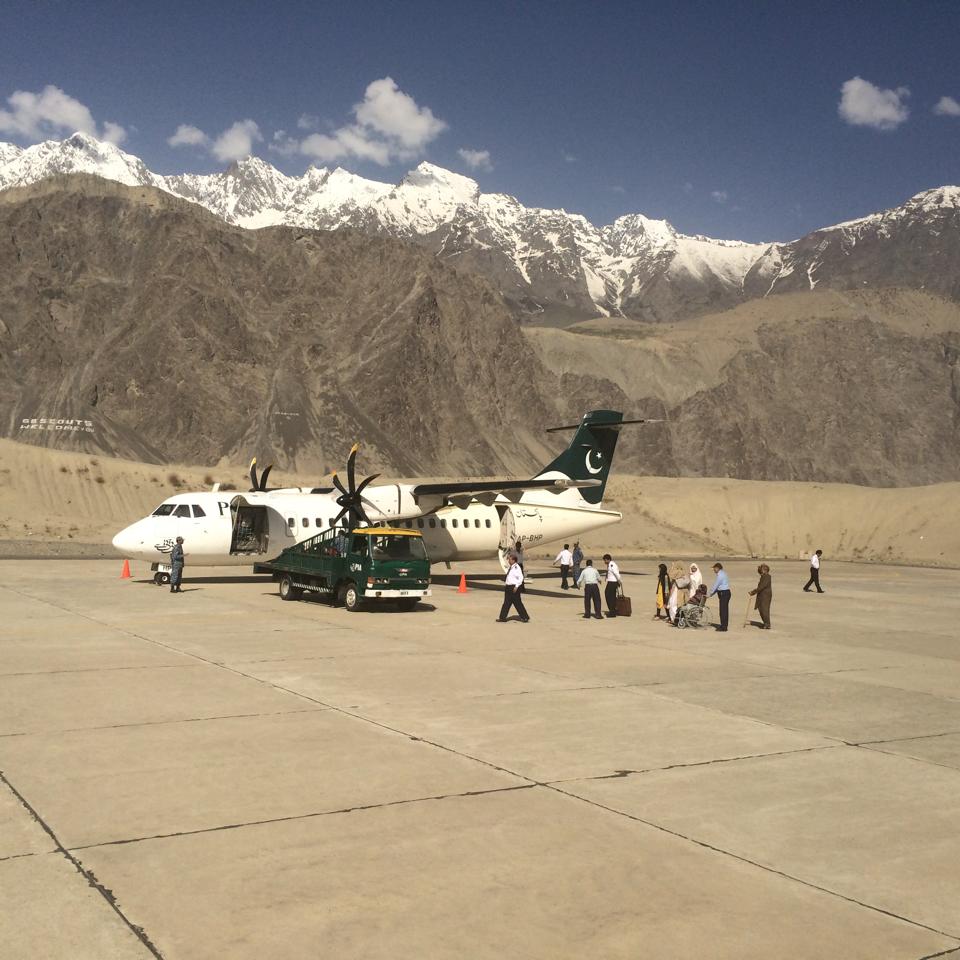
Incident Overview
On 20 July 2019, Pakistan International Airlines flight PIA 605, an ATR 42-500 aircraft registered as AP-BHP, was involved in a serious incident at Gilgit Airport. The aircraft experienced a runway excursion after landing, resulting in damage to multiple components.
Aircraft and Flight Details
The aircraft was an ATR 42-500, registration AP-BHP, operated by Pakistan International Airlines on flight PIA 605. The incident occurred on 20 July 2019 at Gilgit Airport.
Sequence of Events
Based on the investigation report, the flight progressed through takeoff, climb, cruise, descent, and approach to Gilgit Airport. During the final approach, the aircraft was configured for landing with flaps and landing gear extended. The aircraft touched down on runway 25. Following touchdown, the crew applied brakes. However, the aircraft departed the runway, resulting in a runway excursion.
Damage
The right engine propeller blades were broken. The right main landing gear (MLG) collapsed, and the left MLG was also damaged. The nose landing gear (NLG) sustained damage. Impact marks were observed on the fuselage, and the right wing navigation light was damaged. The aircraft's tyres left marks on the runway during the excursion.
Investigation
The Aircraft Accident Investigation Board (AAIB) of Pakistan conducted the investigation and issued a final report on 4 July 2024. The report includes factual information, analysis, findings, and safety recommendations.