Flight Details
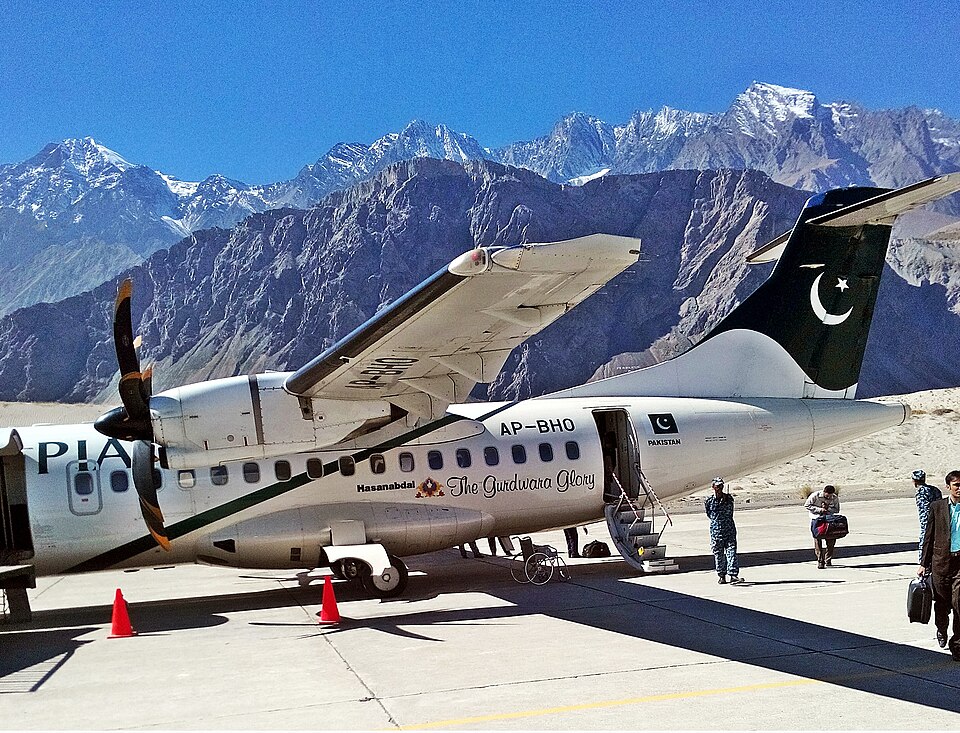
On the morning of 7 December 2016, a Pakistan International Airlines (PIA) ATR 42-500, registration AP-BHO, operated five routine flights from Benazir Bhutto International Airport (BBIAP) Islamabad. Its sixth and final flight of the day departed Chitral at 10:38:50 UTC (15:38:50 PST) for Islamabad with 42 passengers (including one engineer) and five crew members (three pilots and two cabin crew). The aircraft crashed at 11:20:38 UTC (16:20:38 PST) approximately 3.5 nautical miles south-southeast of Havelian and 24 nautical miles north of BBIAP Islamabad, after 42 minutes of flight. All 47 occupants were fatally injured.
Accident Sequence
The flight was divided into three stages. In the initial stage (10:38 to 11:04 UTC), the digital flight data recorder (DFDR) showed degraded speed governing accuracy of the left propeller, which was not observed by the cockpit crew. The aircraft stabilized at 13,500 feet AMSL at 186 knots indicated airspeed (IAS), lower than the expected 230 knots. Two pre-existing technical anomalies were present: a fractured or dislodged PT-1 blade (due to a known quality issue) and a fractured pin inside the overspeed governor (OSG). Additionally, probable external contamination existed inside the propeller valve module (PVM) of the No. 1 (left) engine.
During the middle stage (11:04 to 11:13 UTC), a series of warnings and malfunctions affected the No. 1 engine and its propeller control system. Propeller Electronic Control (PEC) fault indications were followed by engine power loss and uncontrolled variation in propeller speed and blade pitch angle. The propeller speed initially decreased from 82% to 62%, then increased to 102% for 15–18 seconds before dropping to non-computed data (NCD). Based on simulations, blade pitch angle increased, possibly near feather. Subsequently, propeller speed rose to 120–125% for 40–45 seconds before an abrupt drop to NCD, with blade pitch settling at a different value. These variations caused drastic changes in aircraft behavior and sounds. The autopilot initially maintained directional control, but pilot actions—delayed advancement of the No. 2 engine power, a 15-second reduction of No. 2 engine power when the left propeller was at 120–125% rpm, and another power reduction later—incorrectly contributed to IAS depletion. The autopilot disengaged, and the aircraft approached stall. The No. 1 engine was shut down; the No. 2 engine operated normally. With IAS around 120 knots, the aircraft rolled left and descended, activating the stick shaker and stick pusher. Calculated drag on the left side peaked when propeller speed was 120–125%, then reduced as speed dropped. Advancement of No. 2 engine power was coupled with excessive right rudder input, coinciding with the last propeller speed drop. The combined aerodynamic forces caused a stalled, uncontrolled flight condition: the aircraft inverted and lost 5,100 feet (from approximately 13,450 to 8,350 feet AMSL).
In the final stage (11:13 to 11:20 UTC), the aircraft recovered from uncontrolled flight. Although blade pitch was not recorded, simulations estimated the left propeller blade pitch settled at a low angle while rotating at about 5% speed. Stable additional drag on the left side persisted, preventing level flight. However, lateral control was possible with a controlled descent. The aircraft performance was outside the identified envelope, making it exceptionally difficult for the pilots to understand and control the situation.
Probable Cause
Official findings identified the following probable causes: Primary factors included the dislodging/fracture of one PT-1 blade in the No. 1 engine, which triggered a chain of events. This occurred after omission from the Engine Maintenance Manual (non-compliance with Service Bulletin SB-21878) by PIA Engineering during an unscheduled maintenance in November 2016, where PT-1 blades met replacement criteria but were not replaced. The fracture happened after the blade accumulated slightly more than 10,000 flight hours (10,004.1 + 93 hours) due to a known quality issue, since addressed by redesigning the PT-1 blades. Contributory factors included a fractured pin and contamination inside the OSG, resulting from improper reassembly during unauthorized maintenance. Contamination found in the overspeed line of the PVM of the No. 1 engine, likely introduced when propeller system LRUs were not installed on the gearbox, contributed to unfeathering of the propeller. The exact time and place of these maintenance issues could not be determined.