Flight History
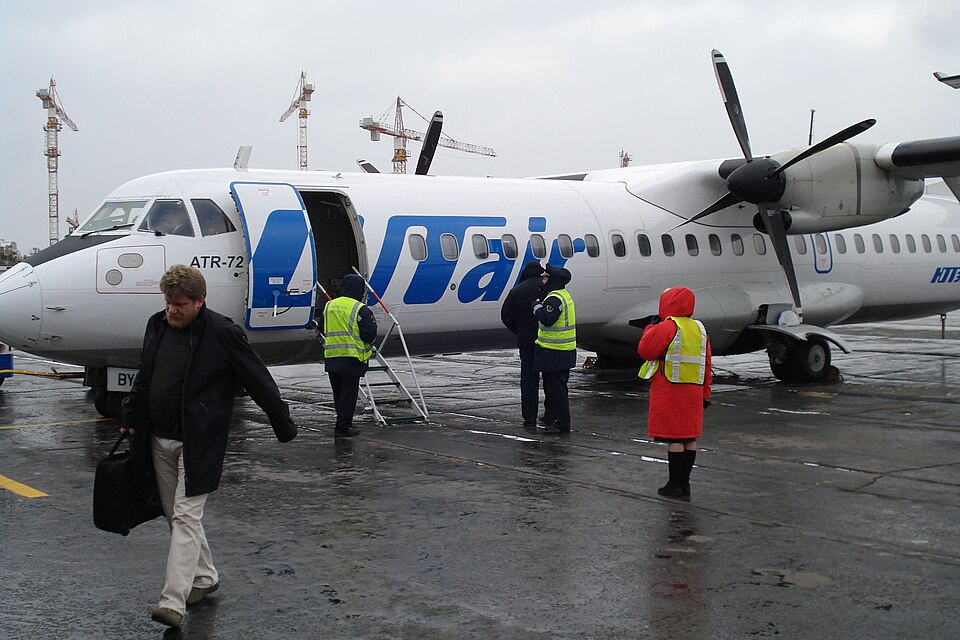
On 1 April 2012, a UTAir Air Division 1 crew operated a scheduled passenger flight (UTA-119) from Surgut to Tyumen using an ATR 72-201 aircraft, registration VP-BYZ. The aircraft landed at Tyumen (Roschino) Airport at 17:41 UTC. After landing, the crew proceeded to rest at a hotel until 23:30 UTC (05:30 local time on 2 April). During this period, the aircraft remained parked at stand 3, exposed to precipitation including rain and wet snow, with ambient temperatures near 0°C and wind speeds exceeding 10 m/s, for over seven hours. No de-icing or anti-icing treatment was applied before the subsequent flight.
Preflight Preparation
Upon returning to the airport, the crew began preflight preparations for the return flight UTA-120 from Tyumen to Surgut, with Nizhnevartovsk as the alternate. At 00:15, they received a weather briefing; the forecast and actual conditions did not indicate hazards. The captain signed the weather briefing log. After a medical examination, the crew proceeded to the aircraft. The captain conducted a brief external inspection, lingering near the right engine, moving along the fuselage, and stopping by the left main gear before entering the cockpit. The flight technical logbook recorded the inspection as complete with no remarks.
Takeoff and Accident
Boarding was completed at 01:13, and the door was closed. At 01:20, engine start began, followed by taxi. After obtaining clearance, the aircraft started its takeoff roll at 01:32:58 with flaps set to 15°. Liftoff occurred at 01:33:28 at approximately 127 knots. The autopilot was engaged at 600 feet and 135 knots. At 690 feet and 150 knots, after flaps retraction began, an uncommanded right bank developed. The autopilot disengaged, and the bank angle reached about 40° within three seconds. Corrective aileron and rudder inputs were applied, but the aircraft then banked left, which could not be compensated by full right aileron deflection. The aircraft collided with terrain at 01:34:35 with a pitch angle of -11°, left bank of 55°, and vertical descent rate over 20 m/s. The accident site elevation was approximately 110 meters. The aircraft was destroyed, and a ground fire ensued. Of the 43 persons on board, 4 crew members and 29 passengers were killed; the others sustained serious injuries.
Probable Cause
According to the official investigation, the immediate cause was the captain's decision to take off without de-icing or anti-icing treatment, despite snow and ice deposits on the aircraft surface that were discovered by the crew during taxi. This led to degradation of aerodynamic performance and a stall during climb after takeoff. The crew failed to recognize the stall and did not undertake recovery procedures. The stall occurred at operational angles of attack after flaps retraction with autopilot engaged, before stall warning activation, due to loss of wing lift effectiveness from ground icing. System causes included shortcomings in ground handling activities and staff training in UTAir-Technik, resulting from inadequate monitoring by the airline's technical and operation supervising directorates, leading to erroneous evaluation of aircraft condition by the captain and mechanic.