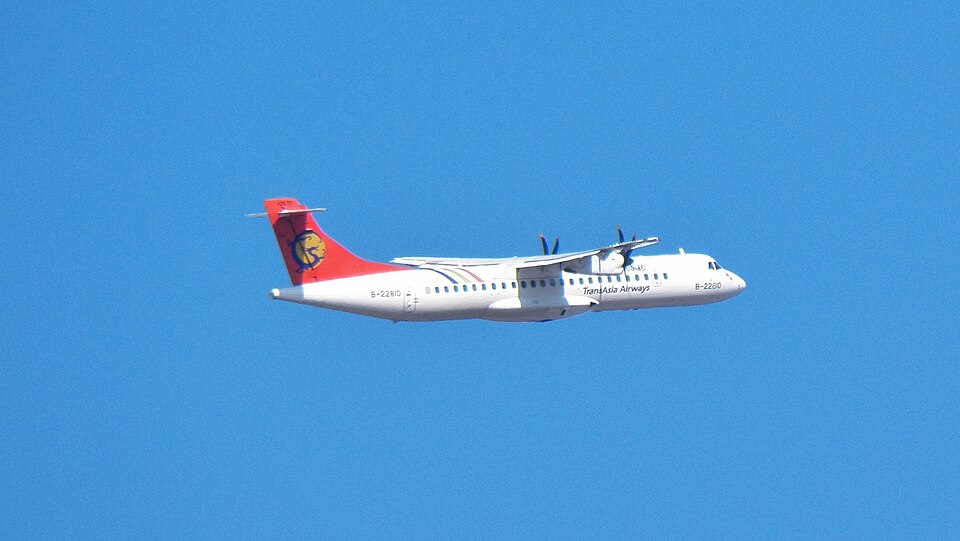
Circumstances
The aircraft was operating an instrument flight rules (IFR) regular public transport service from Kaohsiung to Magong in the Penghu archipelago. At 1906 Taipei Local Time, the aircraft impacted terrain approximately 850 meters northeast of the threshold of runway 20 at Magong Airport and then collided with a residential area on the outskirts of Xixi village approximately 200 meters southeast of the initial impact zone. At the time, the crew was conducting a VOR non-precision approach to runway 20. The aircraft was destroyed by impact forces and a post-impact fire. Ten passengers survived the occurrence, and five residents on the ground sustained minor injuries.
Approach and Impact
The occurrence was the result of controlled flight into terrain, meaning an airworthy aircraft under the control of the flight crew was flown unintentionally into terrain with limited awareness of the aircraft's proximity to terrain. The crew continued the approach below the minimum descent altitude (MDA) when they were not visual with the runway environment, contrary to standard operating procedures. During the final approach, heavy rain and thunderstorm activity intensified, producing a maximum rainfall of 1.8 mm per minute. Runway visual range (RVR) reduced to approximately 500 meters, significantly reducing the likelihood that the crew could have acquired visual references to the runway environment.
Investigation and Probable Cause
The investigation report identified a range of contributing and other safety factors relating to the flight crew, TransAsia's flight operations and safety management processes, communication of weather information, coordination issues at the civil/military joint-use airport, and regulatory oversight by the Civil Aeronautics Administration (CAA).
Probable cause (official findings):
- The flight crew did not comply with the published runway 20 VOR non-precision instrument approach procedures at Magong Airport with respect to the minimum descent altitude (MDA). The captain, as the pilot flying, intentionally descended the aircraft below the published MDA of 330 feet in instrument meteorological conditions (IMC) without obtaining required visual references.
- The aircraft maintained an altitude between 168 and 192 feet before and just after overflying the missed approach point (MAPt). Both pilots spent about 13 seconds attempting to visually locate the runway environment, rather than commencing a missed approach at or prior to the MAPt.
- As the aircraft descended below the MDA, it diverted left of the inbound instrument approach track, and its rate of descent increased due to the flying pilot's control inputs and meteorological conditions. The hazardous flight path was not detected and corrected in time, suggesting the crew lost situational awareness about the aircraft's position during the latter stages of the approach.
- Flight crew coordination, communication, and threat and error management were less than effective. The first officer did not challenge the captain's intentional descent below the MDA and collaborated with it. The first officer also did not detect the deviation from the inbound track or identify increased risk of a CFIT event.
- None of the flight crew recognized the need for a missed approach until the aircraft reached 72 feet, 0.5 nautical mile beyond the MAPt, where collision became unavoidable. The aircraft collided with foliage 850 meters northeast of the runway 20 threshold two seconds after a go-around decision was made. Due to high impact forces and post-impact fire, the crew and most passengers perished.
- Flight recorder data showed non-compliance with standard operating procedures (SOPs) was a repeated practice during the flight, constituting an operating culture where high-risk practices were routine and considered normal.
- Non-compliance with SOPs breached obstacle clearances, bypassed safety criteria and risk controls, and increased the risk of a CFIT event.