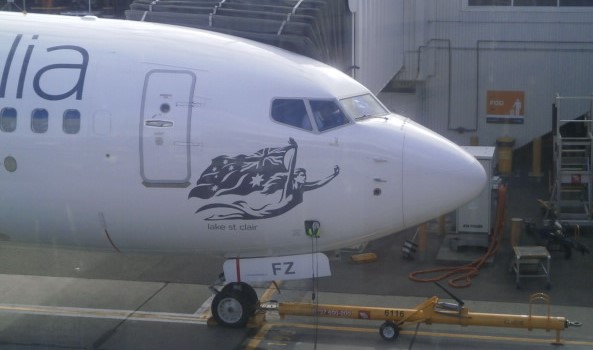
Incident Overview
On the morning of 27 April 2022, a Boeing 737-800 registered VH-YFZ and operated by Virgin Australia Airlines departed from Gold Coast Airport, Queensland. Immediately after takeoff, the pilot noticed a tendency for the aircraft to roll to the right. The pilot trimmed the rudder to keep the wings level. The aircraft no longer required trim when the flaps were retracted for cruise, but the issue returned when the flaps were extended for landing. No warnings of flap skew or asymmetry were provided to the flight crew.
Post-Flight Inspection
A walk-around inspection following the flight revealed that the left outboard aft flap had not completely retracted. A subsequent engineering inspection found several components in the aft flap actuation system had failed. The Australian Transport Safety Bureau (ATSB) determined that a pre-existing fatigue crack progressed through the aft flap's inboard programming roller cartridge, resulting in component failure. This cartridge held a roller that guided the aft flap during extension and retraction. The failed cartridge affected aft flap performance when flaps were deployed, leading to the aircraft's tendency to roll to the right.
Timeline and Detection
While it could not be determined precisely when the cartridge failed, it likely occurred at some point following touchdown during the previous flight, but before takeoff on the incident flight. It is also likely that the aft flap was fully and properly retracted after the previous flight; if not, the resulting skew would probably have been detected during walk-around inspections. The failure changed the position of the aft flap, resulting in asymmetric performance. When the flaps were retracted for cruise, the failed cartridge may have caught on the main flap, preventing complete retraction, which could explain a noise heard by the cabin manager; however, the aircraft handled normally during cruise.
Inspection History
Boeing specified a general visual inspection of the left outboard flap. On VH-YFZ, this inspection last occurred in October 2020, with no defects found. It could not be determined whether the fatigue crack was present at that inspection. Ten other instances of cracking and/or failure at the programming roller were reported to Boeing between 2017 and 2022. At least six of these were old enough to have been inspected several times prior to failure. Significantly, the area in which the fatigue cracks developed was not included in a detailed inspection that Boeing specified for the flap actuation system. The more detailed inspection was not due on VH-YFZ for another 5,600 cycles; however, on each of the six aircraft with reported failures, the programming rollers would have been inspected at least once prior to failure. As with the general visual inspection, this detailed inspection was performed on-wing, restricting observation of the cartridge, and the task card did not include the cartridges that housed the rollers.
Safety Recommendation
While it was identified that failure of this component would not significantly affect the controllability of the aircraft, the ATSB issued a safety recommendation to The Boeing Company that it take safety action to increase the detection of fatigue cracks in the roller cartridges of 737-800 prior to failure.