Introduction
On two occasions in late October 2022, Boeing 737-800 aircraft operated by Virgin Australia Airlines and Qantas Airways descended below the minimum safe altitude while approaching Cairns Airport in Queensland. The incidents occurred during routine passenger flights from Brisbane to Cairns and were attributed to crew errors in programming the flight management computer (FMC).
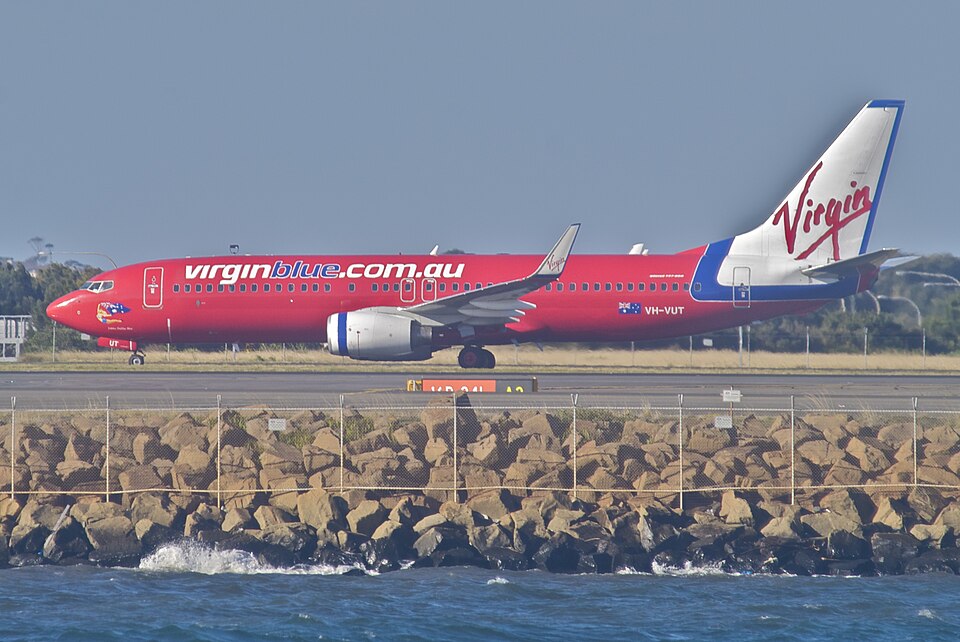
Incident on 24 October 2022 – Virgin Australia Flight VH‑VUT
On the evening of 24 October 2022, a Virgin Australia Airlines Boeing 737-800, registered VH‑VUT, was cruising in darkness at 1945 local time. Air traffic control (ATC) cleared the flight for the HENDO 8Y arrival via the BARIA transition, followed by the required navigation performance (RNP) Y instrument approach for runway 33 at Cairns Airport. The crew entered the arrival, transition, and approach into the FMC but did not select an approach transition. This created a discontinuity between the HENDO arrival waypoint and the approach intermediate fix (IF) waypoint CS540. The crew resolved the discontinuity by manually linking HENDO to CS540, which bypassed the 6,800 ft descent altitude constraint programmed for HENDO in the RNP approach. As the aircraft neared HENDO, the captain selected 800 ft on the autopilot mode control panel, and the aircraft descended below 6,800 ft and then below the minimum sector altitude of 6,500 ft. ATC alerted the crew and issued climb instructions. The crew climbed above 6,800 ft and executed a missed approach before conducting a second approach and landing without further incident.
Incident on 26 October 2022 – Qantas Airways Flight VH-VZA
On the morning of 26 October 2022, a Qantas Airways Boeing 737-800, registered VH-VZA, was cruising in daylight at 0739 local time south of Cairns. ATC cleared the crew for the same HENDO 8Y arrival via BARIA and the RNP Y runway 33 approach. The crew entered the procedures but did not select an approach transition, again creating a discontinuity. They noted that waypoints CS522 and CS523 were missing from the navigation display track but linked HENDO to CS540, believing the track passed over those waypoints. This action removed the altitude constraints for HENDO, CS522, and CS523. As the aircraft approached HENDO, the captain selected 5,500 ft on the autopilot panel, and the aircraft descended below 6,800 ft and then below 6,500 ft. ATC contacted the crew and subsequently cleared them for a visual approach. The aircraft landed without further incident.
ATSB Findings
The Australian Transport Safety Bureau (ATSB) investigated both occurrences. It found that on both flights, the crews did not recognize that an approach transition selection was required in the FMC. Consequently, no selection was made, and the crews manually linked the HENDO waypoint to CS540, which removed the descent altitude protections associated with HENDO. This resulted in programmed flight paths that led both aircraft below the minimum safe altitude.
The ATSB also identified that the Jeppesen RNP Y runway 33 approach chart used by both crews did not include the waypoints HENDO, CS522, and CS523 in the chart’s vertical profile depiction. Additionally, the chart's map displayed information for those waypoints over dense topographical detail, limiting the crews' ability to identify omitted descent restrictions. The pre-flight briefings conducted by the crews did not identify that data entry errors had removed some altitude protections.
On each occasion, ATC quickly detected the deviations and took appropriate corrective actions.
Actions Taken
Two days after the first incident, Virgin Australia issued a safety update to all flight crew, providing contextual information and highlighting the missing waypoints in the vertical profile depiction on the Jeppesen Cairns RNP Y runway 33 chart. The update emphasized the requirement for an approach transition selection and was supported by an operational notice to Boeing 737 flight crews for Cairns operations, highlighting the complex nature of the HENDO 8Y arrival and providing instructions for correct FMC data entry.
The day after the second incident, Qantas issued an internal notice to flight crew explaining that many arrival and approach pairings require both an arrival transition and approach transition selection. The notice also described the effects of not selecting an approach transition. This information was later incorporated into the Cairns Airport Route Manual Supplement. The incident details were also shared with all flight crew via a fleet newsletter and integrated into Qantas’ evidence-based training program.