The Incident
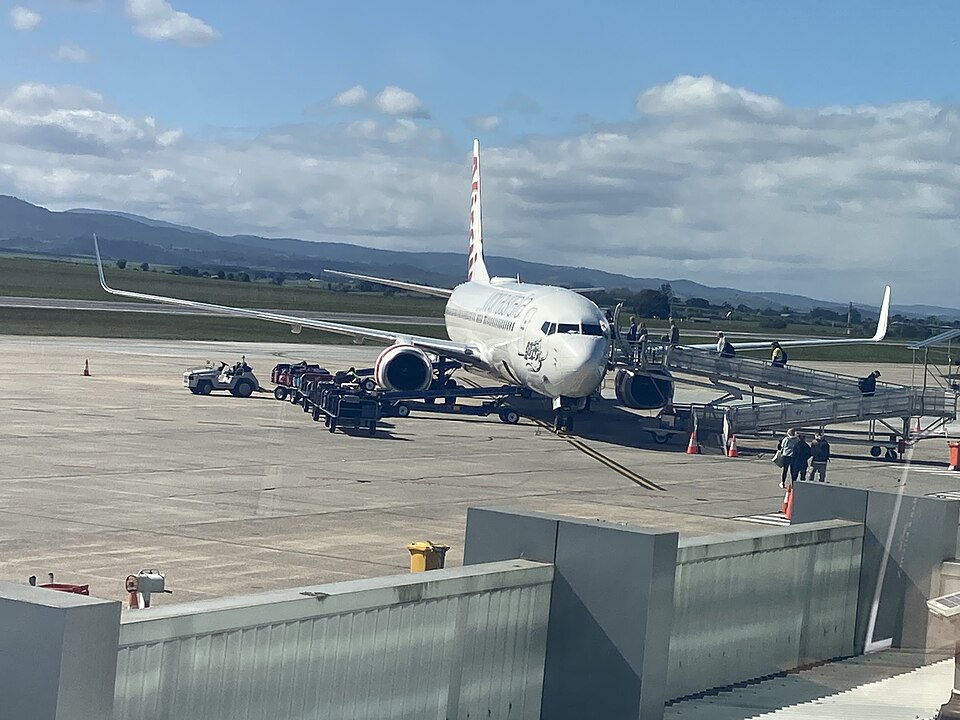
On the morning of 10 March 2023, a Boeing Company 737, registered VH-YQR, operated by Virgin Australia as flight VA916, departed Brisbane, Queensland for Sydney, New South Wales. After a stabilised approach, the aircraft experienced a hard landing during the landing phase.
Findings
The Australian Transport Safety Bureau (ATSB) determined that during the final approach, the first officer (FO) initiated the flare later than usual and did not reduce the throttle to idle prior to the initial touchdown. This resulted in the aircraft bouncing approximately 3 feet. During the bounce, the ground spoilers and speed brakes deployed, leading to a hard landing of 2.96 G on the second touchdown.
The ATSB also found that the training provider contracted by the operator to conduct Boeing 737 conversion training was instructing pilots to initiate the flare at 30 feet, whereas the flight crew training manual (FCTM) specified a flare height of approximately 20 feet. This discrepancy increased the risk of unstable or hard landings.
Safety Actions
In response, the operator completed several safety actions: a review of hard landing events from 2017 to identify trends; increased oversight of external type rating providers and alignment of training with standard operating procedures; addition of Zero Flight Time advanced simulator sessions into the operator’s conversion course program; and an independent review of the checking and training department, including a post-COVID performance assessment.
The operator noted that CAE, the training provider involved, is no longer used as a type rating provider for reasons unrelated to this event. CAE also undertook actions, including a risk assessment, review of all Boeing 737 courseware for conflicting information, review of training program design processes, modification of courseware on autothrottle auto-retard height, alignment with FCTM flare technique, and issuance of a training bulletin to all 737 Max training centres emphasising the 20-foot FCTM guidance.
Safety Message
The ATSB highlighted the importance of operators ensuring external training providers align their training with the operator’s flight procedures. It also emphasised that flight crew should remain go-around minded during approach and landing. The Boeing FCTM states that if an airplane bounces, pilots should hold or re-establish a normal landing attitude, add thrust as necessary, and initiate a go-around if a high, hard bounce occurs.
The occurrence landing and a similar event on 5 April 2023 shared characteristics: a late flare combined with higher-than-idle thrust at initial touchdown, followed by speedbrake and ground spoiler deployment during the bounce, which reduced lift and led to hard landings on the second touchdown.
The training provider taught pilots to mentally prepare for the flare at 30 feet and to flare at 25 feet, rather than the FCTM's 20 feet. This discrepancy had the potential to create confusion and reduce reaction time. The operator was unaware of this difference. Although the operator's conversion course required a 20-foot flare, the FO's training reports showed no indication of issues. The intention to flare at 20 feet, contrary to the FO's established habit, likely introduced unfamiliarity and uncertainty, leading to a misjudged late flare and failure to reduce thrust before touchdown.