Ultralight Crash in Chonburi Kills Pilot Due to Wing Fabric Failure
An X-AIR HAWK ultralight crashed in Chonburi, Thailand, killing the pilot and injuring a passenger. The accident was caused by deteriorated wing fabric and…
On September 10, 2025, a The Boeing Company 767-3JHF (registration VH-XQU) operated by Tasman Cargo Airlines Pty Ltd was involved in an aviation accident near Near Sydney Airport, New South Wales. No fatalities were reported. Investigators recorded the probable cause as: Two Airbus A380s on the ground at Sydney Airport taxied through the instrument landing system critical area and in front of the glideslope antenna, causing interference to the glideslope signal. This summary draws on records from the Australian Transport Safety Bureau (ATSB).
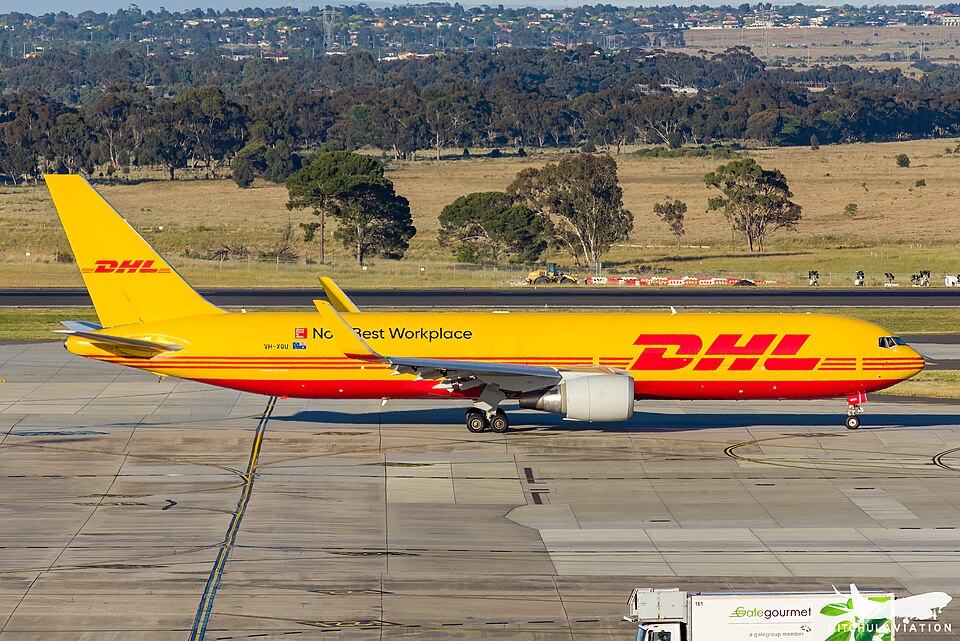
Two Airbus A380s on the ground at Sydney Airport taxied through the instrument landing system critical area and in front of the glideslope antenna, causing interference to the glideslope signal. As a result, after detecting the interference, the Boeing 767's autopilot established the aircraft on a flight path that deviated away from the glideslope, before alerting the crew that it was operating in a degraded mode. The pilot flying continued the approach with the autopilot in a degraded mode. As a result, the aircraft’s high descent rate triggered an air traffic control minimum safe altitude warning. After disconnecting the autopilot, the pilot flying delayed the initiation of a missed approach and the aircraft descended below the localiser segment minimum safe altitude. The pilot monitoring did not effectively monitor the aircraft's flight path during the approach and did not call out deviations or advise the pilot flying to conduct a missed approach.
— NTSB Determination
Introduction This analysis will discuss the factors leading to the performance of the autoflight system and the protection requirements of the instrument landing system critical area. In addition, it will examine the actions of the flight crew in response. Finally, the analysis will consider the operator’s procedures and training for conducting precision approaches, low visibility operations and practice autoland approaches. Glideslope interference As the aircraft was intercepting the glideslope prior to the commencement of a practice autoland approach, an A380 aircraft holding at A1, within the ILS critical area, began moving onto the runway. A second A380 then entered the critical area as the first vacated. The movements of both aircraft coincided with anomalies observed in the glideslope signal received by the aircraft.The weather conditions at Sydney Airport at the time were better than those for which protection of the ILS critical area was required. Therefore, ATC was not required to protect the area for a practice autoland. Furthermore, while the tower controller was required to inform the flight crew that the ILS was not being protected, the flight crew had not yet transferred to this controller. Therefore, there was no opportunity for the flight crew to be given this advice.After initially attempting to capture the glideslope from below, the aircraft's descent rate increased away from the flight director pitch guidance, and it began deviating away from the glideslope. As described in the flight crew operations manual (FCOM) bulletin for ILS signal interference, when the autopilot flight director system (AFDS) detected an unstable glideslope signal it changed to an attitude stabilising mode. Cockpit alerts were subsequently displayed to alert the flight crew to the degraded performance of the autopilot. These alerts were consistent with those expected when the AFDS had been in attitude stabilising mode for 15 seconds. Therefore, the movement of the first A380 through the ILS critical area caused an interference to the glideslope signal, which was subsequently detected by the AFDS. As a result, after attempting to capture the glideslope prematurely, the AFDS entered and remained in an attitude stabilising mode before alerting the crew. Contributing factorTwo Airbus A380s on the ground at Sydney Airport taxied through the instrument landing system critical area and in front of the glideslope antenna, causing interference to the glideslope signal. As a result, after detecting the interference, the Boeing 767's autopilot established the aircraft on a flight path that deviated away from the glideslope, before alerting the crew that it was operating in a degraded mode. Descent below glideslope
Pilot flying After the interference stopped, it is likely that the flight path deviation had increased beyond the threshold at which the AFDS could re-capture the glideslope. Therefore, the AFDS remained in attitude stabilising mode while the annunciations indicating the degraded performance of the autopilot continued to be displayed to the flight crew. The pilot flying recognised that the autopilot was no longer following the glideslope, and that the aircraft was descending at a high rate. However, believing that they had sufficient time and altitude, they did not disengage the autopilot and commenced discussion and preparation for a change to a localiser approach. Both operator and manufacturer procedures required that if automation was not operating as expected then it should be disengaged and the aircraft flown manually. However, the pilot flying allowed flight below the glideslope to continue beyond the initial approach fix and below the approach commencement altitude.After the aircraft’s flight path triggered a minimum safe altitude warning (MSAW), but prior to receiving the corresponding low altitude alert from ATC, the pilot flying did disconnect the autopilot. By this time, the aircraft’s position was significantly below the minimum sector altitude, below which a missed approach was required to be conducted when experiencing a failure of the glideslope. Furthermore, the manufacturer’s procedure specific to glideslope interference required a missed approach to be conducted when corresponding failure annunciations were displayed. These annunciations were continuously displayed throughout the approach. Following the disconnection of the autopilot, the pilot further delayed the initiation of a missed approach. During this period of manual flight, the aircraft descended a further 150 ft and below the localiser segment minimum safe altitude before a missed approach was commenced.The ATSB considered the extended time between the MSAW being triggered and the flight crew receiving a low altitude alert. As the MSAW coincided with an instruction to the crew to contact the tower controller, the low altitude alert could not be given immediately because the approach controller was required to establish which frequency t
An X-AIR HAWK ultralight crashed in Chonburi, Thailand, killing the pilot and injuring a passenger. The accident was caused by deteriorated wing fabric and…
A Challenger II Special ultralight aircraft (U-B23) landed off-runway at Pai Airport, Mae Hong Son, on September 17, 2024, due to a gust of wind. No injuries…
The Polish aviation safety authority is investigating a serious incident involving an AT-3R100 aircraft that occurred on September 2, 2024. The investigation…
A SZD-48-3 glider suffered damage when its left wing struck a ground obstacle during a low final approach at EPWK on June 20, 2025. The pilot was uninjured.
A 39-year-old skydiver died after a hard landing near Leszno on May 1, 2026. The PKBWL preliminary report indicates the fatal impact resulted from a late,…
A student pilot crashed an SZD-50-3 Puchacz glider into the airfield fence during a solo training flight on June 6, 2026. The pilot was uninjured, but the…