Paraglider Crash in Puente Alto Injures Pilot and Passenger
A SkyWalk Join't 3 paraglider crashed into the ground near Las Vizcachas, Chile, on September 1, 2024. The pilot and passenger sustained serious spinal…
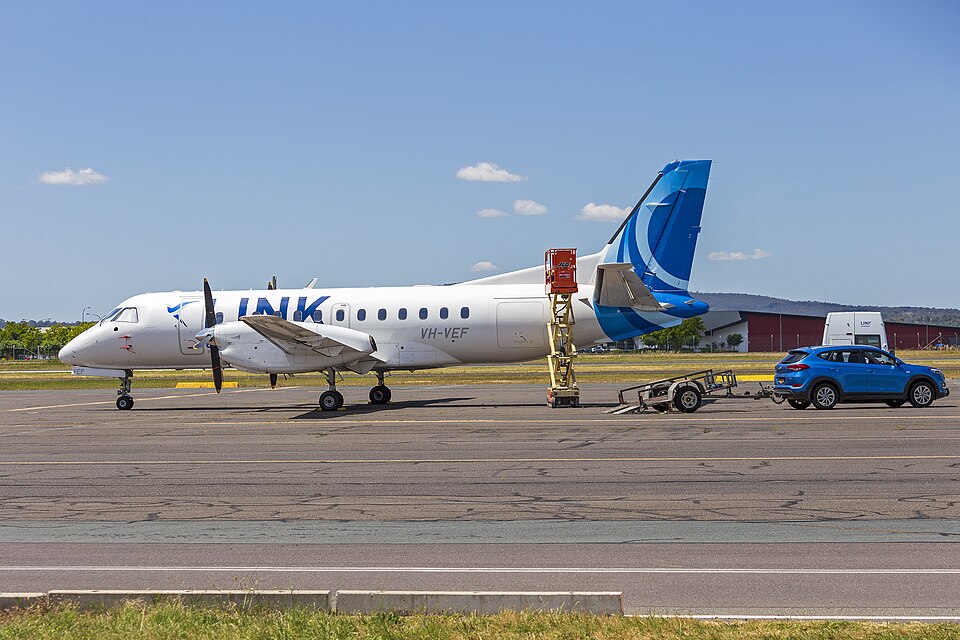
On April 1, 2026, a Saab Aircraft Co. 340B (registration VH-VEF) operated by Vee H Aviation Pty Ltd was involved in an aviation accident near Melbourne Airport, Victoria. No fatalities were reported. Investigators recorded the probable cause as: contributing factors’ and ‘other factors that increased risk’ (that is, factors that did not meet the definition of a contributing factor for this occurrence but were still considered important to include in the report for the purpose of increasing awareness… This summary draws on records from the Australian Transport Safety Bureau (ATSB); 1 related events involving the same aircraft type or operator are linked below.
contributing factors’ and ‘other factors that increased risk’ (that is, factors that did not meet the definition of a contributing factor for this occurrence but were still considered important to include in the report for the purpose of increasing awareness and enhancing safety). In addition ‘other findings’ may be included to provide important information about topics other than safety factors. These findings should not be read as apportioning blame or liability to any particular organisation or individual. Contributing factors Fracture of the main landing gear wheel resulted from fatigue cracking in the bead seat area. The fractured wheel and cracked wheel on the same landing gear leg were of a design that was previously established to be susceptible to cracking in the bead seat region.
— the Australian Transport Safety Bureau (ATSB) Determination
Fracture and separation of the section of inner wheel rim was the result of fatigue cracking. The fracture occurred between routine maintenance inspections, around the inner bead seat area of the wheel subassembly that was previously established to be susceptible to cracking. Contributing factorFracture of the main landing gear wheel resulted from fatigue cracking in the bead seat area.The susceptible wheel design has now been in service for over 30 years. Therefore, if the design alone was sufficient to result in in-service fracture, between inspections, there would very likely be a significantly higher number of reported wheel failure events than the 2 previously investigated. As noted in the 2019 ATSB investigation report, the existing inspection regime appeared generally adequate to identify wheel cracks before they progressed to failure. Therefore, it is likely that other factors contributed to fracture in the relatively low number of flight cycles since the wheel was overhauled.The ATSB considered whether an incipient crack might have existed, but not been detected, at the time of the most recent overhaul, as previous investigations found likely. This would extend the number of flight cycles to which the wheel was exposed, to initiate and grow the crack to a critical size under normal loading. While eddy current is a suitable inspection method for detecting small flaws, it, like all non-destructive inspection methods, is subject to errors or variables that reduce the likelihood of flaw detection. The report of crack detection in the second wheel, after it was reintroduced into the inspection system, provided some confidence in the overhauler’s inspection process, but can’t guarantee that a crack was not missed on another occasion. Additionally, the presence of the large crack in the second wheel might suggest that 2 cracks, in separate wheels, were not detected during overhaul, which would seem less likely for a robust inspection process. An alternative explanation would involve an abnormal loading event to the landing gear leg to initiate and grow a crack to a critical size within 143 flight cycles. This could also account for the presence of a large crack in the second wheel. While there were no reports of a hard landing or any indication of damage from visited runways, it was still possible that the landing gear leg experienced a higher-than-normal stress event. This could include a firm landing that was still below the hard landing threshold, that was not detected by a flight crew or not considered serious enough to report. Such an event, in combination with the susceptibility of the wheels to cracking, could conceivably result in the cracking or fracture of both wheels between maintenance inspections. The cracked wheel was not examined by the ATSB and the nature of the crack was not determined. As such, it was also possible that cracking of the second wheel was not due to fatigue and instead resulted from additional loading after being operated with the mating wheel with a deflated tyre.Ultimately, the factors contributing to the fracture and cracking of the wheels could not be conclusively determined from the available evidence. Nevertheless, the constant factor in this occurrence, and those previously investigated, was the susceptibility of the pre‑redesign wheel subassembly to fracture. For the given set of loading conditions that resulted in the crack initiation, the reduced strength of the bead seat area on the subject wheels would almost certainly have contributed to the extent of cracking and fracture of the wheel in service. Contributing factorThe fractured wheel and cracked wheel on the same landing gear leg were of a design that was previously established to be susceptible to cracking in the bead seat region.The 3 wheel fracture occurrences investigated by the ATSB indicated that as long as these specific wheels continue to be operated with the existing inspection regime, there remained an increased likelihood of in-service wheel fracture. However, the susceptible wheel subassemblies appear to make up only a small percentage of those currently in service, based on the records of the overhaul organisation. The likelihood of in-service fracture would therefore be respectively small. Additionally, for each of the 3 wheel fracture events investigated in Australia there have been no significant adverse safety outcomes as a result. As such, the ATSB considers the ongoing safety risk presented by the ongoing use of these wheels to be low.
Fracture and separation of the section of inner wheel rim was the result of fatigue cracking. The fracture occurred between routine maintenance inspections, around the inner bead seat area of the wheel subassembly that was previously established to be susceptible to cracking. Contributing factorFracture of the main…
No fatalities were recorded in this accident.
The accident on 1 Apr 2026 involved a Saab Aircraft Co. 340B, registration VH-VEF, operated by Vee H Aviation Pty Ltd, at Melbourne Airport, Victoria.
contributing factors’ and ‘other factors that increased risk’ (that is, factors that did not meet the definition of a contributing factor for this occurrence but were still considered important to include in the report for the purpose of increasing awareness and enhancing safety). In addition ‘other findings’ may be…
A SkyWalk Join't 3 paraglider crashed into the ground near Las Vizcachas, Chile, on September 1, 2024. The pilot and passenger sustained serious spinal…
A Cessna 172N struck electrical cables while on final approach to land at Aucó Aerodrome in Chile. The pilot was uninjured, but the aircraft sustained damage…
A Bombardier DHC-8-402 suffered a tail strike during landing at Puerto Williams on September 9, 2024. All 76 occupants were unharmed, but the aircraft…
A MYD JS-MD 3 glider veered off the runway and struck a wall at Vitacura Aerodrome on January 6, 2025. The pilot was uninjured, but the aircraft sustained…
A recreational paraglider flight in Puchuncaví, Chile, ended with the pilot sustaining serious injuries after a rapid descent and impact with a hillside on…
A Tecnam P2006T landed on its belly at an aerodrome in Poland after the crew failed to confirm landing gear deployment. The incident resulted in no injuries…