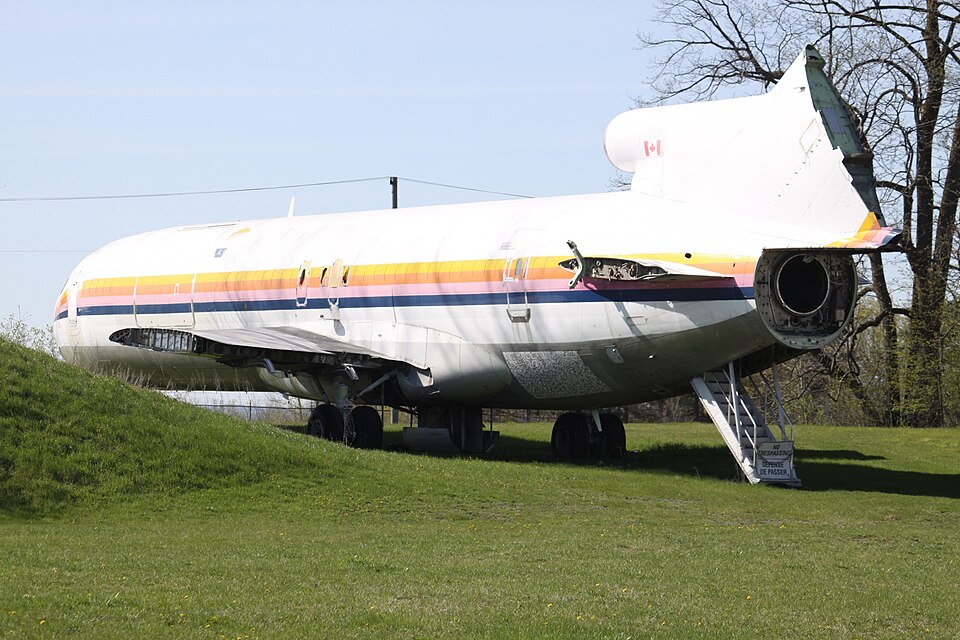
Incident Overview
On 20 May 2002 at 2224 UTC, a Boeing 727-2H3 (registration C-GYFA) operating a cargo flight from Copenhagen to East Midlands Airport encountered a stall warning event during its approach. The aircraft, powered by three Pratt & Whitney JT8D turbofan engines and manufactured in 1976, was crewed by a commander (handling pilot), co-pilot, and a second officer acting as flight engineer. No passengers were on board; all three crew members were uninjured and the aircraft sustained no damage.
Flight History
The flight departed Copenhagen at 2044 hrs. En route to East Midlands, the aircraft encountered heavy rain and continuous light to moderate turbulence from local thunderstorm activity. The crew requested radar vectors to avoid storm cells visible on the weather radar, which took them northwest of the airport. After clearing the weather, they accepted an approach. At that time, the aircraft was level at 3,000 feet QNH, speed 225 kt, weight 117,000 lb (well below maximum landing weight of 154,000 lb).
ATC provided an intercept heading to the localiser; the GPS indicated about 1.5 nm to intercept. The crew was instructed to descend to 2,000 feet QNH and reduce to 180 kt. The commander extended the speedbrake and began a descending, 30° banked turn toward the localiser. During this turn, the stick shaker activated. The crew was uncertain whether Flap 2 was already deployed or extended in response; both speedbrake and Flap 2 were deployed. Despite applying go-around thrust, the aircraft continued descending, pitching down to 7° nose-down. The co-pilot called an altitude warning. The commander applied considerable back pressure and increased power beyond go-around thrust.
The use of speedbrake with flaps extended is prohibited; a warning horn sounds. Initially selecting Flaps 2 triggered the horn. The second officer called a warning, but initially neither the commander nor co-pilot heard. After repetition, the speedbrake was quickly stowed. The aircraft then climbed rapidly, pitch reaching 19° nose-up. The lowest altitude was 1,100 feet QNH (800 feet above airfield level), triggering a GPWS alert. The aircraft climbed back to 3,000 feet and accelerated to 250 kt before the crew corrected pitch and reduced power. ATC provided a new intercept heading, and the crew established on the ILS for an uneventful landing.
Analysis
The manufacturer's Flight Crew Training Manual states that speedbrakes raise initial buffet speed and, when used with flaps down, can cause deep stalls. The operator's manual prohibits speedbrakes with flaps extended and below 200 kt. Flight data recorder data showed oscillating normal load factor (0.75 g to 1.36 g) due to turbulence. With speedbrakes extended at 1 g, stick shaker activates at approximately 153 kt (Flaps UP or Flaps 2), with an 18 kt margin to stall. The aircraft performed a decelerating turn, reducing margin; a gust likely triggered the stick shaker at 180 kt.
Stall recovery procedure near ground calls for advancing thrust to go-around, adjusting pitch to avoid terrain, levelling wings, and not changing flap position. With flaps extended, a large nose-down pitching moment can occur at high angles of attack due to airflow separation on the inboard wing.
Comment
The crew faced multiple alerts: stick shaker, speedbrake warning horn, and GPWS. The second officer's initial warning went unnoticed but was heard upon repetition. High workload from thunderstorm avoidance and the timing of ATC instructions (descent, deceleration, and intercept near the Final Approach Fix) contributed to the situation. The natural reaction to use speedbrakes in a descending decelerating turn, combined with limited time before reaching the company's speedbrake limit and minimum clean manoeuvring speed, increased the risk of leaving the speedbrakes extended.