Flight Details
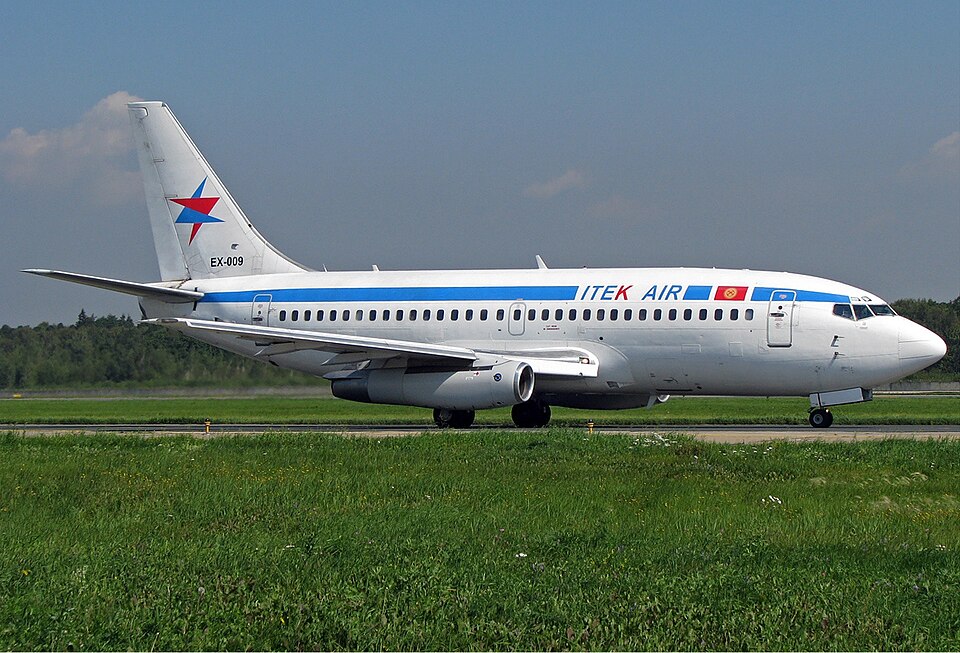
On 24 August 2008, a Boeing 737-200 registered as EX-009, operated by Itek Air (a Kyrgyz airline) under a leasing agreement with Iran Aseman Airlines, was scheduled as passenger flight IRC 6895 from Bishkek to Tehran. The cockpit crew consisted of a pilot-in-command and a co-pilot, along with three cabin crew members. There were 85 passengers on board, including two service passengers: a maintenance engineer and a representative of Iran Aseman Airlines. The crew passed a medical examination at Manas Airport and reported no health complaints; they received a complete preflight briefing. Weather at Manas, Tehran, and alternates was favorable. The aircraft had 12,000 kg of fuel, a takeoff weight of 48,371 kg, and center of gravity at 24.8% MAC, all within limits.
Accident Sequence
After climbing to approximately 3,000 meters, the crew reported a pressurization system fault to air traffic control and decided to return to Manas. During descent for a visual approach, the aircraft collided with the ground. Impact damage and a subsequent fire destroyed the aircraft. Sixty-four passengers died at the scene or in the ensuing fire. One passenger, transferred on 29 August 2008 to the Moscow Sklifasovsky Research Institute burn department, died on 23 October 2008 from burn injuries complicated by pneumonia, directly related to the accident.
Probable Cause
The official investigation determined that the cause of the accident was the crew's decision to descend to an altitude lower than the minimum descent altitude for a visual approach at night. This occurred during the return to Bishkek after a pressurization fault, which was probably caused by jamming of the left forward door seal. The descent below the minimum altitude led to the aircraft striking the ground. Contributing factors included deviations from standard operating procedures and pilot flying/monitoring task sharing, non-adherence to visual approach rules (including failure to maintain visual contact and follow prescribed procedures after losing it), loss of altitude control during a missed approach (initiated because the pilot-in-command misjudged the aircraft's position), and failure to follow procedures after the TAWS warning.