Flight History
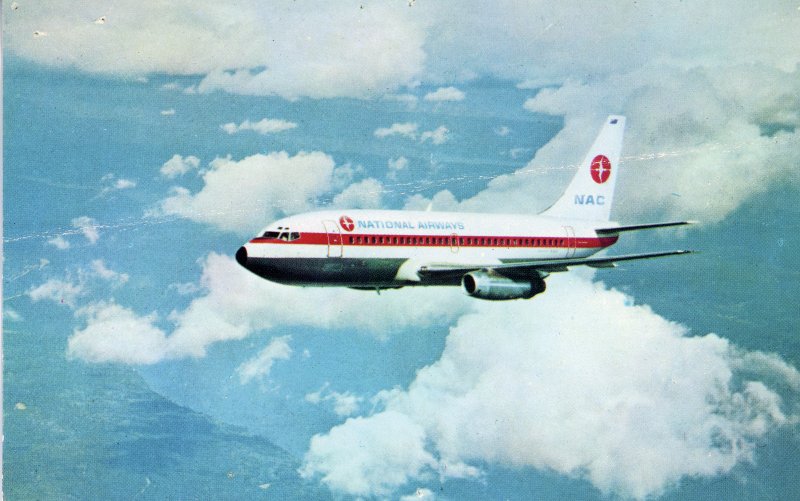
On October 29, 2006, a Boeing 737-200 aircraft that had night-stopped at Calabar departed for Lagos and landed at 0825 hrs. After refueling and a cabin crew change, it departed as ADK 063 at 0929 hrs for Abuja, landing at 1020 hrs. The aircraft uplifted 5000 liters of fuel, totaling 11,000 kg, for the next leg as ADK 053 to Sokoto. After boarding, rain began, prompting the crew to close doors. When the rain subsided, doors were reopened for ground personnel to disembark.
Departure and Weather Conditions
The crew requested startup clearance at 1115 hrs and received taxi clearance to holding position Runway 22 at 1121 hrs. The pilot requested wind information, initially reported as 210 degrees variable at 8 knots, then south-westerly at 15 knots. The tower advised of gusty wind, first 35 knots then 28 knots within a minute. At 1125 hrs, wind was again reported as south-westerly at 15 knots. Another pilot, from Virgin Nigeria 042, commented that it looked like 35 knots and decided to wait for weather improvement.
Accident Sequence
Flight ADK 053 requested and received takeoff clearance with a right turn-out on course at 1129 hrs. The aircraft became airborne but did not acknowledge transfer to Approach Control on 119.8 MHz. Multiple attempts to contact the crew failed, with other aircraft and area controls unable to establish communication. At 1138 hrs, a report from a nearby village (Tungar Madaki) indicated a plane crash. A search party confirmed the aircraft crashed shortly after takeoff. The accident occurred at latitude N 08 59.691’ longitude E 007 14.772’ at an elevation of 1123 ft ASL at 1130 hrs during daylight and in rain.
Fatalities
The accident resulted in 96 fatalities among the 105 persons on board.
Probable Cause
The official investigation determined the causal factor as the pilot’s decision to take off in known adverse weather conditions and failure to execute proper windshear recovery procedures, which caused the aircraft to stall close to the ground. Contributory factors included the flight crew's inability to apply windshear recovery procedures and lack of company standard operating procedures for adverse weather, as well as inconsistent coordination between the pilot-flying and pilot-not-flying during the encounter.