Introduction
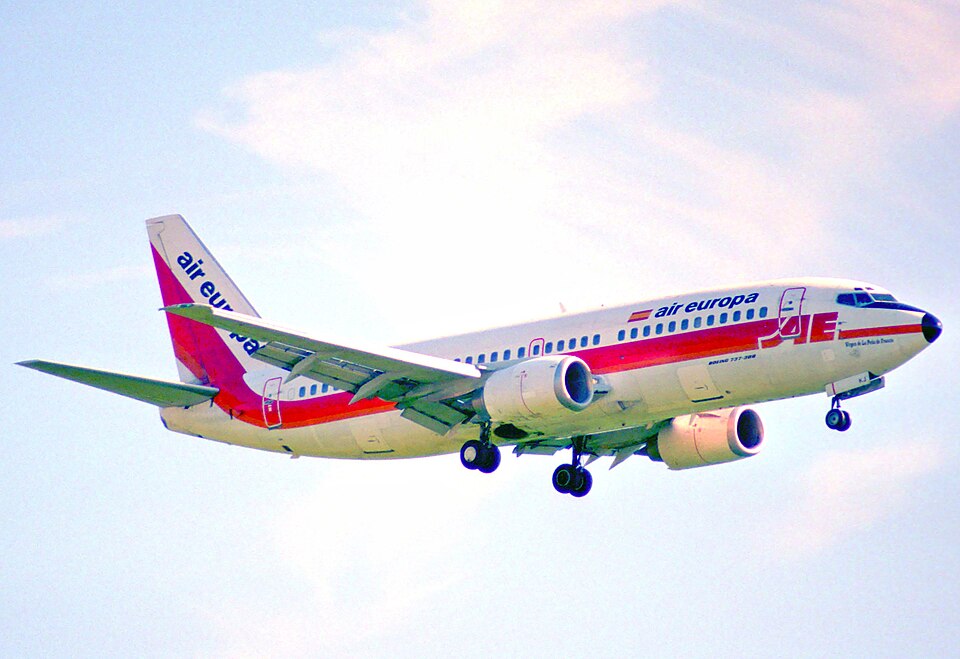
On 14 May 1998, at approximately 1500 hours, a ground incident occurred at Norwich Airport involving two aircraft: a Boeing 737-300, registration EC-FKJ, and an ATR 72-202, registration G-UKTL. Both aircraft were parked adjacent to the terminal building on public transport flights. The Boeing 737 was preparing to depart with 5 crew and 148 passengers on board, while the ATR 72 had 4 crew and no passengers. No injuries were reported for either aircraft, and the only damage observed was puncture holes to the tail fin of the ATR 72.
Event Details
The Boeing 737 was parked on Stand 2 and received clearance from Air Traffic Control to taxi. The commander reported that after receiving an 'all clear' signal from the ground engineer, he increased engine thrust from idle to 30-35% N1, but this was insufficient to move the aircraft. Thrust was then increased to 35-40% N1, and the aircraft began to move. After approximately 50 metres, the ground engineer signalled the commander to stop because a strip of tarmac from the apron surface had become attached to the aircraft's nosewheel tyre. The strip was removed, the landing gear inspected, and the aircraft continued to taxi.
As the Boeing 737 taxied, the jet blast from its engines dislodged a wooden board from a nearby baggage truck. The board, measuring 6 feet by 4 feet, was used as the floor and battery compartment cover of an electric baggage trolley. It struck the tail fin of the ATR 72, which was parked on Stand 3, causing puncture holes. The commander of the Boeing 737 was unaware of this incident as he continued to taxi.
Observations
The Airfield Operations Director had a clear view of the apron from his office window. He reported that as the Boeing 737 attempted to taxi, its nosewheel was set at nearly right angles. As the aircraft tried to move, the nosewheel tyres appeared to be shredding. He immediately informed Air Traffic Control. At that moment, the Boeing 737 reduced power, the nosewheel steering angle was reduced by 10-15 degrees, and the aircraft started to roll backwards. This backward movement was stopped by a further increase in power. The aircraft's tail, which had been parked pointing away from other aircraft, was now directed at the ATR 72. At that point, the wooden board was dislodged from the baggage trolley. Later investigation revealed that what appeared to be shredded tyre was actually a 2-foot length of tarmac crack sealing strip that had been peeled from the surface by the nosewheel's action. The air temperature at the time was 19°C.
Aftermath
As a result of this incident, Norwich Airport revised its ramp procedures and conducted a re-survey of ramp markings and clearances.