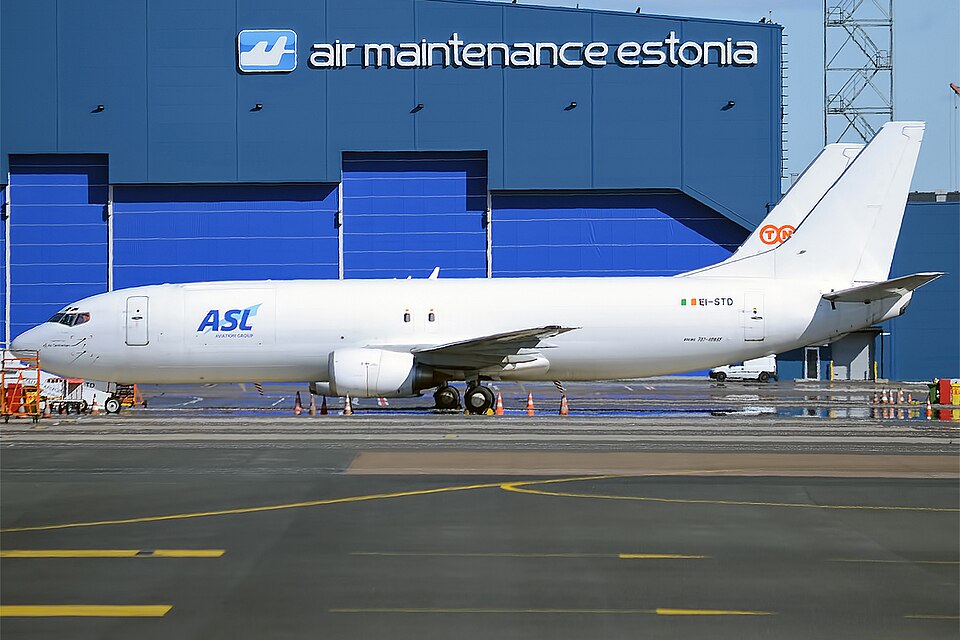
Incident Overview
On a scheduled cargo flight operating from Athens to Bergamo, Paris Charles de Gaulle, and East Midlands, the aircraft, a Boeing 737 (registration EI-STD), suffered a left main landing gear (MLG) failure during landing at East Midlands Airport. The aircraft was carrying 10 tonnes of freight and 8 tonnes of fuel. The co-pilot was the pilot flying for the approach, with a planned manual landing using Flap 30 and Autobrake 2. The landing was unremarkable until the aircraft slowed to approximately 60 knots.
Sequence of Events
After touchdown, the autobrake functioned normally. As the speed reduced through 60 knots, the co-pilot handed control to the commander, who attempted to disengage the autobrake by applying the brake pedals. The first application did not disengage the system, so the commander made a second, more positive application. The aircraft shuddered and rolled left-wing-low as the lower part of the left main landing gear detached. The aircraft came to a halt slightly off the centerline, resting on its right main landing gear, the remains of the left MLG leg, and the left engine lower cowl.
The co-pilot noticed smoke and informed the tower. Another aircraft's co-pilot reported smoke from the 737's landing gear. Concerned about fire, the commander shut down both engines. Three RFFS vehicles arrived and moved close to the aircraft. Firefighters placed a ladder against door L1, which the co-pilot had opened. The commander spoke to firefighters, then returned to the flight deck and switched off the battery. The crew were assisted from the aircraft, and firefighters applied foam around the landing gear and engine. The commander took the dangerous goods notification (Notoc) from the aircraft.
Probable Cause
The detachment of the left MLG axle, wheel, and brake assembly caused damage to the flap system, fuselage, and MLG equipment. The aircraft settling and sliding along the runway resulted in damage to the MLG outer cylinder, engine, and nacelle. The left MLG axle assembly detached from the inner cylinder due to a momentary increase in bending load during the transition from auto to manual braking. The failure resulted from stress corrosion cracking and fatigue weakening the high strength steel substrate at a point approximately 75 mm above the axle. Some heat damage may have occurred during the overhaul process, as indicated by chicken wire cracking within the chrome plating, but this was not severe enough to damage the steel substrate. The origin of the failure was an area of intense, localized heating that damaged the chrome protection and changed the metallurgy (formation of martensite), leading to a surface corrosion pit, stress corrosion cracking, fatigue propagation, and eventual failure under normal loading.
Aftermath
The aircraft was damaged but no injuries were reported. The flight crew evacuated safely and were assisted by firefighters.