Flight Details
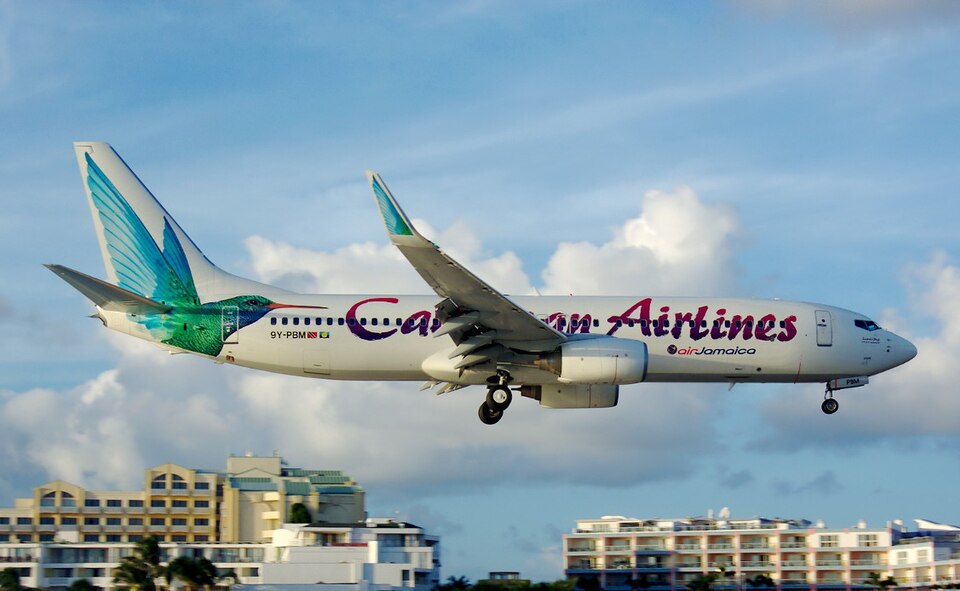
BW 523 originated in New York and made a passenger and fuel stop in Port-of-Spain, Trinidad, where a new crew consisting of two pilots and four flight attendants boarded before continuing to Georgetown, Guyana. The flight departed Piarco at 04:36 UTC. The aircraft proceeded to Georgetown at Flight Level 330, was given descent clearance, and was cleared for an RNAV (GPS) approach to Runway 06, landing at 05:32 UTC.
Approach and Landing
During the transition from cruise to approach, the aircraft deviated to avoid thunderstorm cells north and east of the airport. Reported visibility was 9,000 meters, and light rain was encountered during the approach. The pilot reported that after visual contact was made and after crossing the Final Approach Fix (FAF), he disengaged the autopilot and configured the aircraft for landing. The Flight Data Recorder indicated normal flight until the aircraft was approaching the runway. Even before the aircraft crossed the threshold, the captain commented that he was not landing here. As the flight continued over the runway, the captain indicated to the first officer that the aircraft was not touching down. A go-around call was made by the captain and acknowledged by the first officer, but three seconds elapsed and the aircraft subsequently touched down approximately 4,700 feet from the threshold, leaving just over 2,700 feet of runway surface remaining.
Runway Overrun
Upon touchdown, brake pressure was gradually increased, and maximum brake pressure of 3,000 psi was not achieved until the aircraft was 250 feet from the end of the runway (450 feet from the end of the paved area). The ground spoilers extended on touchdown, and the thrust reversers partially deployed after touchdown. The aircraft did not stop and overran the runway, then assumed a downward trajectory followed by a loud impact.
Probable Cause
The probable cause of the accident was that the aircraft touched down approximately 4,700 feet beyond the runway threshold, some 2,700 feet from the end of the runway, as a result of the captain maintaining excess power during the flare, and upon touching down, failure to utilize the aircraft’s full deceleration capability resulted in the aircraft overrunning the remaining runway and fracturing the fuselage. Contributory factors included the flight crew’s indecision as to the execution of a go-around, failure to execute a go-around after the aircraft floated some distance down the runway, and their diminished situational awareness.