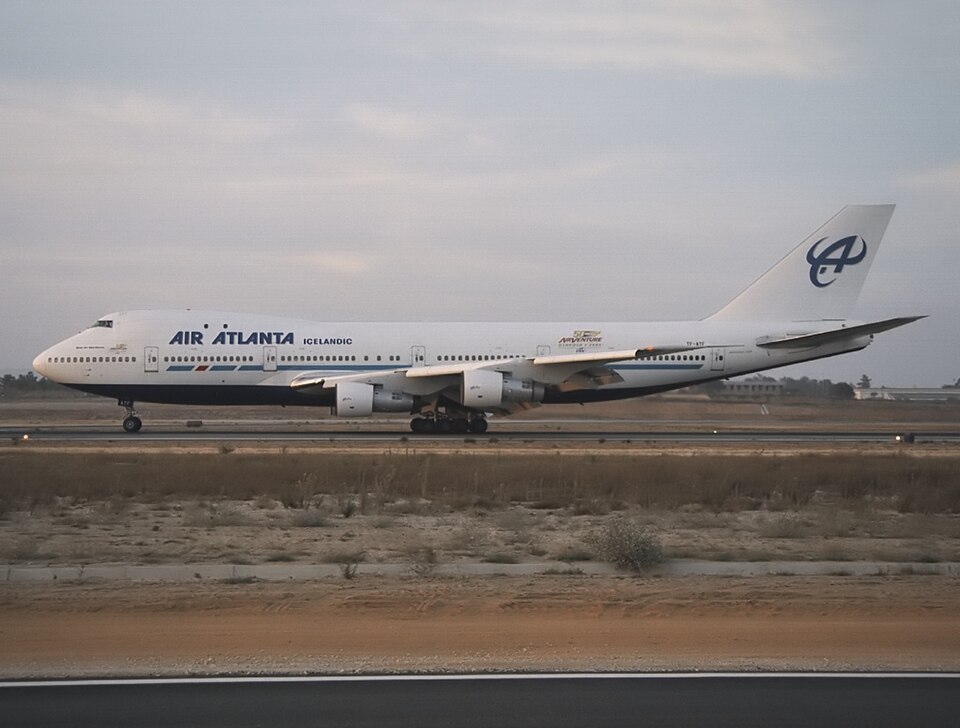
Incident Summary
On 25 September 2000, at 0905 UTC, a Boeing 747-200 (registration TF-ATF) departed from Manchester Airport on a passenger charter flight to Tenerife. Just after takeoff, smoke appeared from below the centre console between the pilots and increased in intensity. Cabin crew reported smoke throughout the cabin, more concentrated in the forward section. Air Traffic Control advised the crew that smoke had momentarily been seen from a left engine.
Emergency Response
The commander declared an emergency and made an immediate return to the airport. An overweight landing was conducted without incident. After landing, the Airport Fire Service informed the crew that smoke was coming from the No 2 engine. The engine was shut down, and the aircraft taxied to the stand where passengers disembarked normally.
Engineering Findings
Engineering inspection ruled out an electrical system problem. Evidence showed that engine oil had entered the air conditioning bleed ducts from the No 2 engine. Suspecting a defective engine vane controller (EVC), an EVC trim run was performed, during which the EVC showed indications of failure. Bird strike evidence was found across the front of the No 2 engine, with slight damage to fan blades, inlet guide vanes, and fan exit guide vanes. The birds were thought to be starlings. A borescope inspection revealed no damage to high-pressure compressor stages. After cleaning the fan and guide vanes, subsequent EVC and high-power runs were satisfactory.
Maintenance personnel concluded that bird debris had affected the airflow sensing system for the inlet vane control system, impacting inlet vane scheduling. This caused a reduction in compressor airflow and loss of correct air pressure balance across one or more internal oil/air labyrinth seals, allowing oil to pass into the compressor stages. The oil-laden air heated and entered the bleed duct for the air conditioning system, producing an oil mist perceived as smoke. The aircraft returned to service the following day, and the engine operated normally thereafter.