Incident Summary
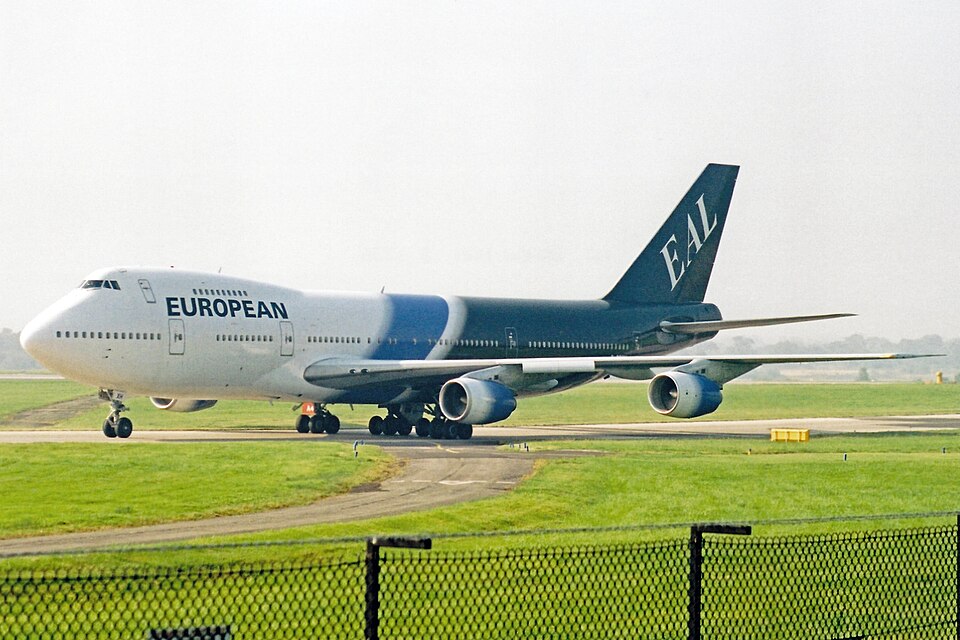
On 9 August 1996, a Boeing 747-236B, registration G-BDXH, was being taxied for takeoff at London Gatwick Airport. During the pre-flight control checks, the crew carried out a rudder movement check. The lower section of the rudder jammed at a deflection of 14° to the right. Shortly thereafter, a loss of No. 2 hydraulic system fluid was observed. The aircraft was returned to the terminal gate for inspection.
Damage and Inspection
Initial inspection revealed damage to the lower rudder Power Control Unit (PCU) and its input linkage. The PCU casing had cracked circumferentially near the ram end, and the crack extended axially to the free edge. This allowed the externally threaded locking ring and the power cylinder end seal block, which it secured, to move outward along the ram toward the eye end. The ram was retracted as far as possible given the displaced components. The end of the input feedback lever, attached to the ram eye end fitting, had broken open.
The PCU had been fitted at manufacture and had accumulated approximately 70,500 hours and 12,000 flight cycles. No injuries were reported among crew or passengers.
Metallurgical Findings
Metallurgical examination determined that high cycle fatigue had originated in the runout radius of the cylinder thread undercut. The fatigue crack propagated over an estimated 3,000 cycles, with evidence of four separate overload events occurring during the propagation period. No deficiencies in material specification or defects in the casing were found that would have contributed to crack initiation. The damage to the input feedback lever was caused by the actuator ram end retracting into the displaced locking ring and end block. The loss of hydraulic fluid resulted from the displacement of the seal block.
Previous Occurrences
Two previous cases of cracking in the same area of this PCU type had been recorded: one in 1976 on an aircraft with 22,000 hours / 6,200 flight cycles, and another in 1992 on an aircraft with 60,000 hours / 15,000 cycles. A fourth occurrence happened shortly after this event on an aircraft with 30,000 cycles, mainly in shorthaul operations.
The first failure, which occurred on an upper rudder PCU during takeoff, resulted from fatigue cracking originating in the root of the innermost thread, found to have very sharp radius corners. That failure led to the loss of one hydraulic system and a full right rudder jam.
Design and Operational Considerations
The PCU design incorporated a snubbing action over the last 12% of its stroke to reduce actuator ram speed as it approached the end of travel. Higher ram speeds generated greater hydraulic pressure in the snubbed volume. It was considered likely that cyclic loads from high snubbing pressures initiated the fatigue cracking.
The rudder system consisted of two independently actuated control surfaces, designed so that a malfunction of one would not result in loss of adequate rudder control. The original PCU design life was 60,000 flight hours / 18,000 flight cycles.
Examination of flight recorder data from G-BDXH showed that during taxi, two full rudder travel checks were performed. The first took 3.5 seconds and the second 7.5 seconds. While these applications induced the final failure, the crack had already existed for approximately 3,000 cycles.
Corrective Actions
Following the 1976 failure, the manufacturer issued an Operations Manual Bulletin and a Maintenance Manual revision instructing that all rudder flight control checks be performed slowly and smoothly, taking no less than 8 seconds for a full cycle. Additionally, a controlled root radius on the thread was incorporated into subsequent manufacture, and later the radius in the thread undercut was increased. The importance of proper locking ring tightening was emphasized.
After this occurrence, the operator initiated a special inspection of high-cycle PCUs, which revealed no defects. The operator also issued a notice to flight crews, later incorporated into the Flying Manual, reminding them of the requirement to perform the rudder travel check slowly and smoothly. A program to monitor rudder application rates at high angles of travel was introduced, showing that about 70% of such events occurred during pre-flight control checks.