Incident
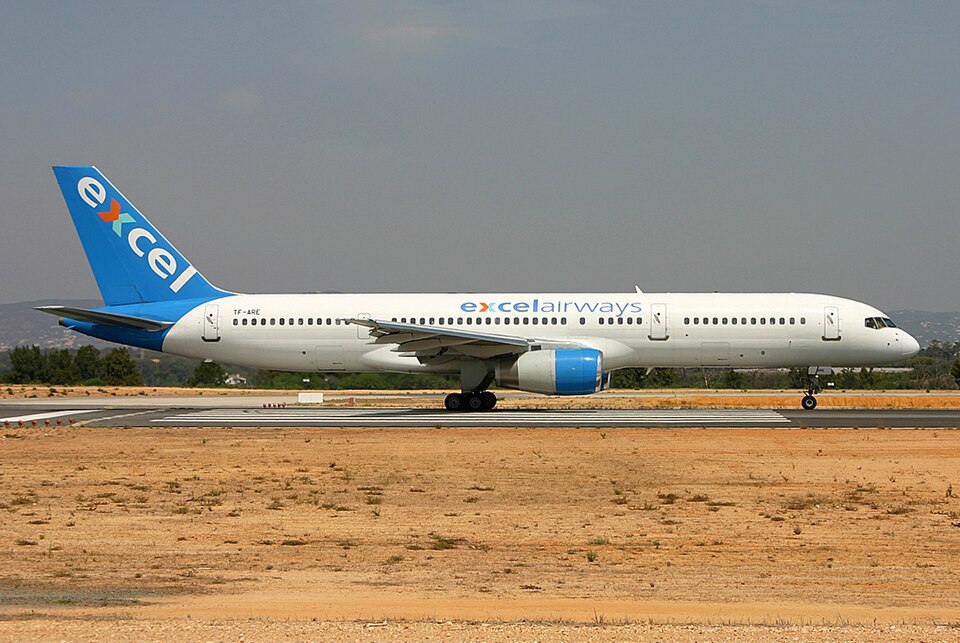
On 11 June 2005, a Boeing 757-200 (registration TF-ARE) was preparing for a charter flight from Manchester International Airport to Antalya, delayed by approximately five hours after its late arrival from London Gatwick Airport. During pre-boarding checks, a cabin crew member with three months experience on type was near the R4 door. She noticed the door begin to move and assumed it was being pushed closed from outside. The door stopped moving, and she decided to close and lock it to protect herself from further uncommanded movement. She positioned herself with her left hand on the door assist handle and right hand on the locking handle. The door then started moving quickly, trapping her left forearm between the bulkhead and door assist handle. She screamed for the person outside to stop, but the door continued closing, forcing her hand to bend around the handle and causing her wrist to fracture in three places. Once the door reached the fully closed position, she was able to free her arm. Paramedics treated her at the aircraft before she was taken to hospital.
The caterer who had left the aircraft through the R4 door stated that he retracted the catering truck bridge, reached up, and moved the door to a half-closed position with relatively little force. He did not hear any shouting or screaming. He later noted that it is common for cabin attendants to struggle with doors and that caterers often assist. He could not recall if he asked the attendant for permission to help, but as the door moved, he assumed the gust lock had been disengaged and saw the attendant closing the door in a normal manner. He became aware of the injury two weeks later.
Aircraft and Door Operation
The Boeing 757-200 doors are heavy, and it can be difficult for inexperienced or slightly built crew members to overcome the door's inertia. Once moving, momentum will allow the door to continue closing at a steady rate, with the rate appearing to increase in the final phase. Wind pressure or external assistance can affect closure rate. The gust lock engages automatically when the door is moved to the fully open position and must be manually disengaged before closing.
The cabin crew member had been trained on a cabin simulator with lighter doors that did not reproduce wind loading. The potential to fall from the aircraft when closing doors is a concern among many crew members, and it is not uncommon for cabin crew to seek help from ground staff, especially on wet floors or in strong winds.
Investigation
The AAIB investigation considered that the caterer may have offered assistance, but the attendant did not hear due to noise. The caterer saw the attendant standing by the door as it moved and assumed she had disengaged the gust lock. After the door was half-closed, the caterer left the task to the attendant. The attendant does not recall disengaging the gust lock, suggesting the lock may not have fully engaged when the door was initially opened. A breakdown in communication occurred. The inexperienced crew member had to quickly position herself in a confined space to close the door, and it is possible that she was not mentally prepared or correctly positioned. The fact that the door stopped moving is consistent with the caterer leaving it half open, and it is probable that the door's normal momentum exerted sufficient force to fracture her wrist.
Safety Recommendations
Two safety recommendations were made. Safety Recommendation 2005-133 recommended that Excel Airways review its procedures for closing cabin doors to reflect that cabin attendants may require assistance from ground staff. Safety Recommendation 2005-134 recommended that Excel Airways review its training for Boeing 757-200 cabin doors to ensure that final assessment of an individual's capability to operate a cabin door safely is conducted on an aircraft under representative conditions. In response, the operator issued instructions emphasizing that door operation is solely the crew member's responsibility, and any additional assistance must be obtained from another cabin crew member on board.