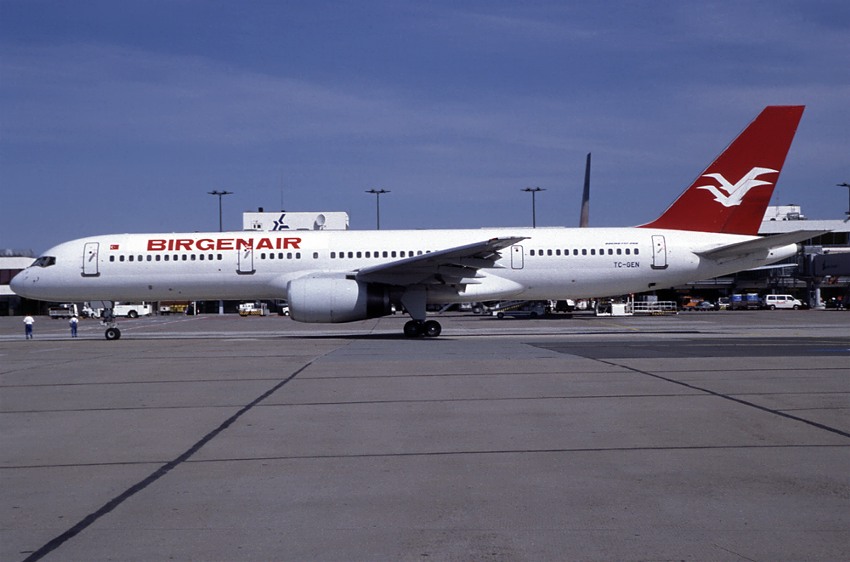
Flight Details
On behalf of Alas Nacionales, a charter flight was operating from Puerto Plata, Dominican Republic, to Frankfurt, Germany, with intermediate stops in Gander, Canada, and Berlin, Germany. The aircraft carried 176 German passengers and 13 Turkish crew members, totaling 189 occupants.
Airspeed Indicator Discrepancy
During the takeoff roll at 80 knots, the captain observed that his airspeed indicator (ASI) appeared incorrect, while the copilot's ASI seemed accurate. During the initial climb at approximately 4,700 feet, the captain's ASI indicated 350 knots, while the actual speed was 220 knots. This discrepancy caused the autopilot and autothrottle to increase the pitch-up attitude and reduce power in an attempt to lower the airspeed.
Crew Confusion and Warnings
The crew received 'Rudder ratio' and 'Mach airspeed' advisory warnings. Confusion escalated when the copilot reported his ASI reading 200 knots and decreasing, even as an excessive speed warning and stick shaker activated. The pilots concluded that both ASIs were unreliable. They subsequently disconnected the autopilot, which had been reducing speed based on the captain's faulty ASI, bringing the aircraft close to stall speed. Full thrust was applied.
Crash
At 23:47:17, an aural GPWS warning sounded. Eight seconds later, the aircraft crashed into the ocean. All 189 occupants were killed.
Probable Cause
The official investigation determined the probable cause to be the crew's failure to recognize the activation of the stick shaker as a warning of an imminent stall, and the failure of the crew to execute the procedures for recovery from the onset of loss of control. Before the stick shaker warning activated, there was confusion by the flight crew due to erroneous indications of relative speed increase and an overspeed warning. It is believed that the incorrect ASI readings were the consequence of an obstructed Pitot tube, possibly by mud and/or debris from a small insect introduced into the Pitot tube while the aircraft was on the ground. The aircraft had not flown for 20 days before the crash and was returned for service without a verification of the Pitot static system as recommended by Boeing.