Incident Description
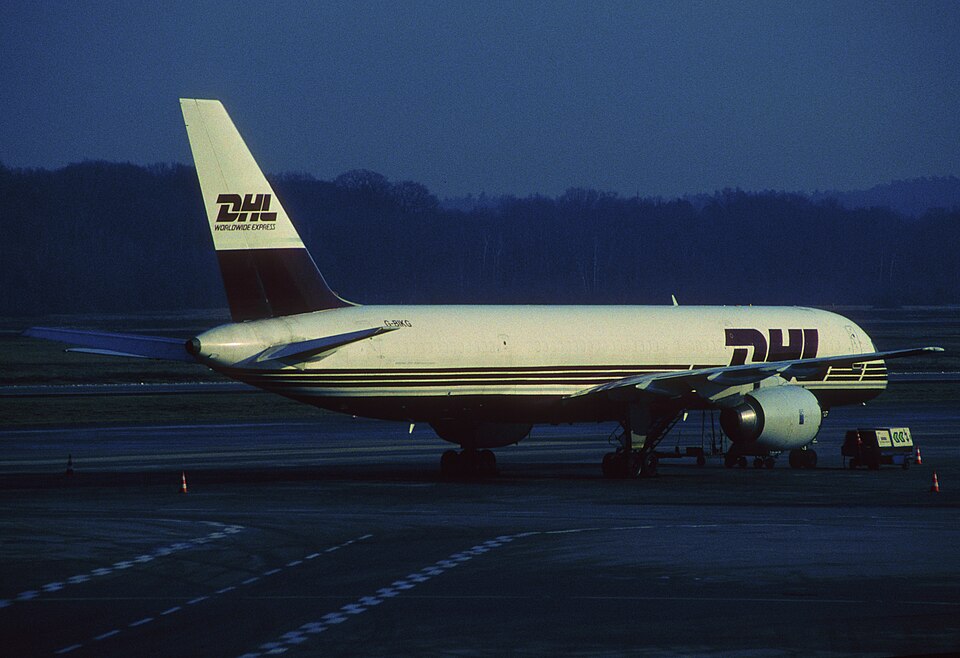
On 10 June 1999, at 0645 UTC, a Boeing 757-236 (registration G-BIKG) was operating a public transport flight from London Heathrow to Edinburgh. The aircraft was in cruise at flight level 350, approximately 55 nautical miles southwest of Newcastle, when the audio warning siren sounded. The 'Cabin Altitude' warning appeared on the Engine Indication and Crew Alerting System (EICAS), and the red 'Cabin Altitude' lights illuminated on the overhead and centre panels.
The commander, who was the handling pilot, had temporarily handed control to the P2 while making a cabin address. After checking in with the P2 and preparing navigation aids for arrival, the commander began the arrival briefing when the warnings occurred. He immediately called for flight deck crew oxygen masks to be donned, which was done promptly, and he re-established communications with the P2.
The cabin altitude on the overhead panel exceeded 15,000 feet, and the outflow valve position indicator showed fully closed. The commander switched the passenger oxygen 'ON'. Simultaneously, the P2 selected manual on the mode select switch on the Cabin Altitude Control Panel and operated the manual control to confirm the outflow valve was fully closed. The commander instructed the P2 to start an emergency descent, which was executed smoothly. A 'MAYDAY' call was broadcast on the ATC frequency, and the aircraft was cleared to descend to FL 100. During the descent, the Quick Reference Handbook (QRH) confirmed that the memory drills were completed correctly.
Upon leveling at FL 100, the senior cabin crew member was called to the flight deck. She reported no casualties in the passenger cabin and no obvious damage to the aircraft. The cabin altitude stabilised at 4 to 5,000 feet. The flight crew removed their oxygen masks, downgraded the 'MAYDAY' to a 'PAN', and continued to Edinburgh.
Investigation Findings
A review of the aircraft's recent history revealed that the Cabin Altitude Control System had difficulty maintaining the desired cabin altitude at FL 370 with both air conditioning packs operating normally and the outflow valve fully closed. Leaks were identified at main entry doors 1L, 2L, and 4L, which were rectified. Prior to the incident flight, the No 2 air conditioning pack had been 'locked out' in accordance with the Despatch Deviation Manual (DDM) due to a heat exchanger air leak. High Flow Mode was verified to be operating normally on the remaining No 1 pack.
Following the incident, the No 2 pack heat exchangers were replaced to enable cabin pressure leak checks. It was discovered that the equipment cooling overboard exhaust valve was remaining open in the 'smoke' position. After rectification of that defect, several other airframe pressure leaks were identified, resulting in a cabin pressure loss exceeding 2,000 feet per minute at 4 psi differential pressure.
The incident was caused by an aircraft suffering excessive cabin air leakage being despatched with one air conditioning pack inoperative. The Boeing 757 is designed and certified to maintain cabin altitude up to FL 350 with one pack operating in high flow mode. However, because the aircraft already had several airframe pressure leaks, the remaining pack, even in high flow mode, was unable to maintain cabin altitude at the desired level.
A similar cabin pressurisation system failure had occurred on another of the operator's Boeing 757s, G-BIKL, on 22 May 1999. That aircraft was operating with the No 2 air conditioning pack inoperative in accordance with the DDM. An emergency descent was carried out from FL 310 following a No 1 engine bleed off light illuminating in the cruise and the cabin altitude starting to climb at about 2,000 feet per minute. A review of the Technical Log history revealed a "long thin trail of reports of left bleed off in the cruise with subsequent checks showing no fault found".
The operator had in place two systems to detect repeat defects: copies of the last 10 technical logs were available on the aircraft for flight and maintenance crews, and the computerised maintenance data system checked for three repeat defect codes on any one aircraft in the last 100 sectors. Neither system would have detected "the long thin trail of defects on G-BIKL".
Corrective Actions
As a result of the investigation of these incidents, the operator reviewed its maintenance programmes to ensure that adequate checks are in place to detect and correct excessive cabin air pressure leaks. Changes were also drafted to the company's Despatch Deviation Manual (DDM), reminding captains and ground engineers of the need to review any defect history when applying DDM requirements.