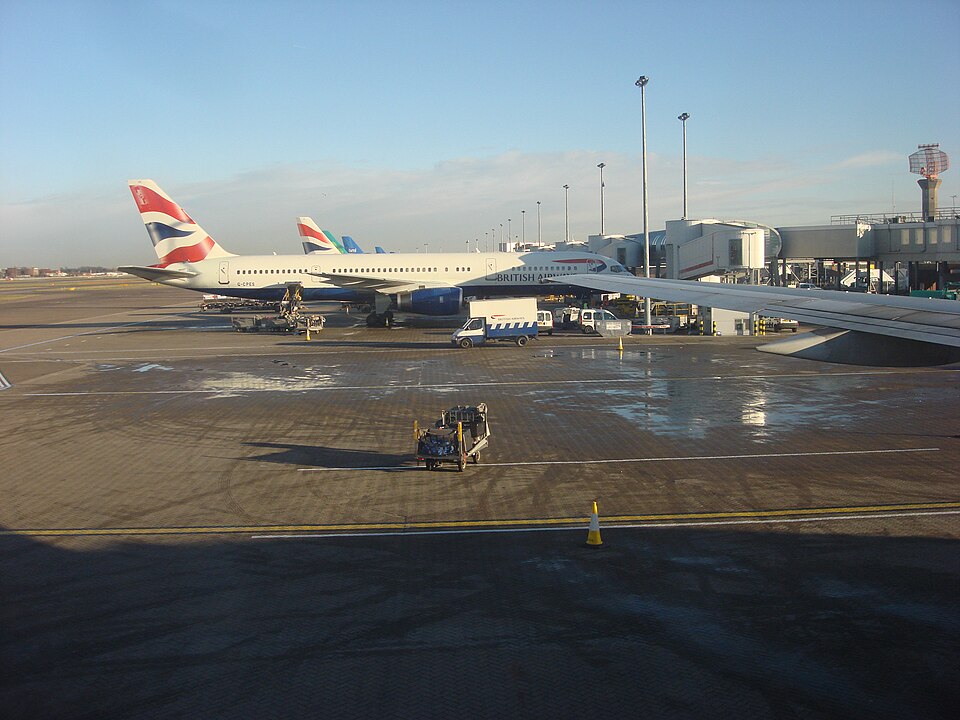
Oil Smell in Cockpit Forces Return to Heathrow

Casualties unknown • After takeoff from London Heathrow, GB

A Boeing 757 passenger flight from London Heathrow to Istanbul was forced to return to the airport after the crew detected a strong scent of oil during takeoff.

What happened

On 19 November 2003, a Boeing 757-236, registration G-CPES, was performing a scheduled passenger service from London Heathrow to Istanbul. During the takeoff roll, as the aircraft rotated, the flight crew noticed a powerful smell of oil within the cockpit. After finishing the initial after-takeoff checklists, the crew noted that while the odor had slightly diminished, it remained noticeable. To confirm the situation, the Cabin Services Director was summoned to the flight deck.

Due to the nature of the odor, the crew elected to return to London Heathrow. They declared a PAN to air traffic control and initiated the necessary Quick Reference Handbook (QRH) procedures, which included the crew donning oxygen masks. The aircraft landed at Heathrow without further incident, and there were no injuries to the 63 passengers or 9 crew members on board.

The investigation

Investigators performed extensive troubleshooting on the aircraft but were unable to identify a specific mechanical defect that would account for the odor. However, an inspection of the engine oil levels revealed that the quantities were higher than the operator's maximum permitted fill limit.

Technical analysis suggested that when engines are overfilled, oil can leak past the compressor front bearing seal. This oil then enters the gas path, where it can be drawn into the air supply serving the cabin and cockpit. The investigation also noted a similar occurrence involving another Boeing 757 operated by the same company, which had experienced cockpit oil smells in September 2004.

Findings

  • The engine oil levels were found to be above the operator's defined maximum fill limit.
  • Overfilling the engines can cause oil to bypass the compressor front bearing seal and enter the aircraft's ventilation system.
  • The operator had previously established an internal limit of one litre below the 'FULL' mark on the sight glass to prevent such leaks, but this threshold was exceeded in this instance.

Probable cause

The presence of an oil smell in the cockpit was caused by engine oil levels exceeding the maximum allowable limit, leading to oil entering the ventilation system via the compressor front bearing seal.

All Boeing 757-200 accidents →

Frequently asked questions

What happened in the 2003-11-19 Boeing 757-236, accident near After takeoff from London Heathrow, GB?

A Boeing 757 passenger flight from London Heathrow to Istanbul was forced to return to the airport after the crew detected a strong scent of oil during takeoff.

What aircraft was involved and where did it happen?

The accident on 2003-11-19 involved a Boeing 757-236,, registration G-CPES, at After takeoff from London Heathrow, GB.

What was the probable cause of the accident?

The presence of an oil smell in the cockpit was caused by engine oil levels exceeding the maximum allowable limit, leading to oil entering the ventilation system via the compressor front bearing seal.

Loading the flight search…