Incident Overview
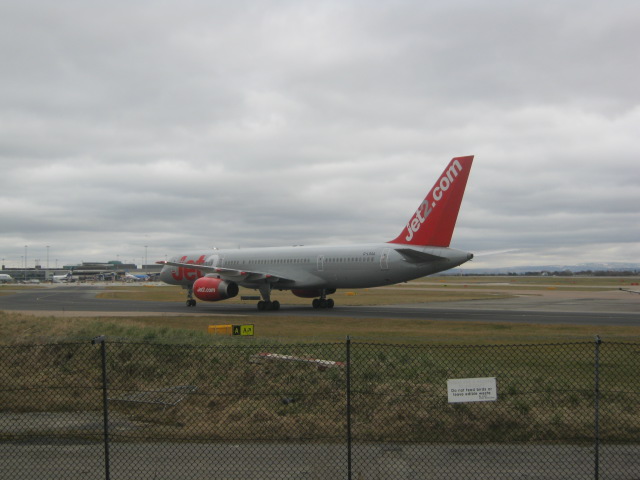
On 2 March 2009, a Boeing 757-236 registered G-LSAA was climbing from FL370 to FL390 en route from Manchester, UK, to Taba, Egypt. As the aircraft levelled at FL390, the flight crew heard a popping sound and felt a pressure change in their ears. They donned oxygen masks and, observing an uncontrollable rise in cabin altitude, executed a rapid descent. A MAYDAY was transmitted to Athens ATC, and a passenger announcement was made. The aircraft diverted to Athens Airport. After landing, the doors could not be opened until the outflow valve was re-opened to equalize pressure. Four passengers reported minor ear discomfort.
Flight Crew Actions
The three flight deck personnel—both pilots and a company maintenance engineer—recollected a popping and whooshing sound. The co-pilot observed the cabin altitude rising at about 4,000 ft/min, while the engineer noted a cabin differential pressure of about 9 psi. All donned oxygen masks. The co-pilot attempted to control cabin altitude by selecting manual mode and closing the outflow valve, but this was ineffective. The commander initiated a rapid descent to a lower level. An EICAS CABIN AUTO INOP caution message appeared, and later a CABIN ALTITUDE warning message displayed briefly. The maximum cabin altitude seen by the crew was between 10,000 and 11,000 feet. The commander decided not to deploy passenger oxygen masks as cabin altitude was below 10,000 feet during the descent.
Recorded Data
Flight data recorder (FDR) parameters show that the cabin altitude exceeded 10,000 feet for 108 seconds, starting as the aircraft climbed through 38,700 feet and ending as it descended through 33,700 feet. The FDR did not record cabin altitude directly but had a discrete indicator for altitudes above 10,000 feet.
Technical Investigation
Post-flight inspection revealed that a cabin positive pressure relief valve (CPRV) had opened. Several pressurization system components were removed and tested. One CPRV had operating pressures 0.25 to 0.45 psi lower than specified, causing it to operate at a lower differential pressure. The active cabin pressure controller (CPC) had a cabin pressure sensor approximately 0.1 in Hg out of tolerance, which may have raised the scheduled cabin pressure slightly. The manufacturer considered that these faults, individually, should not have caused a problem, but their combination likely caused the CPRV to open prematurely, leading to a net loss of cabin air. The aircraft's pressurization system has automatic (AUTO 1 and AUTO 2) and manual (MAN) modes. When MAN is selected, automatic control is locked out, and the outflow valve is controlled manually. The cabin must be depressurized before landing by opening the outflow valve; otherwise, the fuselage remains pressurized and doors cannot open.
Operator's Conclusion
The operator's investigation determined that the reduction of cabin pressure was probably caused by the premature opening of a CPRV, resulting in a state where the loss of cabin air exceeded the rate of inflow. This would have generated the CABIN AUTO INOP EICAS message if the outflow valve was closed. The crew's selection of manual mode and closure of the outflow valve, followed by descent, caused the cabin to re-pressurize. Had the CABIN AUTO INOP checklist been followed, the cabin would have been depressurized before landing, allowing door opening.
Outcome
After the incident, components were replaced and the aircraft returned to service. No further pressurization problems were recorded.