Incident Summary
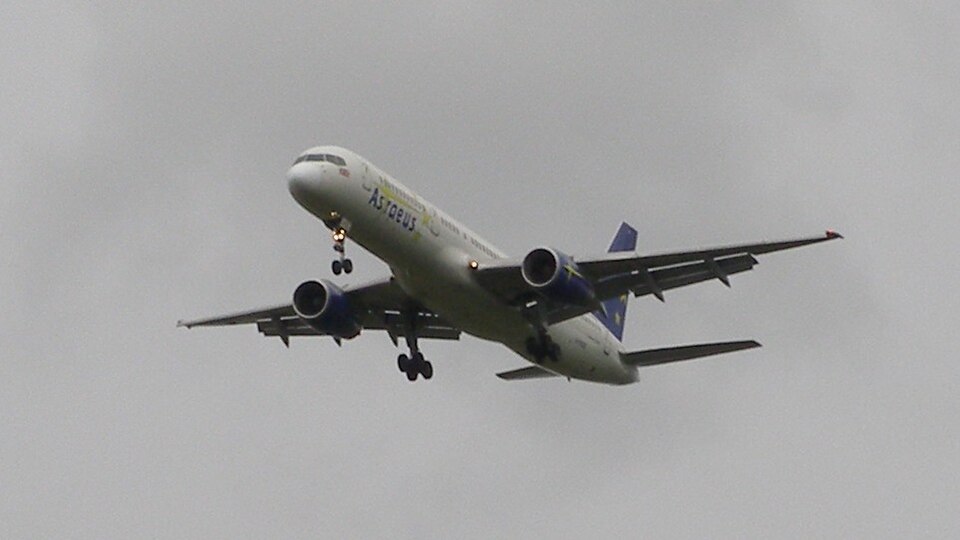
On 19 February 2001, a Boeing 757-28A, registration G-OOOB, was preparing for a scheduled passenger flight from Las Palmas to Glasgow. The aircraft carried 9 crew members and 232 passengers. During taxi, passengers and cabin crew in the rear galley heard a loud bang. The cabin crew supervisor informed the flight crew, who had not heard the bang but noticed a slight change in cabin pressure. No abnormal indications appeared on the flight deck displays. After a brief discussion with the cabin crew, the commander decided to return to the stand. During shutdown checks, the crew received a report of smoke in the rear cabin. Since the aircraft was on a remote stand without airstairs, the commander ordered an emergency evacuation using the escape slides. The evacuation was completed successfully with no serious injuries. The flight crew encountered communication difficulties with the local Chief Fire Officer due to his limited English, necessitating the use of the airline's handling agent to relay information.
Engineering Investigation
The event was caused by the rupture of an Auxiliary Power Unit (APU) bleed air duct at a welded joint. The duct, part number 212N3076-9, carries pressurized air from the APU compressor to the air conditioning packs for ground use. It was located near the forward bulkhead of the aft cargo compartment, behind liner panels and surrounded by insulation. The smoke reported was likely dust and insulation material blown into the cabin after the rupture. The duct had been installed since aircraft manufacture in 1987 and had accumulated 60,474 hours and 20,717 cycles. There was no evidence of a fire.
Subsequent Actions
Following the incident, the operator inspected the APU ducts on its entire Boeing 757 fleet. Two other ducts of the same part number were found with cracks and replaced; both had over 55,000 hours and 18,000 cycles.
In 1989, the aircraft manufacturer made a design change to stress relieve APU ducts after manufacture and apply a hydrostatic test, changing the part number to 212N3076-10. This change was only a production modification; no Service Bulletin was issued for in-service aircraft like G-OOOB. The operator later replaced all -9 ducts with -10 ducts. No failures of the -10 ducts have been reported.