History of the Flight
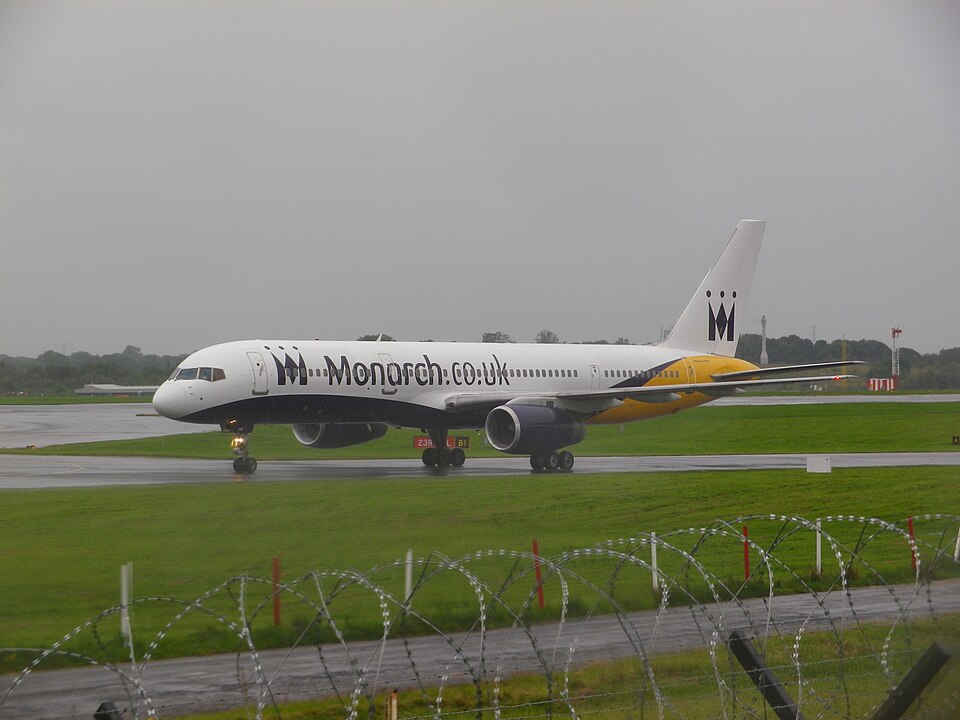
On 13 December 2008, a Boeing 757-2T7, registration G-MONK, was operating a commercial passenger flight from Innsbruck to London Gatwick. The crew, comprising a commander and a co-pilot, had reported for duty at 0430 hrs for a return flight. The commander, aged 51, held an Airline Transport Pilot's Licence and had 10,350 flying hours, including 6,750 hours on type. The co-pilot was also appropriately qualified. Both pilots had flown together previously and held a high regard for each other's abilities. This was the commander's first flight in three weeks and the co-pilot's first in two weeks. During the previous week, they had both flown simulator checks on procedures for Innsbruck.
The operator required the commander to perform both the landing and takeoff at Innsbruck. It was therefore decided that the co-pilot would be the pilot flying (PF) for the outbound leg from Gatwick, handing over to the commander for the landing at Innsbruck. The commander would then be the PF for the return leg and approach, with the co-pilot performing the landing at Gatwick. After checking weather information, the crew decided on a 30-minute delay to ensure suitable weather for arrival at Innsbruck. The outbound flight, turnaround, and departure from Innsbruck were uneventful, and the aircraft was on schedule as it approached Gatwick.
The weather was wet and windy, with surface wind recorded as 14 kt gusting to 26 kt from the southeast. Runway 08R was in use, and aircraft were being radar vectored to intercept the ILS from the south. The wind at 2,000 ft was 50 kt from the south.
At 1040 hrs, ATC advised the crew they had 28 track miles to run. The aircraft was becoming high on the approach profile, so the co-pilot reminded the commander about the strong tailwind on base leg; the commander deployed the speedbrakes. At 1044 hrs, the final approach controller asked the crew to slow to 180 kt and gave instructions for the final turn to intercept the ILS. The instruction was issued when the aircraft was approximately 8.5 nm from touchdown and displaced 2.4 nm south of the ILS centreline; Mode S showed the aircraft's speed as 190 kt. There was a pause before the turn began, after which the aircraft was cleared to descend to 2,000 ft, then further with the ILS.
The commander tried different autopilot modes to reduce airspeed, but the aircraft was high. The crew lowered the landing gear to increase drag and rate of descent. The co-pilot then prompted that the localiser selection on the Mode Control Panel had not yet been armed. As soon as it was selected, the autopilot captured the localiser, but too late to prevent the aircraft from flying through the ILS centreline. Localiser capture was still active, and the autopilot turned the aircraft onto a heading of 145° to intercept the centreline from the north.
The commander was concerned that, as he should not capture the glide slope until established on the localiser, the autopilot would go into ALT CAPTURE mode and level at 2,000 ft. He disconnected the autopilot and flew manually onto the ILS while the co-pilot changed radio frequency, reset the MCP altitude, and signalled cabin crew to take seats for landing. The commander then instructed the co-pilot to re-engage the autopilot. As the co-pilot was concerned that the airspeed was decaying below Flap 5 speed, he prompted the commander and selected Flap 20.
A short time later, the stick shaker activated. The commander immediately lowered the aircraft's nose and increased thrust. The airspeed increased and the stick shaker stopped, but the crew decided to go-around. The commander ordered a go-around and pressed the TOGA button. He increased the pitch attitude; the co-pilot called 'positive climb' but the commander did not respond. After repeating the call, the co-pilot raised the landing gear and advised ATC of the go-around. The commander called for Flap 5 but the co-pilot cautioned that the speed was still too low. The commander was becoming confused as the aircraft attitudes did not appear normal, and the aircraft was not responding in the usual manner. The Flight Director pitch guidance disappeared from both PFDs. Aware that he was becoming disorientated and that the co-pilot seemed to have better situational awareness, he instructed the co-pilot to take control. The co-pilot did so and lowered the nose. The commander subsequently realised that the speedbrakes were still extended and retracted them.
The second approach was initially flown by the co-pilot, but control was handed back to the commander for landing, who had regained situational awareness.
Recorded Information
The Flight Data Recorder (FDR) was removed and analysed. The Cockpit Voice Recorder (CVR) recordings from the incident had been overwritten. FDR data showed the aircraft at 2,400 ft pressure altitude, descending at 140 kt, slowing with flaps extending to Flap 20 and speedbrakes out. Engines were at nominal EPR of 1.10, and nose-down pitch trim was being manually applied. As flaps reached Flap 20, the autopilot was re-engaged. The aircraft continued to descend and slow; no further nose-down pitch trim was applied apart from one small burst. The pitch attitude then increased from a nominal 7° nose-up to 10° about 13 seconds later as the airspeed slowed to 123 kt. Angle of attack increased, and as pitch reached 10°, rates increased sharply. As alpha passed 10.3° (stall warning threshold for Flap 20) at about 1,000 ft, the stick shaker activated and the autopilot disengaged. The stick shaker was active for no more than two seconds. The speedbrakes remained extended. About six seconds later, with speedbrakes still out and aircraft accelerating to about 150 kt, the TOGA button was pressed. The aircraft accelerated to 158 kt before slowing as it pitched up and climbed. During the climb, maximum nose-up pitch was 28° and minimum airspeed was 125 kt. The rest of the climb was uneventful; as the aircraft passed 3,600 ft, the speedbrakes were retracted, 70 seconds after the stick shaker first activated.
Speedbrake Warning
The Boeing 757 was originally fitted with a warning system that provided an EICAS message "Speedbrakes EXT" when the commander's radio altitude was between 800 ft and 15 ft and the speedbrake lever was beyond the ARMED detent. No warning based on thrust lever position was provided. The Flight Crew Training Manual advised that the PF should keep his hand on the speedbrake lever whenever the speedbrakes are used in-flight, to preclude leaving them extended. In 1999, Boeing modified the speedbrake alert system for B757s built after June 1999 to include a warning light when the speedbrake lever is beyond ARMED and the engine thrust lever is forward of flight idle for more than 15 seconds. Boeing considered a retroactive change but did not implement it.
Stick Shaker
The B757 Flight Crew Operations Manual, Non-Normal Manoeuvres section, requires immediate actions upon pre-stall buffet or stick shaker, including for the PF to retract the speedbrakes and for the pilot monitoring to verify all required actions.
Flight Director Guidance
During a go-around with the localiser captured, the Flight Director roll bar gives directions to maintain runway track. The pitch mode, after positive rate and positive vertical speed, should give guidance to maintain selected MCP speed. The autothrottle adjusts thrust levers to achieve a rate of climb of 2,000 fpm. Boeing reviewed the FDR data and conducted tests but were unable to explain why the Flight Director Pitch Bars disappeared from both PFDs during the go-around.
Simulator Assessment
The AAIB, with an experienced B757 Type Rating Examiner, reviewed the approach and go-around in a simulator. The results were used to understand the sequence of events.