Synopsis
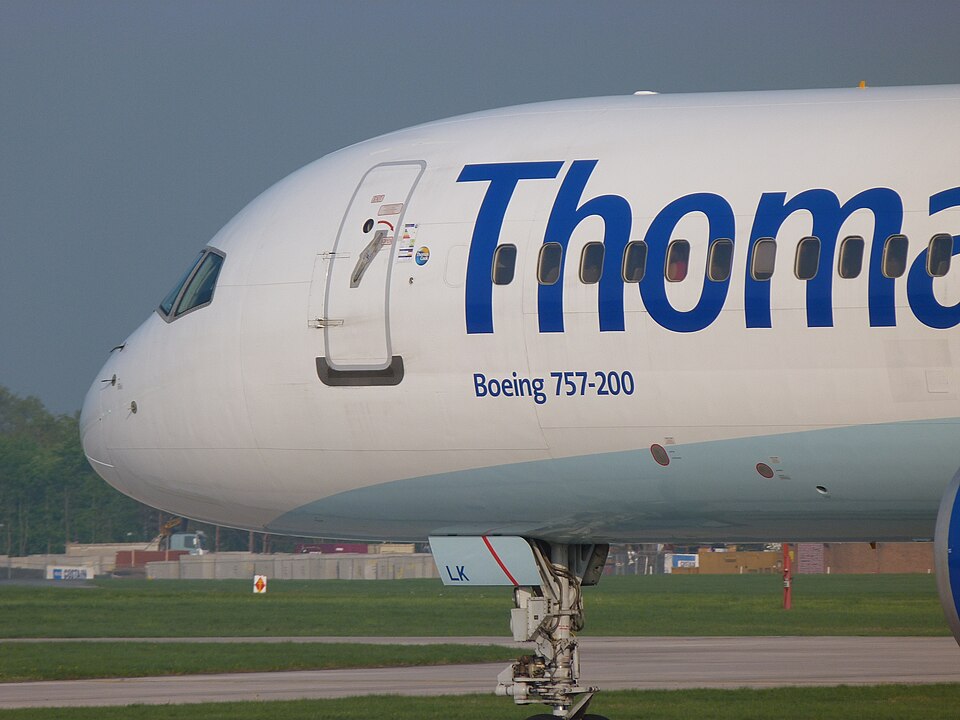
The commander of a Boeing 757-2Y0, registration G-FCLK, ordered passengers to disembark after observing smoke from hydraulic fluid leaking onto the aircraft's brakes. The intent of the order was not understood by all, and some passengers vacated the aircraft using an emergency exit slide.
History of the Flight
Passengers had initially boarded another aircraft at London Stansted for a direct flight to Tenerife, but that aircraft developed a technical problem before departure. They were accommodated in the terminal for several hours while an alternative aircraft was sought. When the replacement aircraft arrived, the crew members' allowable duty hours were insufficient for the Tenerife round trip, so plans were made to fly to Gatwick, where a replacement crew would take over. The departure from Stansted was approximately six hours behind schedule. The flight to Gatwick was uneventful.
The Incident
After landing, the aircraft taxied to Stand 38, where a jet-bridge was attached to door 1L (left forward). The off-going crew began handing over to the on-coming crew. Passengers remained in the cabin, mostly seated. The on-coming commander conducted an external inspection and noted a hydraulic leak above the left main landing gear. He re-boarded, informed the cabin manager and co-pilot, then returned to the ramp. The cabin manager used the interphone to inform rear cabin crew, but evidence suggested this news did not reach all crew. Hydraulic fluid was falling onto the warm brakes, producing smoke.
After a brief discussion with an engineer, the commander decided to disembark passengers and crew rapidly. He returned to the forward vestibule and made a public address announcement: "Ladies and gentlemen, we need to clear the aircraft immediately; there is smoke on the left hand side." Passengers did not react, so he added: "Move, come this way!" Shortly afterward, a cabin crew member informed him that door 3R (right rear emergency exit) had been opened and the slide deployed.
Passenger Actions
A male passenger seated adjacent to door 3R recalled hearing an announcement: "smoke on the left side, get out, get out, get out!" He was uncertain if it came from a crew member. He looked left but could not see anything amiss. He examined the emergency exit instructions and heard another passenger say "do it, do it." He opened the exit, the slide deployed, and he assisted others onto it before sliding down. His partner recalled a similar announcement without an introduction like "this is the captain." She also heard another passenger urge her partner to open the exit. She exited via the slide without difficulty and then assisted others.
Aftermath
Airline and airport staff, then fire and rescue personnel, assisted passengers on the ramp. Five passengers suffered minor injuries and were treated at the scene; none were hospitalized. Those who used the slide were escorted into the terminal. All passengers were accommodated overnight in a nearby hotel and flown to Tenerife the next day. Estimates of the number who used the slide varied between 10 and 100; several witnesses mentioned around 20 or 30.
Engineering Findings
Engineers identified that hydraulic fluid had leaked from the left main landing gear retract actuator. The actuator was sent for strip-down, examination, and repair. Examination revealed corrosion on several items, with damage and failure of associated o-ring seals leading to the fluid leakage. The extent of damage made the actuator beyond economic repair. This was the only main landing gear actuator failure on record for the operator. The component is not subject to a specific overhaul life policy set by the original equipment manufacturer. The actuator was replaced, and the aircraft returned to service.
Crew Procedures
The operator had published procedures for rapid disembarkation and evacuation, including specific public address announcements. However, the commander's announcement did not follow the prescribed wording. Ten days before the incident, the operator issued a bulletin reminding crew not to leave doors unattended with passengers on board. The operator later revised its procedures to differentiate between "controlled disembarkation" and full evacuation, specifying that the captain would decide which doors to use and give the instruction accordingly, but no prescribed wording for passenger announcements was included.
Flight Recorders
The cockpit voice recorder (CVR) was downloaded but did not contain relevant dialogue or the commander's PA announcement, as conversations occurred outside the cockpit area microphone range and the PA system was not recorded. The flight data recorder (FDR) did not contain relevant data and was not downloaded.