Incident Details
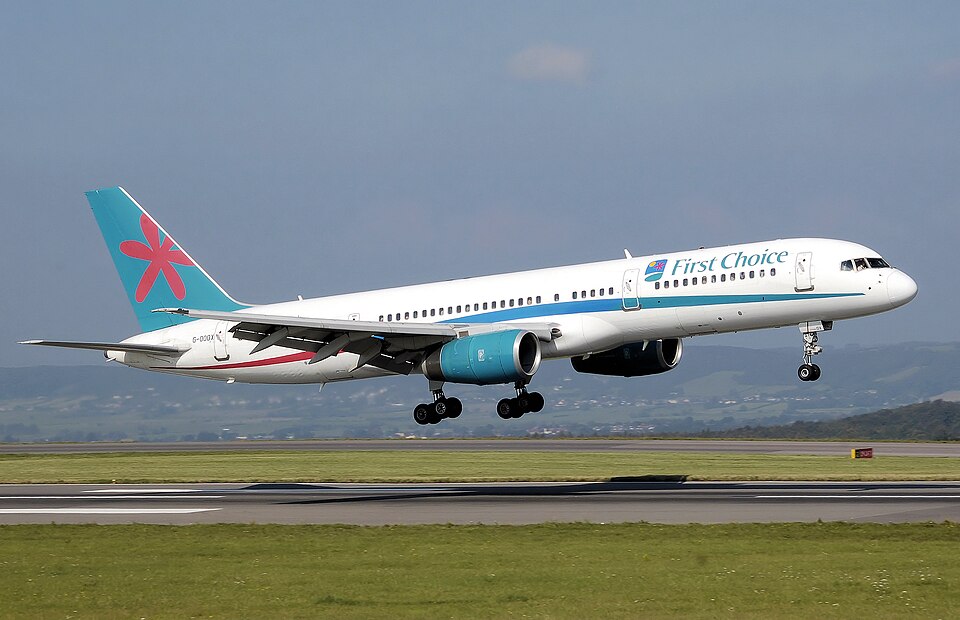
On 22 June 1998 at 0005 UTC, a Boeing 757-2YO, registration G-OOOX, was climbing out of Larnaca, Cyprus, en route to Manchester, UK, with 206 passengers and 9 crew. The first officer was the handling pilot, with autopilot and autothrottle engaged. Passing flight level 255, a loud bang and a shower of sparks emanated from the overhead panel (P11). The commander's airspeed indication dropped to zero, his altimeter showed an OFF flag, and multiple OFF flags appeared on his Radio Distance Magnetic Indicator (RDMI). The first officer retained control and levelled the aircraft at FL270.
Several caution and advisory messages appeared on the Engine Indication and Crew Alerting System (EICAS). The commander selected the alternate air data source, which restored his airspeed indicator and altimeter. Meanwhile, his VOR/DME controller display went blank, the centre ILS failed, and the standby attitude indicator displayed multiple OFF flags before toppling.
The crew declared a PAN and requested a return to Larnaca, where weather was good: visibility 20 km, scattered cloud at 3,500 feet, no significant weather, surface temperature +22°C, light winds, and runway 22 (asphalt, landing distance 2,520 m) in use with all approach aids and lighting serviceable.
The first officer continued to fly while the commander performed drills for EICAS messages: 'Spoilers', 'Left Yaw Damper', and 'Standby Bus Off'. He could not restore power to the standby bus; both main and APU batteries were discharging, so he reset the standby power selector to 'Auto' per the drill. During the return, the commander's flight director and autothrottle failed. Descending through 5,000 feet, the 'Right IRS DC Fail' message appeared. At about 2,000 feet on the extended runway centreline with visual contact, the commander took control and executed an overweight manual landing at 96 tonnes. After landing, starting the APU during taxi produced the message 'APU Batt No Stby'.
Engineering Investigation
Investigation revealed that two wires behind panel P11 had chafed against a bonding lead that earthed the disconnect bracket AP0011 to the fuselage. The resulting short circuit tripped the AC standby bus power circuit breaker, taking multiple systems offline. Damage was limited to the two wires, caused by faulty routing of the wiring loom. The wires were repaired with permanent in-line splices, and the aircraft was ferried to Manchester for a thorough inspection before return to service.
Fleet Inspection
The operator inspected 13 aircraft of the same type. One other aircraft showed slight damage from chafing against the disconnect bracket; two aircraft had inadequate clearance but no chafing. Details were forwarded to the manufacturer, the National Transportation Safety Board, and the FAA. An Airworthiness Directive was written to address the problem, expected for release as an immediate adoption AD in early to mid-September 1998.