Introduction
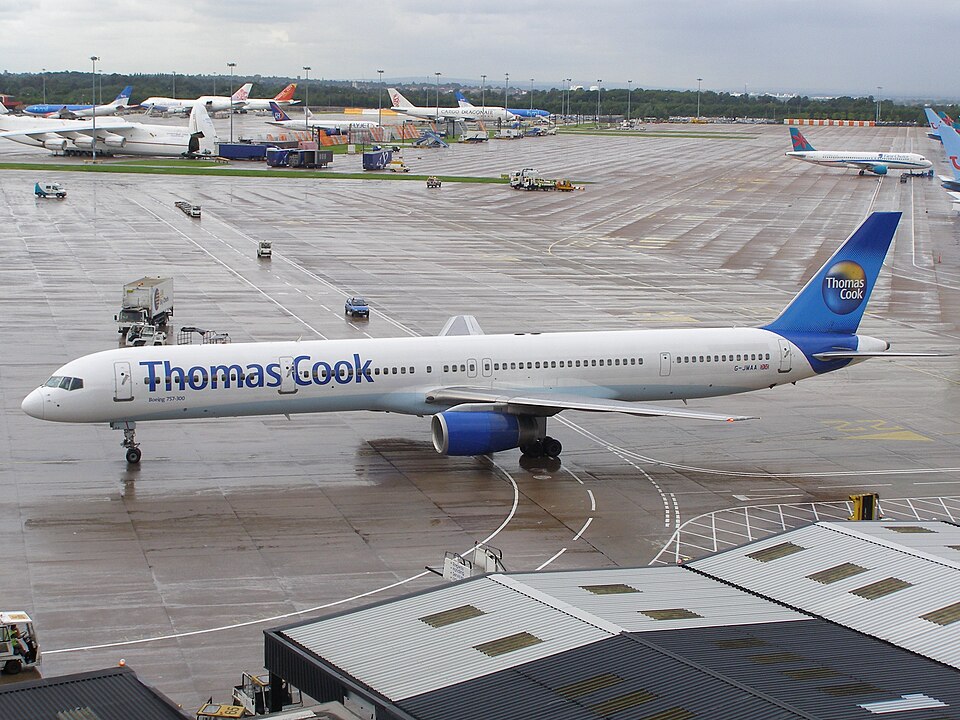
On 23 November 2004, a Boeing 757-3CQ, registration G-JMAA, operated a public transport passenger flight from Antalya, Turkey, to Manchester International Airport. The aircraft was equipped with two Rolls-Royce RB211-535E4-B-37 turbofan engines and had been manufactured in 2001. The commander, aged 37, held an Airline Transport Pilot's Licence and had accumulated 8,358 total flying hours, with 6,833 hours on type. The co-pilot was also present. There were 9 crew members and 281 passengers on board; no injuries occurred and no damage was sustained.
History of the Flight
During the arrival, Manchester ATIS information Quebec indicated meteorological visibility of 200 m and that Low Visibility Procedures (LVPs) were in operation. The crew briefed for a Category 3A automatic landing using the ILS, with the commander as Pilot Flying. At 1905 hrs, the crew requested Runway Visual Range (RVR) information and were told the touchdown RVR exceeded 1,500 m and the mid-point was 900 m. Shortly after, another pilot inquired whether LVPs were still in force and was informed they were.
While the Boeing 757 was on the Approach frequency, no further mention of LVPs was made. The crew were instructed to leave the hold, continue the approach, and contact the Director. On the Director frequency, no reference to LVPs was made by any aircraft or controller.
At 1923 hrs, the Boeing 757 flight crew contacted the Air (Aerodrome) controller and were instructed to continue the approach. Another aircraft was on short final, and the Air controller assessed the interval as sufficient to permit two departing aircraft (an MD-80 and an Embraer 145) after the arriving aircraft vacated but before the Boeing 757 landed. The Embraer 145 was slow to respond to instructions and did not take off promptly, despite being instructed twice.
As the Embraer 145 lifted off and the Boeing 757 approached the runway threshold, the controller cleared the Boeing to land. The final approach continued normally until at about 30 ft height when the aircraft rolled unexpectedly. The commander disconnected the autopilots and completed a manual landing.
Recorded Flight Data
The aircraft was equipped with a Cockpit Voice Recorder (CVR) and Flight Data Recorder (FDR); the CVR had overwritten, but the FDR was successfully replayed. The airport's Surface Movement Radar (SMR) had overwritten, and Approach Radar was partially useful. FDR data showed the localiser signal was steady until below 50 ft. At approximately 30 ft, the aircraft began the flare and almost immediately started rolling right. Approximately two seconds later, the heading started drifting right. Corrective action was taken with a large rudder input and left roll input just before touchdown. The largest heading deviation was slightly less than 2°, though the parameter was sampled once per second. The data indicated erroneous localiser deviation signals led the autopilots to deviate.
ATC Communications
ATC staff involved were interviewed. At about 1830 hrs, the Air controller decided to instigate LVPs due to deteriorating visibility, communicated to Approach and Director controllers, but neither placed an LVP reminder strip in their displays, as required by procedures approved by the CAA. When ATIS information changed, a new broadcast was made with a code letter. Pilots were required to report the code on first contact. If pertinent information changed, controllers were to provide new information by broadcast or individually. The Manchester Airport Manual of Air Traffic Services (MATS) Part 2 stated that controllers must notify pilots by R/T of operating conditions other than those in the reported ATIS broadcast received.
From 1833 hrs until 1921 hrs, ATIS included information that LVPs were in force. When the Air controller decided to cease LVPs, this was communicated by telephone to Approach and Director positions, but neither controller passed this to the Boeing 757 flight crew. A widespread controller handover was in progress at the time, which contributed to confusion regarding communication of LVP status.
Analysis
The flight crew prepared for an automatic landing due to reported poor visibility. They acknowledged receipt of ATIS Quebec, which included LVPs in force. The flight progressed normally until the final approach, when both pilots gained visual contact with the runway earlier than expected. The co-pilot judged the weather was above LVP trigger criteria but did not mention it to the commander, likely due to minimal flight deck conversation during critical phases. Recorded flight data showed a slight deviation in flight path just before touchdown. Communications within the ATC unit were central to the incident. The incident identified anomalies in the system by which LVP information was communicated to pilots. ATIS is used not only for LVP status but also other safety-critical information. The provider of ATC services at the airport took action in light of this event.
Safety Recommendations
Safety Recommendation 2005-098: The Civil Aviation Authority should review the means by which critical information from airports, such as whether Low Visibility Procedures are in force, is communicated to pilots, and its receipt and ongoing accuracy are confirmed, and should take action to eliminate any weaknesses identified.
Safety Recommendation 2005-099: The Civil Aviation Authority should require providers of air traffic services at airports to retain Surface Movement Radar data for a period consistent with the needs of accident and incident investigation.